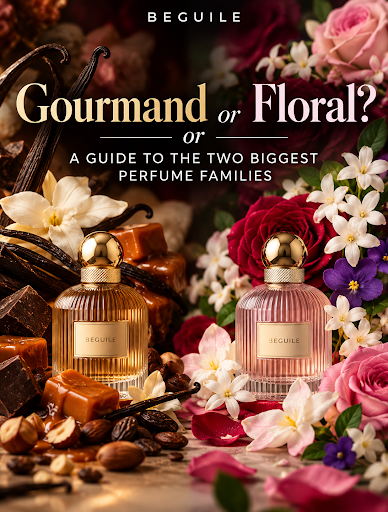
Gourmand or Floral? A Guide to the Two Biggest Perfume Families
Choosing a perfume becomes much easier once you understand fragrance families. Instead of testing dozens of bottles without knowing what you are looking for, you can start with the scent profile that naturally appeals to you. Two of the most recognizable categories are gourmand and floral fragrances. Gourmands are typically associated with edible-smelling notes such as vanilla, caramel, almond, coffee, honey, and chocolate, while florals build their character around flowers such as rose, jasmine, tuberose, violet, and orange blossom.
Yet modern perfumery increasingly blurs those boundaries. A fragrance can begin with an almost dessert-like sweetness and reveal flowers underneath, or take a traditional floral structure and soften it with creamy vanilla. That crossover is exactly where Blush Bloom by Beguile becomes interesting. Created by Beguile, a modern and accessible fragrance house guided by the idea More Than Just A Scent, Blush Bloom combines bitter almond, vanilla blossom, tuberose, vanilla, tonka bean, and sandalwood.
What Is a Gourmand Perfume?
A gourmand perfume is designed around accords that remind us of edible ingredients, desserts, or comforting treats. Vanilla is perhaps the best-known gourmand note, but almond, praline, caramel, chocolate, honey, coffee, pistachio, and warm spices can all create that delicious impression. The modern gourmand category is commonly traced to the early 1990s, after which edible-inspired compositions became an established part of contemporary perfumery.
Importantly, gourmand does not automatically mean extremely sugary. Contemporary compositions can balance sweetness with woods, musk, spice, amber, or flowers. This creates fragrances that feel warm and inviting without smelling like literal candy.
An almond vanilla perfume, for example, can have a nutty opening followed by creamy sweetness and a smooth woody dry-down. This combination can feel intimate and comforting while retaining enough structure for everyday wear.
What Makes Floral Perfumes Different?
Floral fragrances put flowers at the center of the experience. Rose can feel romantic or velvety, jasmine can bring richness and radiance, and tuberose can introduce a creamy, heady quality. Florals may also incorporate fruits, woods, musk, vanilla, or spices, so the category covers far more territory than simply smelling like a bouquet.
A soft floral fragrance usually takes a gentler approach. Rather than delivering an intensely green or powerful floral effect, it may combine delicate flowers with creamy woods, musk, powdery accords, or vanilla. The result often sits closer to the skin and can transition comfortably from daytime to evening.
This is one reason fragrance families should be treated as helpful guides rather than rigid boxes. Modern perfumes frequently borrow elements from several families.
Blush Bloom: Where Gourmand Meets Floral
Blush Bloom by Beguile illustrates that crossover especially clearly. According to Beguile’s official note breakdown, it opens with bitter almond, moves into vanilla blossom and tuberose, and dries down to vanilla, tonka bean, and sandalwood.
The bitter almond establishes the gourmand direction immediately. It has a warm, distinctive nuttiness rather than straightforward sugary sweetness. As the opening settles, vanilla blossom and tuberose introduce the floral side of the composition.
Tuberose is particularly important here because its creamy character works naturally alongside vanilla. Instead of creating a sharp contrast between flowers and sweetness, the notes flow into one another. In the base, vanilla and tonka bean reinforce the warmth while sandalwood provides a smooth woody foundation. Beguile describes the fragrance as a warm, skin-oriented composition, and its own detailed review positions it within the modern vanilla-gourmand-floral space.
Gourmand vs Floral: Which One Should You Choose?
When considering gourmand vs floral, think less about labels and more about the experience you want from your perfume. If vanilla, almond, caramel, coffee, tonka, or dessert-inspired aromas immediately catch your attention, the gourmand family is a logical place to explore. These fragrances often create an enveloping sense of warmth.
If you are naturally attracted to rose, jasmine, tuberose, peony, violet, or other flower-led compositions, explore florals. Depending on their supporting notes, they can range from airy and fresh to creamy, sensual, powdery, or intense.
There is no need to choose only one family, either. Floral gourmands bridge both worlds and can be especially appealing to someone who enjoys sweetness but wants flowers to provide dimension.
Why Blended Fragrance Families Matter in 2026
One of the most useful ways to approach perfume in 2026 is to look beyond a single family name. Current fragrance coverage increasingly highlights compositions that combine gourmand, floral, woody, fruity, and skin-scent characteristics rather than staying inside one traditional category.
That makes Blush Bloom by Beguile a useful example of how a hybrid composition works. The almond, vanilla, and tonka bean create recognizable gourmand warmth, while vanilla blossom and tuberose bring a floral dimension. Sandalwood then gives the dry-down a smoother foundation. Rather than forcing the wearer to choose between “sweet” and “floral,” the composition brings the two ideas together.
Final Thoughts
Understanding fragrance families gives you a practical starting point, but the most memorable perfumes often sit between categories. A gourmand perfume can contain flowers, just as a floral scent can carry vanilla, almond, woods, or other edible-feeling notes.
Blush Bloom demonstrates how those contrasts can coexist: bitter almond for character, vanilla for warmth, tuberose and vanilla blossom for floral creaminess, tonka bean for depth, and sandalwood for a smooth finish. For anyone exploring the space between gourmand comfort and floral softness, it shows why modern fragrance is increasingly about balance rather than labels—More Than Just A Scent.