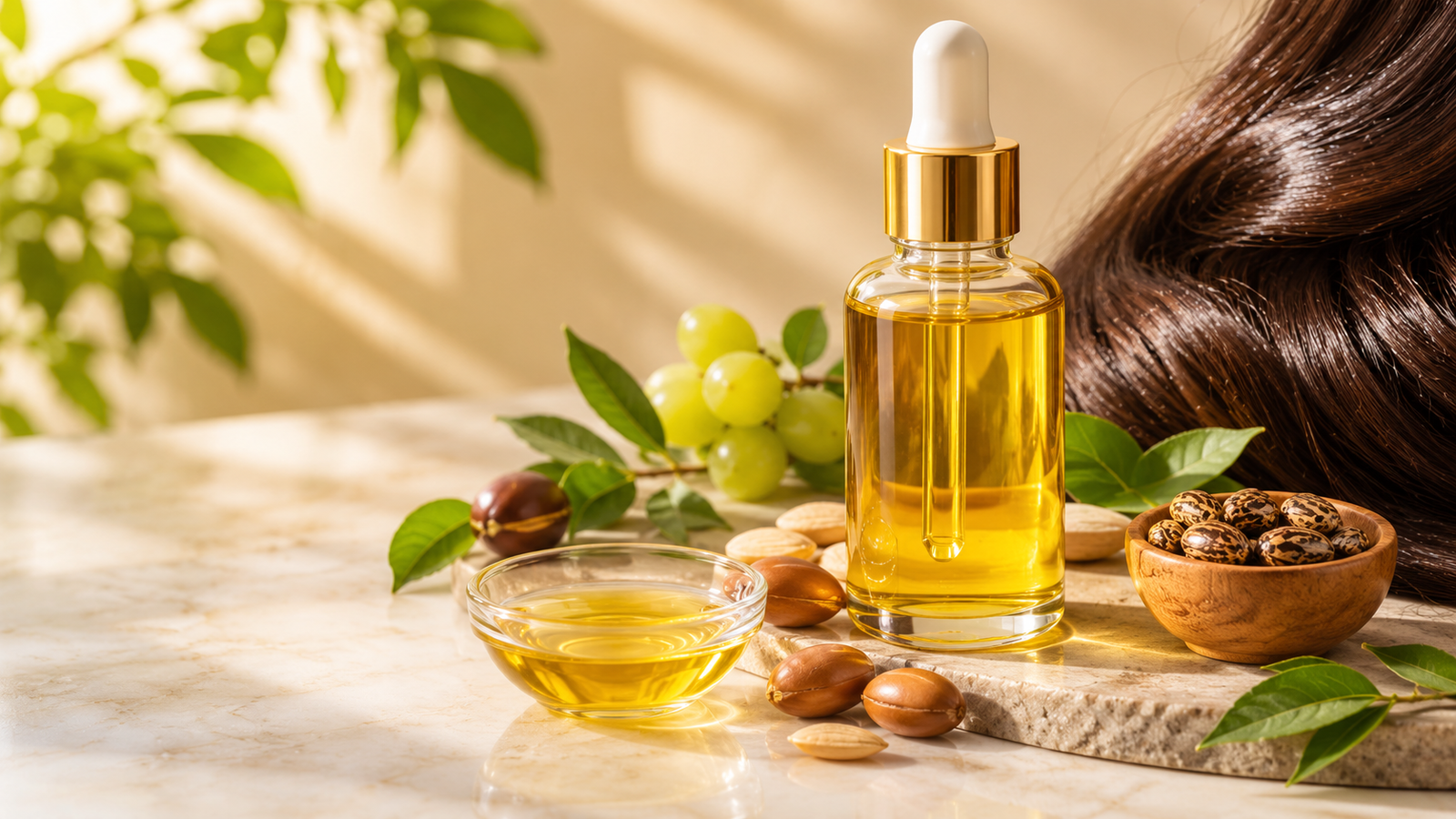
Oils for Low Porosity Hair: What to Use and How to Apply Them
The best oils for low-porosity hair are often lightweight, such as jojoba, grapeseed, sweet almond, and argan oil. Richer oils such as batana oil can still work, but only in smaller amounts.
Low-porosity strands resist absorption, so heavy products tend to sit on the surface and build up. This guide explains why, which oils to try, and how to apply them.
What is Low-Porosity Hair?
Porosity describes how easily hair absorbs and holds moisture. With low porosity, the cuticle lies flat and tightly packed, which makes it harder for water and products to penetrate.
Signs of low-porosity hair include slow wetting, slow drying, water beading on the strand, fast buildup, and products remaining on top of your hair.
It is mostly genetic and more common in straight hair. While oils cannot permanently change the texture of your hair, they can help manage it better.
The Best Oils for Low Porosity Hair
It helps to understand which oils help with low-porosity hair and how to incorporate them into your haircare routine.
Argan Oil for Smoothing Dry Ends
If your main concerns are frizz and rough ends, argan oil can help. Applying a little argan oil after using a leave-in conditioner can help if your hair feels dry.
Start with a drop rubbed between your palms and spread it over the ends. Note that a commercial argan serum or oil may contain silicones and other ingredients, which may cause it to behave differently from pure oil.
Coconut Oil as a Pre-Shampoo Treatment
Coconut oil is sometimes dismissed as too heavy, but several of its properties may suit low porosity hair. It is rich in lauric acid, a fatty acid with a small, straight structure that may let it get into the hair fibre more easily than many other oils.
It is also water-repellent, so applied before washing it may limit how much water the strand soaks up and reduce protein loss during shampooing. Try it along the lengths before shampooing rather than as a finishing oil, and stop if your hair feels stiff.
Sunflower Oil for Surface Lubrication
Sunflower oil is light and spreads easily, so it is less likely to leave low porosity hair feeling coated. Rich in linoleic acid and vitamin E, it can lubricate the hair surface and reduce friction, which may make detangling easier.
It suits a thin smoothing layer, so judge it by easier handling rather than assuming a non-greasy feel proves deeper penetration.
Jojoba Oil for a Finishing Layer
Jojoba oil can add lubrication to the hair: try a small amount on the lengths and assess how your hair feels once dry.
If it looks flat or develops a waxy coating, use a smaller amount or apply it before shampooing instead. Keep it off your scalp if scalp oiling causes irritation.
Batana Oil as an Occasional Washout Treatment
Batana is associated with the American oil palm, Elaeis oleifera. Batana oil is typically used as a pre-shampoo treatment, a hair mask or a leave-in, and some people find it beneficial to massage a small amount into the scalp.
If you want to try it, the Wholesale Botanics batana oil page offers oil and butter variants. The experts there recommend that you start using batana oil with a small amount on the ends before shampooing, particularly if rich products usually weigh your hair down.
How to Use Hair Oil Without Buildup
Start with a single oil and see how your hair feels after use. The problem with introducing several new products at the same time makes it difficult to assess what’s working and what isn’t.
For finishing, shampoo and condition, apply your usual leave-in if needed, then distribute a drop of oil over the damp ends. Add more only if the result warrants it.
For a washout treatment, lightly coat the lengths before your normal wash. Follow product instructions rather than assuming overnight oiling is better. Oil should not require aggressive scrubbing to remove.
There is no need to oil daily. Start with one application during a wash cycle and check whether it actually improves softness or detangling. If your hair already feels comfortable and manageable after conditioner, oil is optional.
Oils for Low Porosity Hair: Choosing an Oil That Works for Your Hair
The right oil makes hair easier to handle without leaving you struggling to wash it clean. Start with the problem you want to solve: rough ends, friction, or damage during washing.
Try one option sparingly, keep the rest of your routine consistent, and judge the result after washing and styling. You may need less oil, not a longer product list.