Half a Scot by Birth: Byron, the Gordons of Gight, and a Buckle for Graduation Day
In the summer of 1790, a young woman with a small child and very little money took the coach north from London to Aberdeen and rented a couple of rooms in a lodging house on Queen Street.
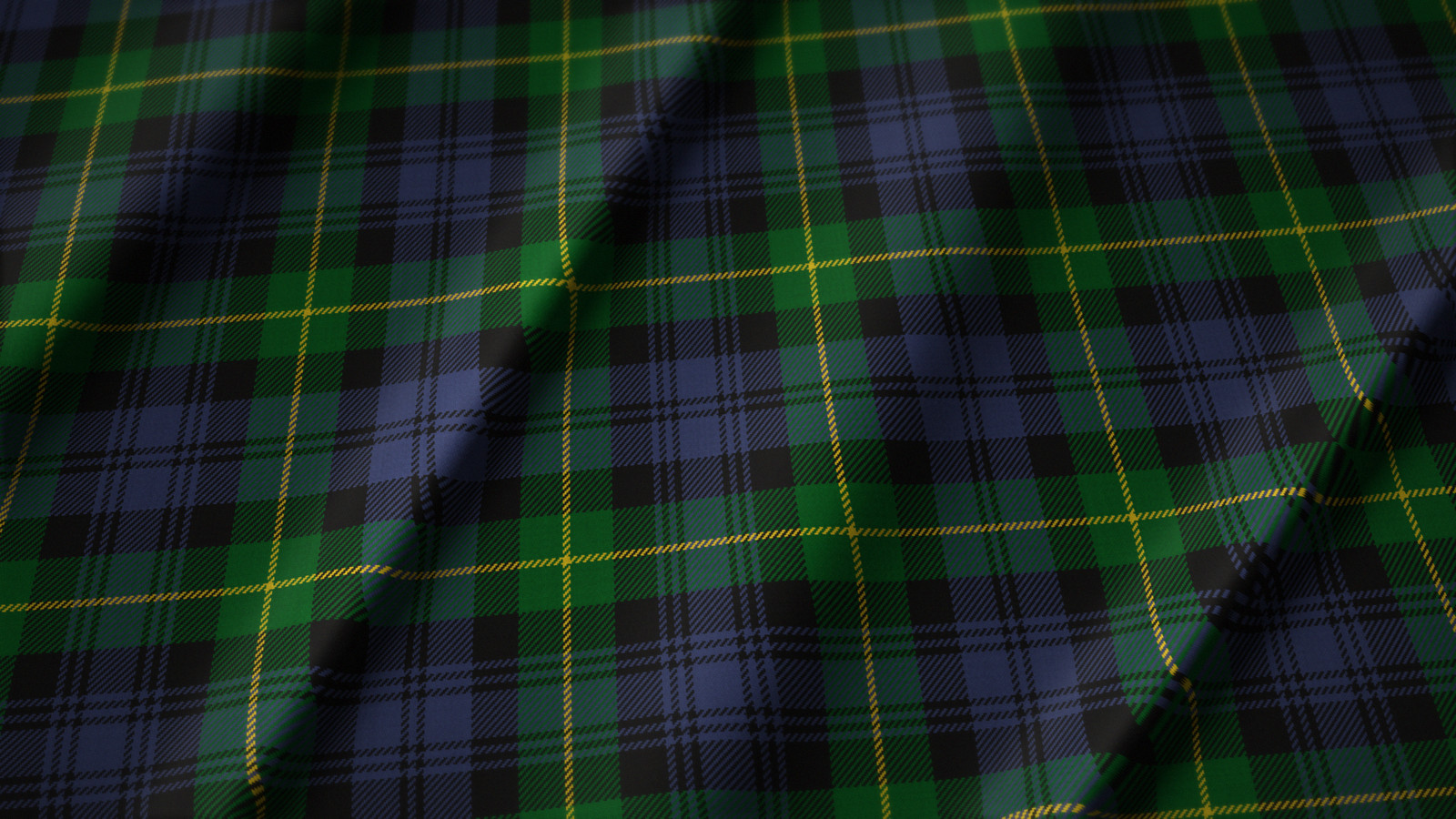
Her name was Catherine Gordon. Three years earlier she had been heiress to the estate of Gight, in Aberdeenshire, with a castle, a ruined one, but a castle, and twenty-three thousand pounds. Then she had married a handsome, penniless Guards officer known to his friends as Mad Jack Byron, and in two years he had spent the lot. Gight was sold to the Earl of Aberdeen to pay his debts. The husband went to France and died there. And Catherine came home to the granite city with her son, a boy of two with a clubbed foot and a temper, whose name was George Gordon Byron. She was a Gordon of Gight, and her family’s cloth was the dark Gordon tartan, navy and green with a thread of gold.
He spent the next eight years in Aberdeen. He went to a dame school in Long Acre and then to the Grammar School, where his name is still on the roll. He was, by his own later account, a wild, sulky, clever child who read everything and fought everyone. And every summer, after a bout of scarlet fever when he was seven, his mother took him up Deeside to a farm near Ballater, under the great dark mountain the Highlanders called Lochnagar.
Dark Lochnagar
In 1798, when he was ten, a great-uncle died in England and the boy became the sixth Baron Byron, with an abbey in Nottinghamshire and a title in the House of Lords. He left Aberdeen that summer and never lived in Scotland again. He was twenty-four when Childe Harold made him famous overnight, and thirty-six when he died in Greece, fighting for its independence, the most notorious man in Europe.
He never forgot the mountain. In his first book of poems, published when he was nineteen, there is one addressed to it:
England! thy beauties are tame and domestic To one who has rov’d o’er the mountains afar: Oh for the crags that are wild and majestic! The steep frowning glories of dark Loch na Garr.
It is not his best poem, and he knew it. But the feeling never left him. Years later, at the height of his fame, deep in Don Juan, he broke off in the middle of a stanza to say something plainly:
But I am half a Scot by birth, and bred A whole one.
The Gordon half was the part that interested him. His mother’s family were the Gordons of Gight, a branch of the great house of Huntly with a reputation, even by the standards of Aberdeenshire, for wildness. Family legend has one laird of Gight drowned in the Ythan and another killed in a duel. Byron, who liked to think of himself as a doomed descendant of doomed men, was pleased to belong to them. Gight Castle still stands, or partly stands, above the river near Fyvie, a broken tower in a wood.
The single yellow line
The tartan of his mother’s people is one of the best documented in Scotland, and its story can be told in a sentence. In 1793 the Duke of Gordon, raising a regiment, asked a Huntly clothier named William Forsyth for a pattern; Forsyth took the dark Government tartan of the Black Watch and sent three samples with one, two and three yellow stripes added; the Duke chose one. The Gordon Highlanders wore it for two hundred years, and the clan adopted it as its own.
So the Gordon is navy, bottle green and black, with a single fine line of gold through the green. The clan itself is far older than the cloth. The Gordons held Strathbogie, around Huntly, from the fourteenth century, and their chief was so powerful in the north-east that all Scotland called him the Cock o’ the North. Their motto is a single Scots word, Bydand, which means abiding or steadfast. The Gordons of Gight were one of the wilder branches of that tree, and Byron liked to say so. It is dark and formal, and it is unlike the other Black Watch derivatives in one way: the yellow line gives it a warmth the rest lack. Under a black jacket it reads as almost military. With brown leather and tweed it softens.
Retailers offer Gordon tartan in Modern, Ancient and Weathered colours, alongside the white-ground Dress Gordon, made to order as kilts, trews, skirts, waistcoats and scarves, or by the yard. Gordon is among the commonest surnames in the north-east, and a great many people who bear it, or descend from it, can claim the cloth. So could Byron. It is pleasant to imagine him in it, and just as well he was not, since he would certainly have written something unforgivable about the hose. A Gordon kilt is usually worn with a black leather belt and a kilt belt buckle, crested or plain.
King’s College, a Thursday in June
Jamie Gordon is twenty-two, and this afternoon he graduates from the University of Aberdeen with a degree in English literature, in the chapel of King’s College, under the crown tower, four hundred yards from the Grammar School where a lame boy called Geordie once fought his way through the playground.
He is a Gordon on both sides, which in Aberdeenshire is not unusual. His mother’s people farmed near Fyvie, three miles from Gight. He did his dissertation on Byron, which his supervisor called an act of filial piety, and he intends to graduate in the kilt.
The gown goes over everything, so what shows is the kilt itself, the hose, the shoes and a strip of the waist. That is the part he has been thinking about, because, unusually, he is not wearing a waistcoat. The graduation gown is hot, the chapel is full, and under it he wants a shirt and tie and nothing more. And a kilt with no waistcoat over it needs a belt.
A kilt belt does not hold the kilt up. The straps do that. It is the last survivor of the sword belt, and it is worn purely because a kilted waist with nothing on it looks unfinished, in the way a suit without a belt does. It is worn only when there is no waistcoat, because a belt under a waistcoat makes a ridge. And it is really a frame for the buckle.
He bought the kilt from Scottish Kilt, cut to his measurements, and the belt and buckle from the same place, from a range described as wide belts in full-grain leather, cut for a kilt waist, with no prong, so the buckle clips on and lies flat, and buckles in chrome and antique finishes to match the sporran cantle. There were thistles, lions, saltires and Celtic knots. The belt is worn on the kilt’s waistband, at the natural waist, snug but not tight, with the buckle dead centre where the two aprons meet. He chose a kilt belt buckle with a plain Celtic interlace in antique silver, on a black belt, because bright chrome under a black gown looked to him like a bus conductor. The sporran cantle, the kilt pin and the cap of the little knife in his sock are antique too. Hose in bottle green, flashes in gold to pick up the line in the cloth. Black brogues.
His grandfather, who is eighty-one and came in from Fyvie for the day, looks him up and down in the quad.
“That’s a Gordon.”
“It’s the Gordon, Grandad. Yours and mine.”
“And that lion on your belt?”
“It’s a knot, not a lion. Antique. It matches the sporran.”
His grandfather considers this. “Your great-grandfather had a buckle with a stag on it. Big as a saucer. Wore it to the Turriff show every year till he died.” He pats the belt. “Aye. Well. That’ll do. You’ll not be writing poems about it, I hope.”
“There’s a Byron line,” says Jamie. “I put it in the dissertation. Half a Scot by birth, and bred a whole one.”
“Was he a Gordon?”
“His mother. From Gight.”
“Gight,” says his grandfather, with the satisfaction of a man placing someone. “Wild lot. Drowned in the Ythan, one of them, so they say.”
Bred a whole one
Byron left Aberdeen at ten and spent the rest of his short life being English, Italian and Greek by turns, scandalising everyone, and dying for a country not his own. But the mountain stayed with him, and so did the family: the reckless Gordons of a broken castle above the Ythan.
Their tartan is the Gordon, navy and green with a single thread of gold, and it looks well under a graduation gown, over a black belt with a plain buckle, on a young man who has just spent a year reading everything the wildest of them ever wrote. Half a Scot by birth, and bred a whole one. It is a good line to walk up the aisle of King’s College Chapel on.