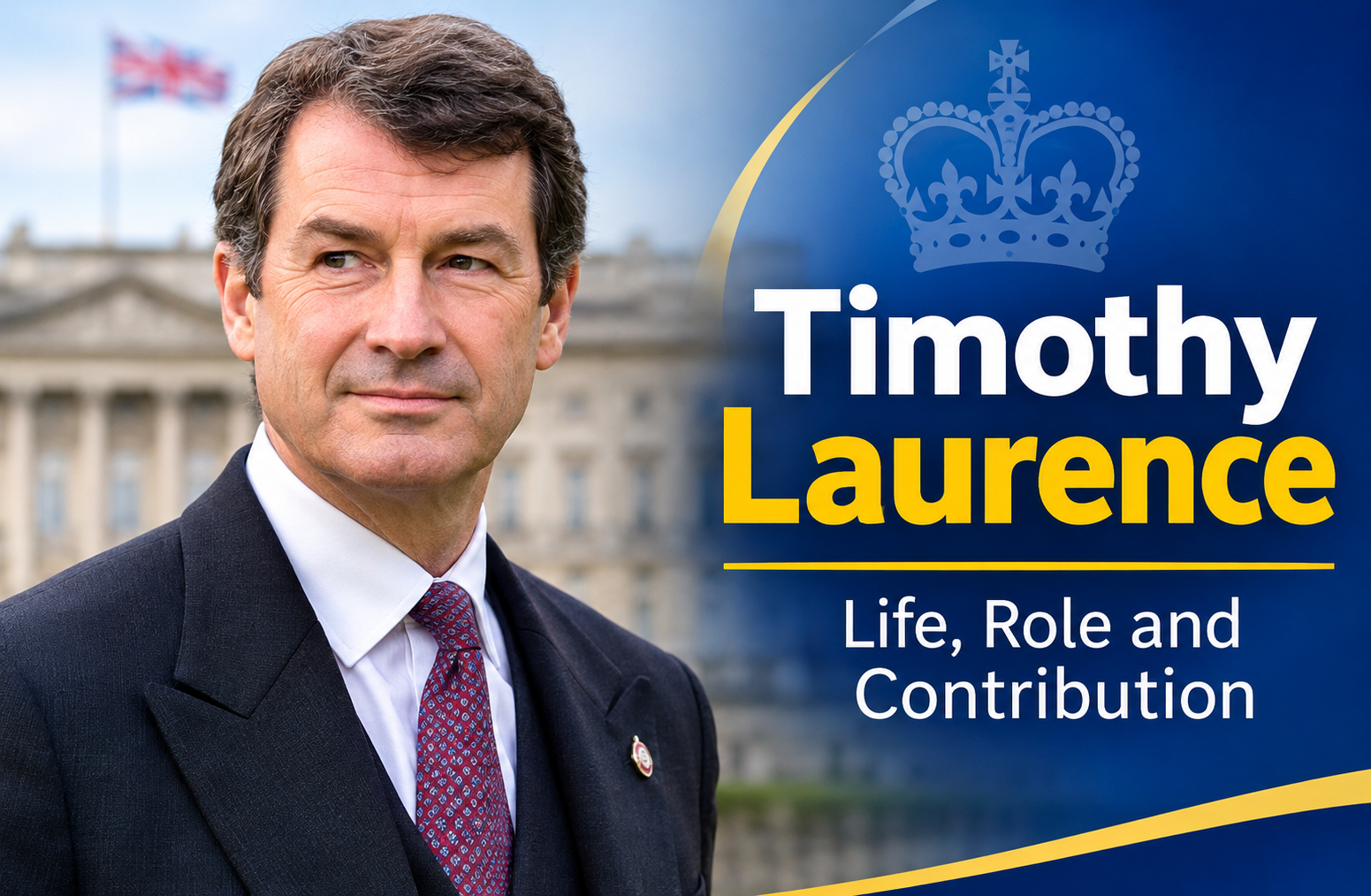
Timothy Laurence: Life, Career, Marriage, and Royal Role
Timothy Laurence is a retired senior Royal Navy officer best known as the husband of Princess Anne, the Princess Royal, and a respected member of the British royal family. Although he is connected to one of Britain’s most recognized royal figures, Timothy Laurence has built his own identity through decades of military service, professional leadership, and public responsibilities. His life combines naval experience, royal connections, and a preference for staying away from unnecessary public attention.
Many people search for Timothy Laurence because they want to understand who he is, how he met Princess Anne, what he did in the Royal Navy, and what role he plays in the royal family. Unlike some royal personalities who regularly appear in interviews and entertainment coverage, Laurence has maintained a relatively private public profile. This has made his background, career, and personal life especially interesting to royal watchers.
His story is not simply about marrying a princess. It is also about a long military career, professional discipline, and a relationship that developed during a period of major change in the British royal family. Understanding his background provides a clearer picture of the man behind the royal title and explains why he remains an important figure in Princess Anne’s life.
Who Is Timothy Laurence?
Timothy James Hamilton Laurence is a British retired naval officer who achieved the rank of Vice-Admiral in the Royal Navy. He was born on 1 March 1955 in Camberwell, South London, England.
He became widely recognized after marrying Princess Anne on 12 December 1992. However, his professional achievements began long before his marriage and were built through years of education, naval training, operational duties, and senior leadership.
His full name is Timothy James Hamilton Laurence. He is commonly referred to as Sir Timothy Laurence or Admiral Laurence.
Some of the most important facts about him include:
- Full name: Timothy James Hamilton Laurence
- Date of birth: 1 March 1955
- Birthplace: Camberwell, South London, England
- Nationality: British
- Profession: Retired Royal Navy officer
- Highest naval rank: Vice-Admiral
- Wife: Anne, Princess Royal
- Marriage date: 12 December 1992
- Education: University College, Durham
- Academic subject: Geography
- Military service: Royal Navy
- Known for: Naval leadership and his connection to the British royal family
These details explain why his biography attracts interest from people researching British royalty, military history, and the personal lives of royal family members.
Timothy Laurence: Early Life and Family Background
Timothy Laurence was born into a family with connections to naval life. His early environment helped introduce him to the values of discipline, responsibility, and professional service.
Growing up in South London, he experienced a relatively traditional British upbringing. His family background was connected to the maritime world, which later became an important part of his professional identity.
His Parents and Childhood
His father was Commander Guy Stewart Laurence, who had served in the Royal Navy before moving into civilian employment. His mother was Barbara Alison Laurence.
Having a father with naval experience meant that Timothy was familiar with the traditions and expectations associated with military service.
Although detailed information about his childhood is not widely available, his educational choices and later career suggest that he developed an interest in structured learning and public service at an early age.
It is important to distinguish between documented information and assumptions. There is no reason to invent dramatic childhood stories to explain his later success. His actual education and professional record provide a much stronger understanding of his development.
A Family Environment Connected to Service
Military families often develop a practical understanding of responsibility, commitment, and teamwork.
These qualities are especially important in naval careers because officers must work with people from different backgrounds, manage complex operations, and make decisions under pressure.
Laurence’s eventual progression through the Royal Navy suggests that he successfully adapted to these professional expectations.
His family background provides useful context, but his achievements should be understood through his own education and service rather than attributed entirely to his father’s career.
Education and Academic Background
Education played an important role in shaping Timothy Laurence’s professional future.
He attended New Beacon School before continuing his studies at Sevenoaks School in Kent.
His education prepared him for university-level study and helped establish the academic foundation required for a career involving leadership, analysis, and decision-making.
Studying Geography at Durham University
Laurence attended University College at the University of Durham, where he studied geography.
He received a naval scholarship, which connected his academic development with his future military career.
Geography may seem like an unusual subject for someone who eventually became a senior naval officer, but it has several practical applications in maritime operations.
The subject involves understanding:
- Physical landscapes and geographical environments.
- Countries, regions, and international boundaries.
- Human populations and settlement patterns.
- Environmental conditions and natural systems.
- Maps, spatial information, and geographical relationships.
- The connections between people, places, and global activity.
For a naval officer, geographical knowledge can be valuable when understanding international waters, maritime routes, strategic locations, and the relationship between geography and security.
It is reasonable to recognize the relevance of his academic background without claiming that his university subject alone determined his military success.
Why His Education Matters
Laurence’s educational journey demonstrates that senior military careers are not based exclusively on physical training.
They also require intellectual ability, communication, planning, and an understanding of wider international issues.
His university education provided an academic foundation that complemented the practical training he received through the Royal Navy.
Timothy Laurence’s Royal Navy Career
One of the most important parts of Timothy Laurence’s biography is his naval career.
He joined the Royal Navy in 1973 and spent nearly four decades in military service. During this period, he worked in different operational and administrative positions, gaining experience in both maritime activities and senior defence management.
His career eventually took him to the rank of Vice-Admiral, one of the senior ranks in the Royal Navy.
This achievement is important because it shows that his professional identity was established independently of his later royal connection.
Joining the Royal Navy in 1973
Laurence entered naval service in 1973 after beginning his academic and professional development.
The Royal Navy provides officers with extensive training in leadership, navigation, military operations, communication, and strategic planning.
Early-career officers generally move through different assignments to gain practical experience and understand how naval organizations operate.
Laurence followed this professional path and gradually progressed through the ranks.
His early service helped him develop the technical and leadership experience needed for more demanding responsibilities.
Serving on Royal Navy Ships
During his career, Laurence served on several Royal Navy vessels.
These included:
- HMS Boxer
- HMS Cumberland
- HMS Montrose
- HMS Cygnet
Each assignment contributed to his experience in maritime operations.
Serving aboard a naval vessel involves much more than spending time at sea. Officers must understand operational procedures, work with different departments, support the crew, and ensure that assigned duties are completed effectively.
The experience also requires adaptability because maritime conditions and operational requirements can change quickly.
His Service in Northern Ireland
An important detail in Laurence’s military record is his service connected to Northern Ireland.
In 1983, he was mentioned in despatches for distinguished service associated with his naval duties in the region.
This recognition is significant because it reflects official acknowledgment of his service.
His work involved naval patrol responsibilities during a period when security concerns required attention to maritime movements.
Rather than treating this recognition as a minor biographical detail, it provides insight into the operational responsibilities he handled before moving into more senior positions.
Progression Through Naval Ranks
Laurence steadily advanced through the Royal Navy’s rank structure.
His professional development involved increasing levels of responsibility, from early operational duties to leadership and strategic positions.
He eventually became a Vice-Admiral, demonstrating the extent of his experience within the service.
A senior naval rank requires a broad understanding of military operations, organizational management, and defence priorities.
His progression also shows why his biography deserves attention beyond its connection to the monarchy.
His Appointment as Equerry to Queen Elizabeth II
Another major turning point in Timothy Laurence’s life came when he was appointed as an equerry to Queen Elizabeth II.
He held this position from 1986 to 1989.
An equerry is an officer who assists a member of the royal family with official duties and related responsibilities.
The position provides an opportunity to work closely with the royal household while maintaining the standards and responsibilities associated with military service.
What Does an Equerry Do?
An equerry supports royal duties and helps with the practical organization of official engagements.
Depending on the appointment, responsibilities can include:
- Assisting with official schedules.
- Supporting royal engagements.
- Coordinating aspects of official visits.
- Helping with communication between royal staff.
- Providing practical assistance during public appearances.
- Supporting the organization of royal activities.
It is a position that requires professionalism, discretion, and strong organizational skills.
An equerry may be visible during certain public occasions, but much of the work takes place away from public attention.
How This Appointment Changed His Life
Serving Queen Elizabeth II brought Laurence into closer contact with the royal family.
It also created the circumstances in which he met Princess Anne.
At that time, he was already an established naval officer with his own professional responsibilities.
His royal appointment did not replace his military identity. Instead, it added a new dimension to his professional life.
This period became especially important because it eventually led to a relationship that would shape his personal life.
How Timothy Laurence Met Princess Anne
One of the most frequently searched aspects of Timothy Laurence’s life is his relationship with Princess Anne.
The two met while Laurence was serving as an equerry to Queen Elizabeth II.
Their connection developed during a period when Princess Anne was already an established public figure and had responsibilities within the royal family.
Princess Anne, whose official title is the Princess Royal, is the only daughter of Queen Elizabeth II and Prince Philip.
She had previously been married to Captain Mark Phillips.
The Beginning of Their Relationship
Laurence and Princess Anne developed a personal relationship during his period of royal service.
Their relationship attracted considerable public attention because Anne was a senior member of the royal family.
The circumstances were also complicated by the expectations surrounding royal marriages and public responsibilities.
However, the relationship eventually developed into a lasting marriage.
It is important to avoid treating every detail of their private relationship as established fact. Much of their personal life has remained outside public discussion.
The documented timeline, however, provides a clear understanding of how their relationship developed.
Public Attention and Media Interest
The relationship received significant media coverage because it involved the Princess Royal and an officer serving the Queen.
Royal relationships are often treated as matters of public interest, especially when they involve changes to established family arrangements.
Despite this attention, Laurence did not develop a celebrity-style public identity.
He largely continued to maintain a professional and reserved approach to public life.
This difference between public attention and personal privacy has remained a defining feature of his profile.
Marriage to Princess Anne in 1992
Princess Anne’s ‘stolen letters’ led to marry Sir Timothy Laurence
Timothy Laurence married Princess Anne on 12 December 1992.
The wedding took place at Crathie Kirk, a Church of Scotland church near Balmoral Castle in Scotland.
The marriage was an important moment in both their personal lives and the wider history of the British royal family.
Unlike many major royal weddings, the ceremony was relatively private.
Why Did They Marry in Scotland?
The choice of Scotland was connected to the Church of Scotland and the circumstances surrounding Princess Anne’s previous marriage.
The Princess Royal had divorced Captain Mark Phillips earlier in 1992.
The Church of England had restrictions concerning the remarriage of divorced people when a former spouse was still living.
The Church of Scotland offered a different religious framework, allowing the couple to marry at Crathie Kirk.
This explains why their wedding took place in Scotland rather than at a major London royal venue.
A Different Kind of Royal Wedding
The ceremony reflected a more private approach to marriage.
It was not organized as a large national celebration in the style of some other royal weddings.
Instead, it focused on the couple’s personal commitment.
Their marriage also marked a new chapter in Princess Anne’s life.
For Laurence, it meant becoming part of the royal family while continuing to maintain his own professional background and identity.
Their Marriage Over the Years
The couple have maintained a relatively private relationship compared with some other high-profile royal couples.
They occasionally appear together at public events, official visits, commemorations, and royal engagements.
Laurence has also accompanied his wife on international visits.
Their public appearances suggest a relationship based on mutual support and shared responsibilities.
However, the details of their everyday married life remain private, and claims about their personal routines should not be presented as established facts without reliable evidence.
Timothy Laurence and His Role in the British Royal Family
Marriage to Princess Anne gave Timothy Laurence a permanent connection to the British royal family.
However, his position is different from that of a working royal who carries out official duties on behalf of the monarch as a full-time public representative.
He has maintained an independent identity as a retired naval officer while supporting his wife’s public responsibilities.
Is Timothy Laurence a Prince?
No. Timothy Laurence is not a prince.
He is known as Vice-Admiral Sir Timothy Laurence, reflecting his naval rank and honors.
His marriage to Princess Anne did not automatically make him a prince or give him the title of Duke.
This distinction is important because royal titles and styles follow specific traditions and rules.
Princess Anne is the Princess Royal, while her husband retains his own established name and professional honors.
Does He Carry Out Royal Duties?
Yes. Laurence regularly accompanies Princess Anne at selected public and official engagements.
His involvement can include:
- Attending official receptions.
- Accompanying the Princess Royal on overseas visits.
- Supporting charitable and cultural events.
- Participating in commemorations.
- Attending military and naval occasions.
- Representing organizations with which he is associated.
These appearances demonstrate his continued involvement in public life.
The important distinction is that supporting royal engagements does not mean every appearance is an official royal duty performed on behalf of the King.
Some activities are connected to his own professional and charitable responsibilities.
His Relationship With King Charles III
Timothy Laurence is the brother-in-law of King Charles III through his marriage to Princess Anne.
He has appeared alongside other members of the royal family at official events and national occasions.
His long-standing connection to the family has allowed him to participate in important public gatherings while maintaining a relatively low profile.
He is not generally associated with public disagreements or attempts to gain personal attention through royal connections.
Instead, his public image is closely connected to professional service and support for the Princess Royal.
His Career After Reaching Senior Naval Rank
Laurence’s professional development did not stop with his royal marriage.
He continued serving in the Royal Navy and eventually moved into senior defence management.
One of the most notable positions he held was Chief Executive of Defence Estates.
What Was Defence Estates?
Defence Estates was responsible for managing property and estate-related matters connected to the UK’s Ministry of Defence.
The organization dealt with a large and complex portfolio of military land, buildings, facilities, and infrastructure.
Managing defence property requires a combination of financial planning, operational knowledge, environmental awareness, and long-term strategy.
The role was particularly important because military facilities must support the changing needs of the armed forces.
Laurence’s appointment demonstrated that his professional abilities extended beyond shipboard service.
Leadership and Administrative Responsibilities
Senior defence roles involve a different type of responsibility from operational naval assignments.
They require leaders to manage people, budgets, facilities, and organizational priorities.
These responsibilities may include:
- Long-term property planning.
- Managing complex government assets.
- Supporting military infrastructure.
- Working with different government departments.
- Overseeing administrative systems.
- Ensuring that facilities meet operational requirements.
Laurence’s experience in both military and administrative environments provided a broad professional background.
His career therefore offers an interesting example of how military officers can transfer their experience into strategic public-sector leadership.
When Did Timothy Laurence Retire From the Royal Navy?
Timothy Laurence retired from the Royal Navy in 2010 after a career spanning nearly four decades.
His retirement marked the end of an important professional chapter.
By this stage, he had reached the rank of Vice-Admiral and held senior positions involving military leadership and defence management.
Retirement did not mean that he completely withdrew from professional or public responsibilities.
Instead, he continued contributing to different organizations and areas of public life.
His later activities have included heritage, property management, charitable work, and international remembrance.
This transition is an important part of his biography because it demonstrates how experienced military professionals can continue serving society after leaving active military employment.
Timothy Laurence’s Honors, Awards, and Recognition
Throughout his career, Laurence received several honors and professional distinctions.
These recognitions reflect his military service, royal connections, and contributions to public responsibilities.
Understanding the different honors also helps explain why his full official style is longer than his everyday name.
Companion of the Order of the Bath
The Order of the Bath is one of the UK’s senior orders of chivalry.
It recognizes distinguished service, particularly in military and civil contexts.
Laurence received recognition through this order during his naval career.
The letters CB are associated with his status as a Companion of the Order of the Bath.
Knight Grand Cross of the Royal Victorian Order
The Royal Victorian Order recognizes personal service to the monarch and the royal family.
Laurence was appointed a Knight Grand Cross of the Royal Victorian Order in 2025.
This is a senior level within the order and represents significant recognition.
It is particularly relevant to his long-standing connection with the royal household and his service in royal-related responsibilities.
Mentioned in Despatches
Another notable distinction in his career is being mentioned in despatches.
This recognition relates to his distinguished service in Northern Ireland.
It provides evidence of his contribution during a period when naval security responsibilities were important.
Other Professional Recognition
His public and charitable work has also contributed to his professional reputation.
However, it is important to distinguish between official military honors, royal honors, and appointments to organizational positions.
They represent different forms of recognition and should not be treated as interchangeable.
His Work With the Commonwealth War Graves Commission
An important part of Laurence’s later public life has been his involvement with the Commonwealth War Graves Commission.
The organization is responsible for commemorating members of Commonwealth armed forces who died during the two World Wars.
Its work includes maintaining graves, memorials, and records across many countries.
Why the Organization Matters
The Commonwealth War Graves Commission has an important historical and humanitarian purpose.
Its work ensures that the service and sacrifice of military personnel are remembered.
The organization maintains commemorative sites in different parts of the world, including locations far from the countries where the fallen soldiers originally lived.
This international responsibility requires cooperation with governments, local communities, historians, and heritage organizations.
Laurence’s Involvement
Laurence has held senior responsibilities within the commission, including serving as Vice-Chairman.
His involvement reflects a continued interest in military remembrance and Commonwealth connections.
This work is particularly relevant to his background as a former naval officer.
His military experience provides a useful understanding of the traditions, responsibilities, and historical importance of armed forces service.
His involvement also demonstrates that his professional interests continued beyond the Royal Navy.
His Leadership at English Heritage
Another significant area of Timothy Laurence’s public work has been heritage conservation.
He served as Chairman of the English Heritage Trust from 2015 to 2022.
English Heritage is associated with the care and presentation of important historical places in England.
Its work helps preserve buildings, monuments, landscapes, and archaeological sites for future generations.
What Does English Heritage Do?
Heritage organizations have responsibilities that extend beyond protecting old buildings.
Their work can involve:
- Maintaining historic properties.
- Protecting important archaeological sites.
- Preserving cultural heritage.
- Supporting educational activities.
- Helping visitors understand British history.
- Managing conservation projects.
- Encouraging public engagement with historic places.
These activities require long-term planning and responsible financial management.
Why His Appointment Was Important
Laurence’s appointment reflected the trust placed in his leadership and management experience.
Although his professional background was primarily naval, his later work demonstrated an ability to contribute to a different public-service sector.
Managing heritage organizations requires careful decision-making because historic sites must be protected while remaining accessible to visitors.
There are also financial and environmental challenges associated with preserving old structures.
His experience in large organizations and public administration was relevant to these responsibilities.
Timothy Laurence and the Over-Seas League
Laurence’s public involvement has also extended to cultural and international organizations.
In 2026, the Royal Over-Seas League introduced him as its new Vice-Patron.
The organization promotes international friendship, cultural exchange, and connections between people across the Commonwealth and beyond.
This appointment represents another continuation of his interest in international cooperation.
Understanding the Organization’s Purpose
The Royal Over-Seas League provides a platform for people with shared interests in arts, culture, education, and international relationships.
Its work includes supporting cultural activities and creating opportunities for connections between different communities.
The organization’s activities reflect a broader understanding of public service.
International cooperation is not limited to governments and military institutions. Cultural organizations also play an important role in building relationships.
What His Appointment Represents
His appointment as Vice-Patron connects his experience in public service with the organization’s cultural mission.
It also reflects the continued development of his public responsibilities after retiring from the Royal Navy.
Rather than focusing exclusively on his royal connection, this appointment provides another example of his independent involvement in public life.
What Is Timothy Laurence Doing Now?
Timothy Laurence continues to appear in public life through selected royal engagements and organizational responsibilities.
Although he retired from active naval service in 2010, he has remained involved in activities connected to heritage, international cooperation, and public service.
His current public profile is therefore broader than that of a retired military officer.
Accompanying Princess Anne
One of his most visible responsibilities is accompanying Princess Anne at selected events.
These engagements can take place in the United Kingdom or overseas.
The couple have appeared together at receptions, official openings, commemorations, and international visits.
His presence provides personal support while also reflecting his own familiarity with public and diplomatic environments.
Supporting Cultural and Heritage Work
Laurence’s previous leadership at English Heritage and his association with cultural organizations demonstrate his continued interest in preserving historical institutions.
Heritage work is an important area because it connects present generations with their history.
It also helps ensure that historical buildings, memorials, and cultural resources remain accessible.
Maintaining a Private Lifestyle
Despite his public responsibilities, Laurence generally avoids unnecessary media attention.
He does not regularly seek interviews or create a public profile through entertainment and celebrity coverage.
This approach is consistent with his professional background.
Naval officers and senior public servants often operate in environments where discretion and responsibility are important.
However, it would be inaccurate to assume that his private preferences or daily routines are fully known.
Public information provides a picture of his official work, not a complete account of his personal life.
Timothy Laurence’s Personality and Public Image
Timothy Laurence is often described in media coverage as reserved, professional, and supportive.
These descriptions are based largely on his public appearances and career history.
It is important to separate observable public behavior from assumptions about someone’s private personality.
His long career in the Royal Navy provides some context for the professional image he maintains.
A Preference for Privacy
Unlike several members of the royal family, Laurence does not regularly participate in public interviews or personal publicity.
His public appearances are usually connected to official responsibilities or events.
This limited media presence has helped preserve a distinction between his public role and private life.
A Professional Approach to Public Responsibilities
His career involved military operations, leadership, and administrative management.
These positions require reliability and an understanding of organizational responsibilities.
His later work in heritage and international organizations also demonstrates that his professional activities have not been limited to one institution.
Why People Find Him Interesting
There are several reasons people continue searching for information about him:
- His marriage to Princess Anne.
- His nearly four-decade naval career.
- His relationship with Queen Elizabeth II through his equerry appointment.
- His senior military rank.
- His involvement in heritage and charitable organizations.
- His relatively private approach to public life.
Together, these details make him an interesting figure in modern British royal history.
Timothy Laurence’s Net Worth and Financial Background
Searches about Timothy Laurence’s net worth are common, particularly because of his marriage to a senior member of the royal family.
However, there is no reliable, publicly verified figure that establishes his personal net worth.
Some websites publish estimated amounts, but these figures should not be treated as confirmed financial information.
What Is Known About His Sources of Income?
His professional career included several decades of service in the Royal Navy.
As a senior naval officer, he would have received military remuneration and may have qualified for retirement benefits under the applicable service arrangements.
His later public and organizational positions have also formed part of his professional life.
However, the exact financial details of his military pension, personal investments, property interests, and other assets are not publicly established in a way that supports a precise net worth calculation.
Does He Share Princess Anne’s Wealth?
Marriage does not automatically make two people’s personal assets identical.
Princess Anne and Timothy Laurence are separate individuals with their own professional histories and financial circumstances.
Public estimates of royal wealth often combine different types of assets, including personal property, inherited assets, and institutional resources.
These categories should not be confused.
A responsible biography should avoid presenting an unsupported net worth figure simply because readers expect one.
Timothy Laurence’s Children and Family Life
Another common question concerns whether Timothy Laurence has children with Princess Anne.
The couple do not have children together.
Princess Anne has two children from her first marriage to Captain Mark Phillips:
- Peter Phillips, born in 1977.
- Zara Tindall, born in 1981.
Laurence became their stepfather after marrying their mother in 1992.
His Relationship With Peter Phillips and Zara Tindall
Peter and Zara were already children when Laurence married Princess Anne.
They have maintained their own adult lives and public identities.
Zara Tindall is known for her achievements in equestrian sport, while Peter Phillips has pursued a professional career outside the traditional role of a working royal.
Laurence’s relationship with them is generally kept private.
There is limited reliable public information about the details of their family interactions, so it would be inappropriate to invent personal stories.
Does Timothy Laurence Have Grandchildren?
Through Princess Anne’s children, Laurence is connected to her grandchildren.
Princess Anne has five grandchildren:
- Savannah Phillips.
- Isla Phillips.
- Mia Tindall.
- Lena Tindall.
- Lucas Tindall.
These family relationships form part of his connection to the wider royal family.
However, he is not their biological grandfather.
This distinction helps readers understand the family structure accurately.
Timothy Laurence and Princess Anne: Why Their Relationship Is Different
The marriage between Timothy Laurence and Princess Anne is interesting because both individuals have established professional identities.
Princess Anne is known for her extensive public service, charitable involvement, and international responsibilities.
Laurence developed his own career through the Royal Navy and later public organizations.
Their relationship therefore brings together two people with experience in structured institutions and public responsibilities.
Shared Understanding of Public Service
Both have spent significant parts of their lives connected to service.
Princess Anne has undertaken extensive royal and charitable engagements.
Laurence served in the armed forces and later contributed to heritage and international organizations.
Their professional backgrounds offer a shared understanding of duty and responsibility.
Supporting Each Other Without Seeking Attention
Laurence frequently accompanies Princess Anne, but he does not appear to compete for public recognition.
This is one of the reasons his role is often described as understated.
His public presence is generally supportive rather than attention-seeking.
A Marriage That Has Lasted More Than Three Decades
The couple married in December 1992.
Their marriage has continued through major changes in the British monarchy, including the deaths of Queen Elizabeth II and Prince Philip and the accession of King Charles III.
They have also continued appearing together at selected public engagements.
The length of their marriage is an important part of their shared history, although the private reasons behind its success belong to the couple themselves.
Important Facts That People Often Get Wrong About Timothy Laurence
Because Laurence is not as publicly visible as some other royal family members, inaccurate information can circulate online.
Understanding a few important distinctions makes it easier to separate verified facts from speculation.
He Is Not Princess Anne’s First Husband
Princess Anne was previously married to Captain Mark Phillips.
Their marriage took place in 1973 and was later dissolved in 1992.
She married Timothy Laurence in December of that year.
He Is Not a Prince
Laurence does not hold the title of prince.
His recognized style is Vice-Admiral Sir Timothy Laurence.
He Was a Naval Officer Before Becoming a Royal Husband
His military career began in 1973.
His professional achievements should not be described as consequences of his marriage to Princess Anne.
He had already developed a substantial naval career before their wedding.
He Did Not Become King Through Marriage
Marriage to the Princess Royal does not give Laurence a position in the line of succession to the British throne.
He is a member of the wider royal family through marriage, but that does not make him a sovereign or heir.
His Exact Net Worth Is Not Publicly Confirmed
Online estimates should be treated carefully.
There is no dependable official figure that establishes his personal wealth.
Why Timothy Laurence’s Story Matters
Timothy Laurence’s biography offers an interesting perspective on the relationship between military service and the modern British monarchy.
His life demonstrates that someone can become connected to the royal family without abandoning an established professional identity.
He spent decades building a career in the Royal Navy, including operational service, senior leadership, and defence management.
He later contributed to heritage preservation and international organizations.
His marriage to Princess Anne brought additional public attention, but his professional record remains an important part of his story.
For readers interested in British history, his biography provides useful information about the Royal Navy, royal household appointments, and the responsibilities associated with public service.
It also highlights the difference between being a royal by birth, joining the family through marriage, and carrying out official responsibilities.
Understanding these distinctions makes his story much more meaningful than simply identifying him as Princess Anne’s husband.
Frequently Asked Questions About Timothy Laurence
1. Who is Timothy Laurence?
Timothy Laurence is a retired British Royal Navy officer and the husband of Princess Anne, the Princess Royal. He reached the rank of Vice-Admiral and has also held important positions in heritage and public-service organizations.
2. How old is Timothy Laurence?
Timothy Laurence was born on 1 March 1955. As of November 2026, he is 71 years old.
3. When did Timothy Laurence marry Princess Anne?
He married Princess Anne on 12 December 1992 at Crathie Kirk near Balmoral Castle in Scotland.
4. What was Timothy Laurence’s military rank?
He reached the rank of Vice-Admiral in the Royal Navy. He served for nearly four decades and held several operational and senior administrative positions.
5. Does Timothy Laurence have children?
No, Timothy Laurence and Princess Anne do not have biological children together. Princess Anne has two children from her previous marriage, Peter Phillips and Zara Tindall.
6. Is Timothy Laurence a prince?
No. He is not a prince. He is known as Vice-Admiral Sir Timothy Laurence and became part of the British royal family through his marriage to Princess Anne.
7. What is Timothy Laurence’s net worth?
His exact personal net worth has not been officially disclosed. Online estimates are speculative, and there is insufficient verified financial information to establish a reliable figure.
8. What does Timothy Laurence do now?
He continues to participate in selected public engagements and organizational activities. He also accompanies Princess Anne at certain royal events and maintains connections with cultural and charitable organizations.
9. How did Timothy Laurence meet Princess Anne?
They met while Laurence was serving as an equerry to Queen Elizabeth II between 1986 and 1989. Their relationship later developed into marriage in 1992.
10. Is Timothy Laurence still in the Royal Navy?
No. He retired from active Royal Navy service in 2010 after a long military career. He retains recognition for his former rank and continues to participate in public life.
Conclusion
Timothy Laurence is much more than the husband of Princess Anne. His life reflects a combination of military achievement, professional leadership, public responsibility, and a long-standing connection to the British royal family.
From his early education in South London to his studies at Durham University, his journey demonstrates the importance of academic preparation and professional development. His nearly four-decade career in the Royal Navy allowed him to progress to the rank of Vice-Admiral and take on important responsibilities within the British defence system.
His appointment as an equerry to Queen Elizabeth II introduced him to the royal household and brought him into contact with Princess Anne. Their marriage in 1992 established a lasting personal connection that has continued for more than three decades.
After retiring from the Navy, Laurence remained involved in public life through heritage conservation, international remembrance, and cultural organizations. His work with English Heritage, the Commonwealth War Graves Commission, and the Royal Over-Seas League demonstrates that his contributions extend beyond military service.
What makes his biography particularly interesting is the balance between his independent professional achievements and his connection to the monarchy. He has maintained a relatively private public profile while continuing to support Princess Anne and participate in meaningful public activities.
Ultimately, his story provides a valuable example of a life shaped by service, leadership, and personal commitment. Understanding his background gives readers a more complete picture of one of the less publicly visible but significant members of the wider British royal family.