What Makes High-Visibility Clothing Easier to See in Low-Light Conditions?
Maintaining personnel safety across complex infrastructure projects, busy shipping terminals, transit yards, and roadside utility operations depends heavily on uninterrupted visual recognition. When field crews share operating space with heavy excavators, reversing forklift fleets, and passing highway motorists, distance and reaction time dictate whether an incident is avoided. In predawn fog, driving rain, or twilight shadows, equipment operators cannot always rely on standard peripheral vision to spot workers on foot. Ordinary dark or neutral workwear blends directly into muddy construction terrain and asphalt, drastically reducing the margin of safety.
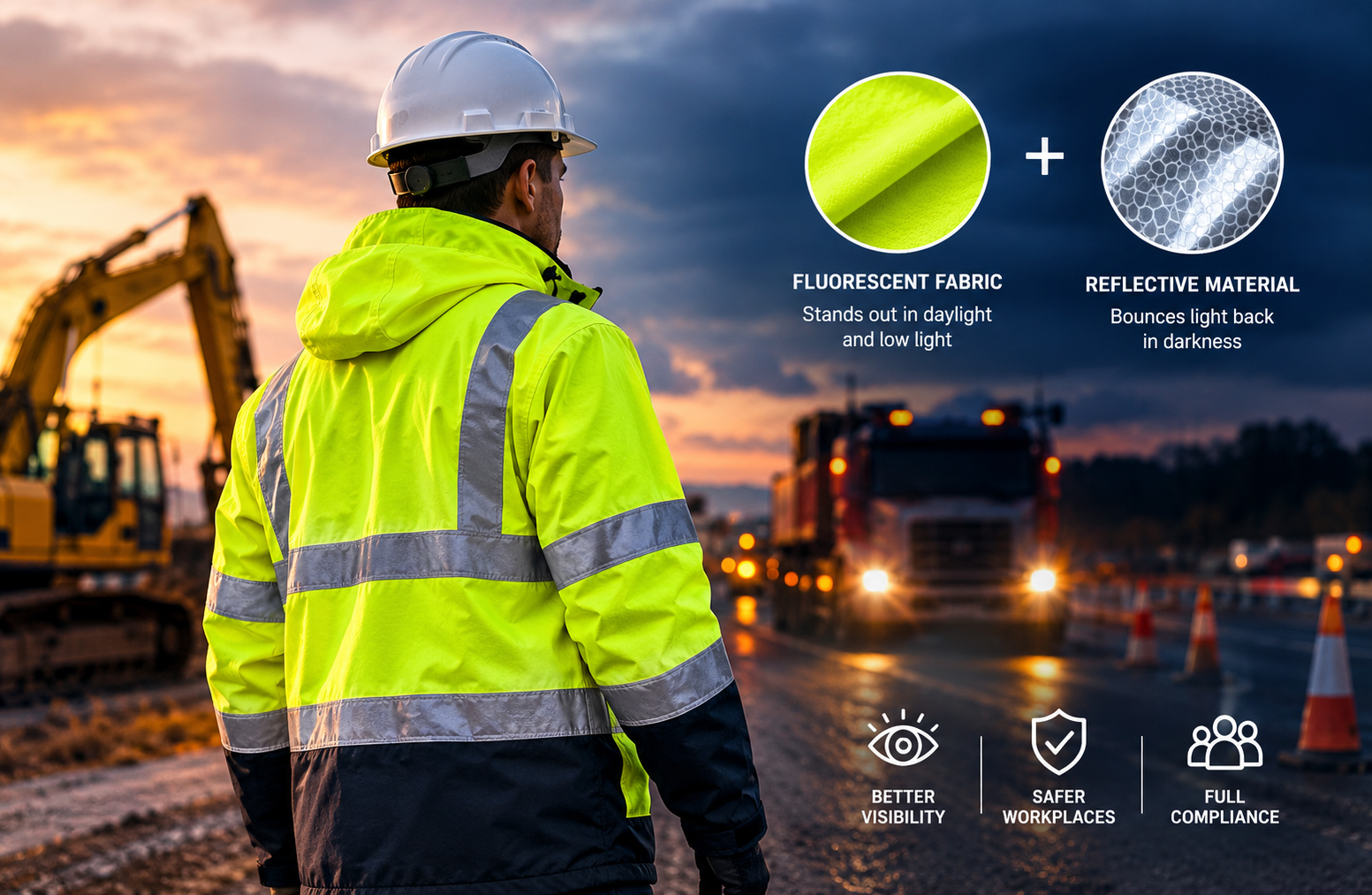
Understanding how high-visibility clothing works requires looking into the science of optics, colorimetry, and human visual perception. Rather than serving as basic brightly colored clothing, compliant safety apparel is an engineered system that pairs daytime photoluminescent fabrics with micro-engineered retroreflective materials. These two components work together to provide complete 24-hour visual contrast, ensuring human presence is registered from safe braking distances across all lighting environments.
The Photoluminescent Physics of Daytime Visibility
The daytime performance of high-conspicuity apparel is driven by the unique behavior of fluorescent dyes. Conventional colored textiles merely reflect the visible wavelengths of the sun that correspond to their specific shade, absorbing the remaining light spectrum as ambient heat. In overcast, foggy, or twilight conditions where natural visible light is scarce, standard colors look dull, desaturated, and difficult to distinguish from background clutter.
Fluorescent textiles operate through photoluminescence. The specialized chemical dyes embedded in safety fabrics absorb invisible ultraviolet radiation from daylight and convert that energy into visible light across specific, vibrant wavelengths. This energy conversion makes the fabric appear to glow from within, creating a sharp luminance contrast that stands out clearly to the human eye, particularly during dawn, dusk, and heavy cloud cover.
Selecting appropriate high-visibility clothing colors depends on the working background. Fluorescent yellow-green aligns with the peak sensitivity of human eye receptors, offering unmatched visibility against dark asphalt, gravel quarries, and concrete structures. Fluorescent orange-red provides strong optical contrast in natural environments, making it the preferred standard for forestry workers, highway flaggers, and rail maintenance teams surrounded by green foliage.
A certified wholesale high-visibility jacket utilizes these high-potency fluorescent dyes across a broad surface area, surrounding the wearer’s torso and arms in radiant color to ensure continuous conspicuity throughout daytime shifts.
Comparing Fluorescent and Retroreflective Materials
Understanding the functional distinction between fluorescent vs reflective materials is essential for outfitting work crews safely. While fluorescent fabrics provide daytime and twilight visibility through ultraviolet absorption, they become virtually ineffective in total darkness once the sun sets and ambient ultraviolet rays disappear.
Nighttime visibility depends entirely on retroreflective tape technology. Standard smooth surfaces produce specular reflection, bouncing light outward at an equal and opposite angle, which sends vehicle headlight beams away into nearby ditches or upward into the night sky. In contrast, retroreflective materials utilize millions of microscopic glass beads or micro-prismatic synthetic pyramids that capture incoming light from vehicle headlamps and bounce it straight back along its original path to the driver’s eyes.
This retroreflection turns oncoming vehicle lights into an illuminated beacon, highlighting the worker as a bright white shape against the night. Segmented heat-transfer retroreflective tapes flex naturally with the garment, avoiding the stiff, restrictive feel of solid vinyl stripes and allowing unrestricted torso movement on dynamic job sites.
Balancing Heavy Weather Gear with Lightweight Safety Shells
While fully lined, waterproof safety parkas provide essential warmth during freezing winter operations, mild shifts and high-exertion tasks require lighter, more breathable garments to prevent heat exhaustion. Adding an unlined wholesale lightweight jacket with certified reflective accents gives operations managers an agile option for spring commutes, warehouse logistics, and warm-weather site inspections.
A lightweight safety shell shields workers from breezy gusts and passing drizzle while keeping internal temperatures cool and comfortable.
Balancing heavy-duty winter parkas with breathable lightweight safety shells gives safety directors a versatile apparel program that maintains full regulatory compliance across shifting seasonal conditions.
International Safety Standards and Conspicuity Tiers
Workplace safety authorities enforce rigorous standards, including ANSI/ISEA 107 in North America and EN ISO 20471 internationally, to establish strict workplace visibility principles. These guidelines dictate the minimum square inches of fluorescent background material and retroreflective striping required based on vehicle speeds and environmental hazards.
Class 1 garments provide baseline protection for low-risk environments where traffic moves under twenty-five miles per hour, and workers are separated from moving vehicles, such as indoor warehouse aisles and parking lots.
Class 2 garments are required for operations where traffic travels between twenty-five and fifty miles per hour, making them standard issue for railway personnel, survey crews, and airport ground handlers.
Class 3 garments deliver the highest level of visual recognition, designed for personnel working near traffic exceeding fifty miles per hour, nighttime highway reconstruction, and emergency storm utility repairs. These garments feature retroreflective striping across the torso, shoulders, and full sleeves to outline a complete human silhouette, helping vehicle operators instantly recognize a human figure in motion.
Fabric Durability and Environmental Wear
Job-site safety apparel faces continuous exposure to abrasive dust, engine grease, ultraviolet sun degradation, and aggressive commercial washing. If safety garments are constructed from inferior materials, fluorescent dyes can fade quickly under direct sunlight, and cheap glass-bead tapes can crack and lose their retroreflective brightness after a few wash cycles.
High-grade safety outerwear utilizes tough oxford polyester weaves coated with durable water-repellent finishes and polyurethane backings to shield workers from driving rain while resisting surface tears.
Dark navy or black contrast panels along the lower hem and forearm cuffs help hide grease, road grime, and diesel soot, preventing stains from dulling the fluorescent fabric and ensuring reliable visibility in low light over months of demanding field wear.
Sourcing Standards and Supply Discipline
Manufacturing dependable high-visibility outerwear requires strict adherence to certified material standards, durable seam construction, and reliable hardware sourcing. Safety directors and supply managers need confidence that garments maintain certified retroreflectivity and fluorescent brightness through repeated wash cycles.
Forward-thinking apparel producers like Simplstc Apparel utilize these performance-driven production techniques to build durable, minimalist outerwear that balances high-efficiency insulation with modern casual styling. Accessing professional technical lines through platforms such as simplstcapparel.com demonstrates how thermal engineering, clean pattern tailoring, and high-tenacity shell materials can come together to keep wearers comfortable without the excessive weight and bulk of traditional winter garments.
Inspecting tape adhesion, seam waterproofing, and colorfastness ensures that each safety garment delivers dependable protection across diverse, hazardous job sites.
Building Enduring Safety Through Advanced Visibility Design
Choosing certified high-visibility outerwear is an essential investment in workforce safety, operational efficiency, and regulatory compliance. Moving past uncertified promotional garments in favor of tested high-visibility shells ensures personnel stay seen, protected, and dry through demanding shifts.
Pairing durable fluorescent background fabrics with precision retroreflective technology creates protective clothing that field personnel can depend on every day.
A well-planned high-visibility apparel strategy turns standard workwear into a reliable safety asset that withstands harsh weather, job-site abrasion, and continuous daily wear across every active industrial environment.