Delta Fitness Authority: Complete Guide to Fitness Equipment and Solutions
Delta Fitness Authority is a name that can be confusing when you first encounter it. Some people assume it refers to a conventional gym, while others search for it because they are interested in fitness equipment, commercial gym development, or wellness solutions. In reality, the name has been associated with Delta Health & Fitness and Delta Marketing in Saudi Arabia, with the business operating in the fitness equipment and services sector rather than functioning simply as a traditional membership gym. (rezagroup.com)
That distinction matters. If you are considering buying exercise equipment, planning a home gym, developing a hotel fitness center, upgrading a commercial gym, or simply trying to understand what this company actually does, a basic description is not enough. You need to know how the business fits into the wider fitness market, what types of equipment and services are associated with it, who it is designed to serve, and what you should evaluate before making a purchase.
This guide takes a practical look at the subject without treating the name as a fitness buzzword. It focuses on what can be verified, where confusion comes from, what the business model means for customers, and how buyers can make better decisions.
What Is Delta Fitness Authority?
Delta Fitness Authority is associated with the fitness division of Delta Marketing, which is part of the Alireza Group in Saudi Arabia. According to the group’s own company information, Delta Health & Fitness began its fitness activities in 1992 with Life Fitness and developed into a distributor of international fitness manufacturers while also providing services related to fitness solutions. (rezagroup.com)
The business is therefore better understood as a fitness equipment and solutions provider than as a conventional gym.
This is one of the most important points for anyone searching the name.
A normal gym primarily provides:
- Memberships
- Training space
- Exercise machines
- Group classes
- Personal training
- Locker and changing facilities
A fitness equipment and solutions provider has a different role. It may supply the machines and infrastructure that a gym, hotel, residential development, company, school, or other organization needs to create a fitness facility.
That makes the business model more closely connected to the infrastructure behind fitness than to the membership model of a typical neighborhood gym.
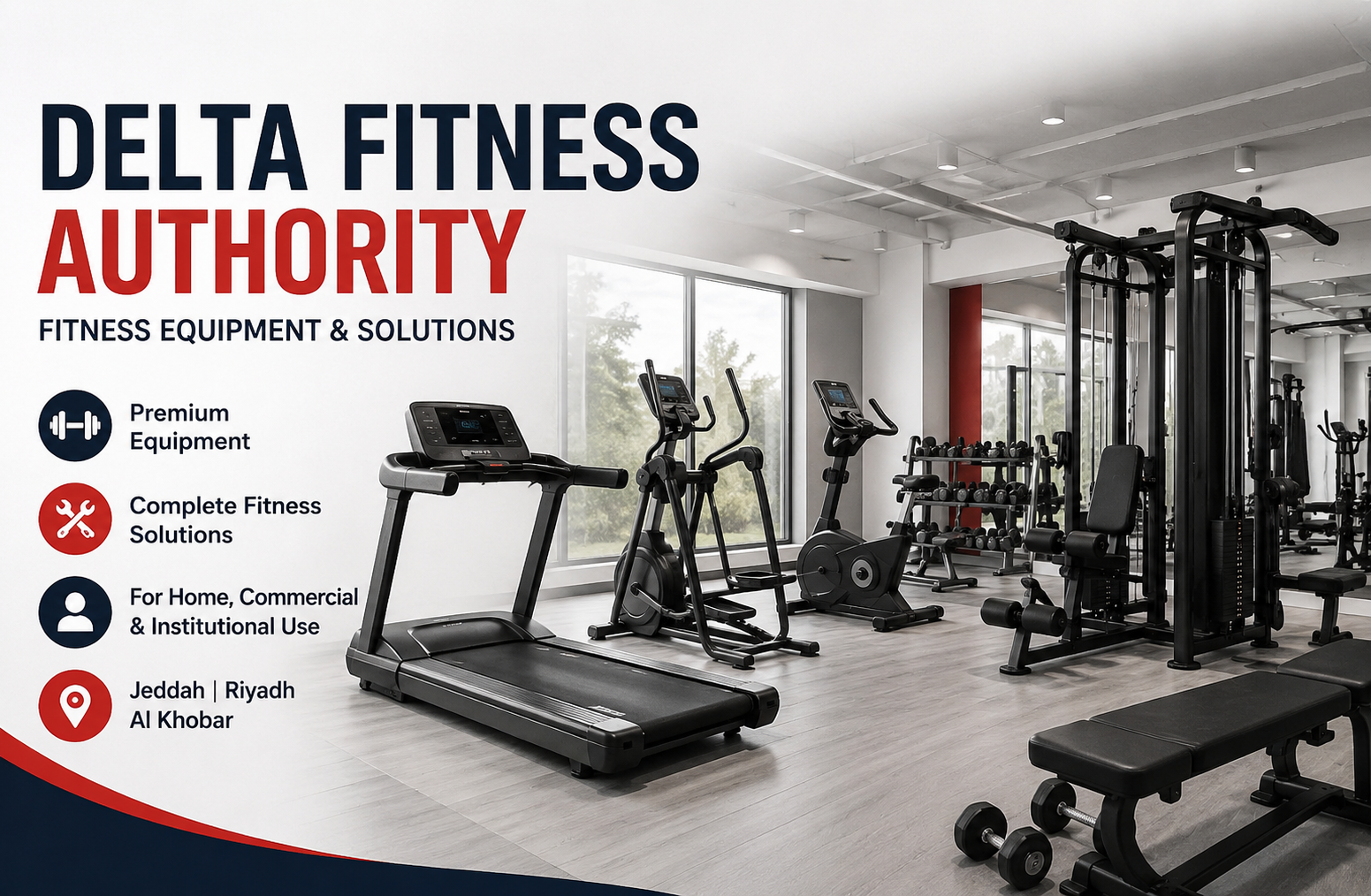
The official Alireza Group information identifies Delta Fitness Authority stores in Jeddah, Riyadh, and Al Khobar and lists a range of international fitness equipment brands associated with Delta Health & Fitness. (rezagroup.com)
Delta Fitness Authority: What Does It Actually Do?
The easiest way to understand the company is to look at the different problems it can help solve.
A person building a home gym might only need one treadmill and a few accessories. A hotel, by contrast, may need dozens of machines, flooring, layout planning, installation, staff support, and ongoing maintenance.
Those are completely different requirements.
A company operating in the fitness solutions sector can sit between the equipment manufacturer and the final customer, helping determine what equipment is appropriate and how it should be used within a larger fitness environment.
According to information published by the Alireza Group, Delta Health & Fitness provides equipment along with services such as staff training, flooring, equipment layout, finance, and leasing. (rezagroup.com)
That makes the business relevant to several types of customers.
Home Fitness Buyers
A home user may be looking for:
- A treadmill
- An exercise bike
- A rowing machine
- Strength equipment
- Free weights
- Functional training equipment
- Pilates equipment
- Recovery products
- Fitness accessories
For this type of customer, the most important question is not simply whether a machine looks impressive.
The better question is whether the equipment fits the person’s available space, training goals, budget, expected frequency of use, and maintenance requirements.
Commercial Gym Owners
Commercial gyms have very different needs.
Equipment in a commercial facility can be used hundreds of times more frequently than equipment in a private home. That means durability, warranty coverage, replacement parts, maintenance response, user safety, and service availability become much more important.
A gym owner should therefore evaluate the entire ownership experience rather than choosing equipment based only on the purchase price.
Hotels and Hospitality Businesses
Hotel gyms have another set of requirements.
Guests usually expect equipment that is easy to understand, visually appealing, reliable, and appropriate for different fitness levels. A hotel may not need an enormous selection, but the equipment it provides needs to cover common training needs without making the room feel crowded.
Layout becomes especially important.
A treadmill placed too close to another machine can make a room uncomfortable. Poorly planned strength equipment can create traffic problems. Insufficient storage can make the facility look untidy.
This is why fitness facility planning can be just as important as the machines themselves.
Corporate and Institutional Facilities
Companies, schools, residential developments, and other organizations can also require fitness spaces.
Their priorities may include:
- Safety
- Durability
- Ease of maintenance
- Space efficiency
- User variety
- Staff support
- Long-term operating costs
A facility used by a wide range of people cannot be planned in exactly the same way as a specialized training center.
The Business Background Behind the Name
Understanding the company structure helps explain why the name appears in different contexts.
Delta Marketing is part of the Alireza Group. The company’s history includes activities outside fitness, while its sports and leisure operations developed into areas including Delta Health & Fitness and sports retail. The Alireza Group states that Delta Marketing began in 1984, while the health and fitness division began working with Life Fitness in 1992. (rezagroup.com)
This distinction is useful because online articles sometimes mix the broader company history with the history of the fitness division.
There is a simple explanation.
The company itself has an earlier history, while its dedicated health and fitness activities developed later.
The result is a business with substantial experience in the Saudi fitness equipment market rather than a newly created online fitness concept.
A 2013 report also documented Delta Marketing’s expansion of Delta Fitness Authority showrooms in Saudi Arabia and described services including equipment selection, installation, and training. (Arab News)
That historical evidence is important because it shows that the name has been associated with physical fitness retail operations for years, rather than appearing only recently as an internet search term.
Where Does Delta Fitness Authority Operate?
The strongest publicly available company information identifies Delta Fitness Authority stores in:
- Jeddah
- Riyadh
- Al Khobar
These locations are specifically identified by the Alireza Group in its description of Delta Health & Fitness. (rezagroup.com)
The company’s fitness activity is therefore strongly connected with Saudi Arabia.
Some current online sources also describe activity connected with Bahrain, but individual services, product availability, showroom operations, and commercial support can change over time. Buyers should verify current availability directly before treating a particular product or service as available in a specific location.
This is an important habit when researching fitness equipment.
A product appearing in a company’s wider catalog does not automatically mean that the same product is currently stocked, priced, or available for immediate delivery in every city.
What Equipment Is Associated With Delta Fitness Authority?
One of the strongest aspects of the business is the range of international equipment brands associated with its fitness division.
The Alireza Group currently lists brands including:
- Life Fitness
- Hammer Strength
- Cybex
- InBody
- Vicore
- Pavigym
- SportsArt
- Concept2
- Peak Pilates
- Marbo Kinetics
- ISSA
- Vibrogym
The exact product portfolio can change, so individual products should always be checked before purchase. (rezagroup.com)
This variety matters because there is no single “best” piece of gym equipment for every customer.
A commercial gym may prioritize durability and throughput.
A home user may prioritize quiet operation and compact dimensions.
A hotel may prioritize appearance and ease of use.
A rehabilitation environment may have completely different requirements.
The value of a broad equipment portfolio is therefore not simply having more products. It is having the ability to match different products to different environments.
Cardio Equipment
Cardio equipment is one of the most recognizable categories in the fitness industry.
Common examples include:
- Treadmills
- Exercise bikes
- Elliptical machines
- Rowing machines
- Other cardiovascular training equipment
For a home user, a treadmill may be attractive because it allows walking or running regardless of outdoor conditions.
For a commercial gym, however, the evaluation becomes more complicated.
The buyer should consider:
- Maximum user capacity
- Expected daily usage
- Motor specifications
- Deck construction
- Noise
- Warranty
- Service availability
- Replacement components
- Space requirements
- Electrical requirements
The machine with the lowest initial price may not be the least expensive option over five or ten years.
That is a broader lesson worth remembering whenever you purchase expensive fitness equipment.
Strength Training Equipment
Strength equipment includes machines and tools designed for resistance training.
Commercial facilities may use:
- Plate-loaded machines
- Selectorized machines
- Cable systems
- Benches
- Racks
- Free weights
- Functional training systems
The right combination depends heavily on the target audience.
A bodybuilding-focused facility may need a large selection of resistance machines.
A hotel gym may need only a compact selection covering major movement patterns.
A corporate gym may benefit from versatile equipment that supports beginners and experienced users without requiring excessive floor space.
The goal should not be to fill every available square meter with equipment.
The goal should be to create a facility where people can train effectively and safely.
Functional Training and Flexible Spaces
Functional training has become an important part of modern fitness facilities because it allows one area to support many different exercises.
Depending on the setup, a functional training space can accommodate:
- Resistance bands
- Kettlebells
- Suspension systems
- Medicine balls
- Bodyweight movements
- Mobility exercises
- Conditioning drills
This flexibility can be especially useful when space is limited.
Instead of dedicating a large section of a facility to a single machine, a properly designed functional area can serve multiple purposes.
That is one reason equipment selection should always be considered alongside facility layout.
Body Composition and Fitness Assessment
Fitness is not only about exercise equipment.
Assessment tools can also play a role in helping users understand changes in body composition and other measurable characteristics.
InBody is one of the brands listed by the Alireza Group among the companies associated with Delta Health & Fitness. (rezagroup.com)
For facilities, assessment technology can be useful when it supports a broader service.
However, numbers should be interpreted carefully.
A measurement is only useful when the user understands what it means, how reliable the measurement is, and how it should influence training or lifestyle decisions.
One measurement should not be treated as a complete picture of health.
Why Equipment Quality Matters
Fitness equipment is not a simple purchase.
It is a long-term asset.
Consider a treadmill in a commercial gym. If the treadmill breaks frequently, the gym loses more than the machine’s immediate usefulness.
It may also lose:
- Member satisfaction
- Training capacity
- Staff time
- Revenue opportunities
- Trust
This is why professional buyers should evaluate the complete lifecycle of equipment.
Initial Purchase Price
The first number people see is usually the purchase price.
It is important, but it is not the complete cost.
Installation
Large commercial machines may require professional installation.
The buyer should know whether installation is included, what site preparation is required, and whether additional electrical or flooring work is necessary.
Maintenance
Every mechanical system requires maintenance.
A treadmill, bike, cable machine, or electronic fitness device may require inspections, cleaning, lubrication, calibration, or replacement components.
Downtime
For a commercial facility, downtime has a real cost.
A machine that remains unavailable for weeks may create a bigger problem than a slightly higher purchase price for a more serviceable alternative.
Warranty
Warranty terms should be read carefully.
The important questions include:
- What components are covered?
- For how long?
- Does labor count?
- Where is service performed?
- What happens if a replacement part is unavailable?
- Are commercial and residential warranties different?
Never assume that a warranty works the same way for home and commercial equipment.
Is Delta Fitness Authority a Gym?
This is probably one of the most common questions surrounding the name.
The short answer is not in the conventional sense.
Delta Fitness Authority is more accurately associated with fitness equipment, retail, distribution, and fitness solutions than with operating a standard membership-based gym chain.
The Alireza Group specifically describes Delta Fitness Authority stores under its Delta Health & Fitness operations. (rezagroup.com)
That means someone searching for a place to buy equipment may encounter the name, while someone searching for a gym membership may be looking for something completely different.
This distinction can prevent a lot of confusion.
If your goal is to join a gym and exercise there regularly, you should evaluate local gyms based on membership terms, location, equipment, coaching, cleanliness, hours, and community.
If your goal is to equip a home or commercial fitness facility, the relevant evaluation criteria are completely different.
Who Can Benefit From This Type of Fitness Provider?
The business model is relevant to several groups.
Home Gym Users
Home users can benefit when they need higher-quality equipment and want to build a dedicated training environment.
The most important step is avoiding unnecessary purchases.
A common mistake is buying equipment based on what looks impressive rather than what will actually be used.
If you walk three times a week, a premium treadmill may be more useful than a collection of machines you rarely touch.
Gym Owners
Gym owners need to think beyond individual products.
The facility needs a coherent equipment mix.
For example, buying ten excellent machines while ignoring free-weight areas, storage, flooring, and traffic flow can produce a poor facility.
Hotel Managers
Hotels need equipment that can serve many types of guests.
A balanced fitness room is usually more practical than a highly specialized one.
Corporate Wellness Managers
Corporate fitness areas need to be accessible and easy to maintain.
The objective is often participation rather than elite performance.
Residential Developers
Residential developments increasingly include shared fitness spaces.
For these facilities, durability, safety, aesthetics, maintenance, and ease of use are all important.
The Biggest Challenge: Choosing the Right Equipment
Having access to many brands and products can create a new problem.
Too much choice can make buying harder.
A buyer may compare dozens of treadmills, bikes, strength machines, and accessories without knowing which differences actually matter.
A better approach is to start with the facility rather than the product.
Ask these questions first:
1. Who Will Use the Equipment?
A home user, hotel guest, professional athlete, and commercial gym member have different expectations.
2. How Often Will It Be Used?
Occasional use and heavy daily use require different equipment standards.
3. How Much Space Is Available?
Measure the room before ordering anything.
Do not rely only on the equipment’s footprint.
You also need enough room for people to use it safely.
4. What Is the Budget?
Set a realistic total budget rather than focusing only on the machine price.
Include delivery, installation, flooring, maintenance, accessories, and potential electrical work.
5. What Happens After the Sale?
This is one of the most important questions.
A supplier should be evaluated partly on its ability to support the equipment after installation.
A Practical Buying Process
If you are considering equipment from a professional supplier, use a structured process.
Step 1: Define the Goal
Decide whether the facility is intended for:
- General health
- Weight management
- Strength training
- Athletic performance
- Rehabilitation
- Corporate wellness
- Hotel guests
- Residential residents
The purpose determines the equipment mix.
Step 2: Measure the Space
Record:
- Length
- Width
- Ceiling height
- Door dimensions
- Electrical points
- Ventilation
- Flooring conditions
This prevents expensive mistakes.
Step 3: Create Equipment Categories
Separate your budget into categories.
For example:
- Cardio
- Strength
- Functional training
- Accessories
- Flooring
- Storage
- Assessment equipment
Step 4: Prioritize High-Use Equipment
If budget is limited, prioritize equipment that will be used frequently.
There is little value in buying a premium machine that receives almost no use while compromising on the equipment everyone needs.
Step 5: Compare Total Ownership Cost
Compare more than the purchase price.
Look at:
- Warranty
- Maintenance
- Parts
- Installation
- Energy use
- Expected lifespan
- Service response
Step 6: Review the Layout
Equipment should support movement through the facility.
Users should not have to walk through active training zones simply to reach another machine.
Step 7: Think About Future Growth
A facility may expand.
Leave enough flexibility to add equipment later without completely redesigning the room.
Common Mistakes Buyers Should Avoid
Buying Based Only on Brand Name
A respected brand can be a positive signal, but the brand alone does not determine whether a product is appropriate for your facility.
Ignoring Maintenance
Even high-quality equipment requires maintenance.
Buying Too Much Cardio Equipment
Cardio machines can take up substantial space.
A facility should have enough variety without sacrificing strength and functional training areas.
Forgetting Storage
Small equipment needs somewhere to go.
Without proper storage, a facility quickly becomes cluttered.
Ignoring Flooring
The floor affects noise, comfort, stability, durability, and equipment protection.
Choosing Equipment Before Planning the Room
This reverses the logical order.
The room should influence the equipment selection, not the other way around.
What Makes a Fitness Facility Actually Successful?
Expensive equipment does not automatically create a successful fitness facility.
The real objective is usability.
People should be able to enter the space and understand how to use it.
Equipment should be positioned logically.
The environment should feel safe.
Maintenance should be consistent.
The facility should match its users.
A five-star hotel does not necessarily need the same equipment strategy as a strength-focused athletic facility.
This is where professional planning becomes valuable.
The best fitness environment is not necessarily the one with the most equipment. It is the one where the available equipment is appropriate, accessible, reliable, and used.
Delta Fitness Authority and Long-Term Value
One of the most useful ways to evaluate a fitness equipment provider is to think beyond the initial transaction.
Imagine two machines.
Machine A costs less but requires frequent service and has limited support.
Machine B costs more but has better durability, stronger support, easier access to replacement components, and a longer useful life.
The cheaper machine may be more expensive over time.
This is especially important for commercial facilities.
For a home user, the calculation may be different because usage is lower.
Therefore, there is no universal answer to the question of which equipment offers the best value.
Value depends on the user’s situation.
How to Evaluate a Supplier Before Buying
Before committing to a significant equipment purchase, use this checklist.
Product Evaluation
Confirm:
- Model number
- Dimensions
- Weight
- Power requirements
- Maximum user capacity
- Warranty
- Intended use
Service Evaluation
Ask:
- Who handles installation?
- Who provides maintenance?
- Are replacement parts available locally?
- What is the expected service process?
- Are commercial warranties different?
Financial Evaluation
Calculate:
- Equipment cost
- Delivery
- Installation
- Flooring
- Accessories
- Maintenance
- Financing costs
- Expected replacement costs
Facility Evaluation
Confirm:
- Door access
- Ceiling clearance
- Floor strength
- Electrical capacity
- Ventilation
- Equipment spacing
- User flow
This process is far more useful than simply asking whether a particular brand is “good.”
What Buyers Should Verify Before Making a Purchase
Even when dealing with an established business, customers should independently confirm the details of their specific order.
This includes:
- Current product availability
- Exact price
- Delivery timeframe
- Installation terms
- Warranty coverage
- Service arrangements
- Return or exchange conditions
- Availability of replacement parts
These details can change.
A company may have a strong reputation while a particular product is temporarily unavailable.
Likewise, a machine can be excellent while still being unsuitable for a particular room.
Good purchasing decisions depend on matching the product to the situation.
Why the Name Creates Confusion Online
Search results for Delta Fitness Authority can contain descriptions that make it sound like several different things.
Some pages describe it as a fitness brand.
Others describe it as a gym equipment company.
Some describe it as a complete fitness solutions provider.
There are also online pages that attach unrelated claims about coaching platforms or fitness frameworks to the same name.
That is why readers should be careful with generic articles that make strong claims without identifying the underlying company.
The clearest evidence comes from the company’s corporate connection with Delta Health & Fitness and the Alireza Group, which specifically identifies Delta Fitness Authority stores and the fitness equipment business behind them. (rezagroup.com)
In other words, the safest interpretation is not to treat every internet description of the name as equally authoritative.
Delta Fitness Authority vs. a Traditional Gym
The difference can be summarized simply.
| Feature | Fitness Equipment Provider | Traditional Gym |
| Main purpose | Supply fitness products and solutions | Provide workout access |
| Primary customer | Individuals and organizations | Members |
| Equipment sales | Yes | Usually no |
| Facility planning | May be provided | Usually limited to its own facility |
| Membership model | Not the main purpose | Core business model |
| Commercial gym support | Relevant | Usually operates one facility |
| Home gym support | Relevant | Usually not a core service |
This distinction helps answer the most basic question about the name.
If you want somewhere to exercise, look for a gym.
If you want to create or equip a fitness environment, a specialist equipment and solutions provider is more relevant.
Is Premium Fitness Equipment Worth the Money?
It depends.
Premium equipment can make sense when:
- Usage is high
- Reliability is critical
- The facility serves paying customers
- Downtime is expensive
- Long-term durability matters
- Professional support is available
For a casual home user, however, the most expensive option may be unnecessary.
A moderately priced machine that meets the user’s needs and receives regular use can provide more practical value than an expensive machine that becomes unused after a few months.
This is one of the most overlooked principles in fitness equipment buying.
The best equipment is the equipment that gets used consistently.
A Better Way to Think About Fitness Equipment
Instead of asking, “What is the best machine?”
Ask:
What is the best machine for this user, this room, and this level of use?
That single change makes purchasing decisions much easier.
For a beginner, simplicity may matter more than advanced technology.
For a commercial gym, durability may matter more than appearance.
For a hotel, ease of use may matter more than specialized features.
For an athlete, performance-specific equipment may be worth the additional investment.
Context determines value.
The Broader Role of Fitness Infrastructure
The fitness industry is often discussed in terms of workouts, diets, trainers, and motivation.
But infrastructure is just as important.
A well-designed facility can influence:
- Accessibility
- User confidence
- Training consistency
- Safety
- Equipment utilization
- Facility operating costs
This is why professional fitness equipment providers can have a role that goes beyond selling machines.
The physical environment is part of the fitness experience.
A poorly designed gym can make good equipment difficult to use.
A well-designed gym can make relatively simple equipment highly effective.
Frequently Asked Questions
What is Delta Fitness Authority?
Delta Fitness Authority is associated with Delta Health & Fitness under Delta Marketing and the Alireza Group in Saudi Arabia. It is primarily connected with fitness equipment, fitness retail, distribution, and related fitness solutions rather than operating simply as a conventional gym. (rezagroup.com)
Is Delta Fitness Authority a gym?
No, it is better understood as a fitness equipment and solutions business. The name has been used for Delta Health & Fitness stores in Saudi Arabia rather than representing a standard membership-based gym chain. (rezagroup.com)
Where is Delta Fitness Authority located?
The Alireza Group identifies Delta Fitness Authority stores in Jeddah, Riyadh, and Al Khobar in Saudi Arabia. (rezagroup.com)
What brands are associated with Delta Fitness Authority?
Brands listed by the Alireza Group in connection with Delta Health & Fitness include Life Fitness, Hammer Strength, Cybex, InBody, SportsArt, Concept2, Peak Pilates, Pavigym, Vicore, and others. (rezagroup.com)
Does Delta Fitness Authority provide commercial gym solutions?
Its fitness division provides equipment and services associated with fitness solutions, including equipment layout, flooring, staff training, finance, and leasing. These services make the business relevant to commercial fitness facilities and other institutional environments. (rezagroup.com)
Is Delta Fitness Authority suitable for a home gym?
It can be relevant to home gym buyers looking for professional fitness equipment. However, buyers should select equipment based on available space, intended use, budget, warranty, maintenance, and actual training needs rather than purchasing simply because a product is premium.
Conclusion
Delta Fitness Authority is best understood through the business behind the name rather than through the word “authority” itself. The available company information connects the name with Delta Health & Fitness, Delta Marketing, and the Alireza Group, with a focus on fitness equipment, international brands, retail operations, and broader fitness solutions. (rezagroup.com)
It is not simply a conventional gym where customers purchase memberships and come in to exercise. Its relevance is broader, covering the equipment and infrastructure used by home users, commercial gyms, hotels, organizations, and other fitness environments.
The most important lesson for buyers is that fitness equipment should be evaluated as part of a complete system.
A treadmill is not just a treadmill. Its value depends on who uses it, how often it operates, how much space it requires, how easily it can be maintained, and what happens when something goes wrong.
The same principle applies to strength equipment, functional training systems, flooring, assessment tools, and complete gym installations.
For anyone researching Delta Fitness Authority, the sensible approach is therefore to separate confirmed company information from generic claims found across the internet. Look at the specific product, the intended application, service arrangements, warranty, installation requirements, and long-term ownership cost.
That approach leads to a much more useful conclusion than simply asking whether a fitness company is “good.”
The right question is whether the equipment and services are appropriate for your particular fitness environment, users, goals, and budget.