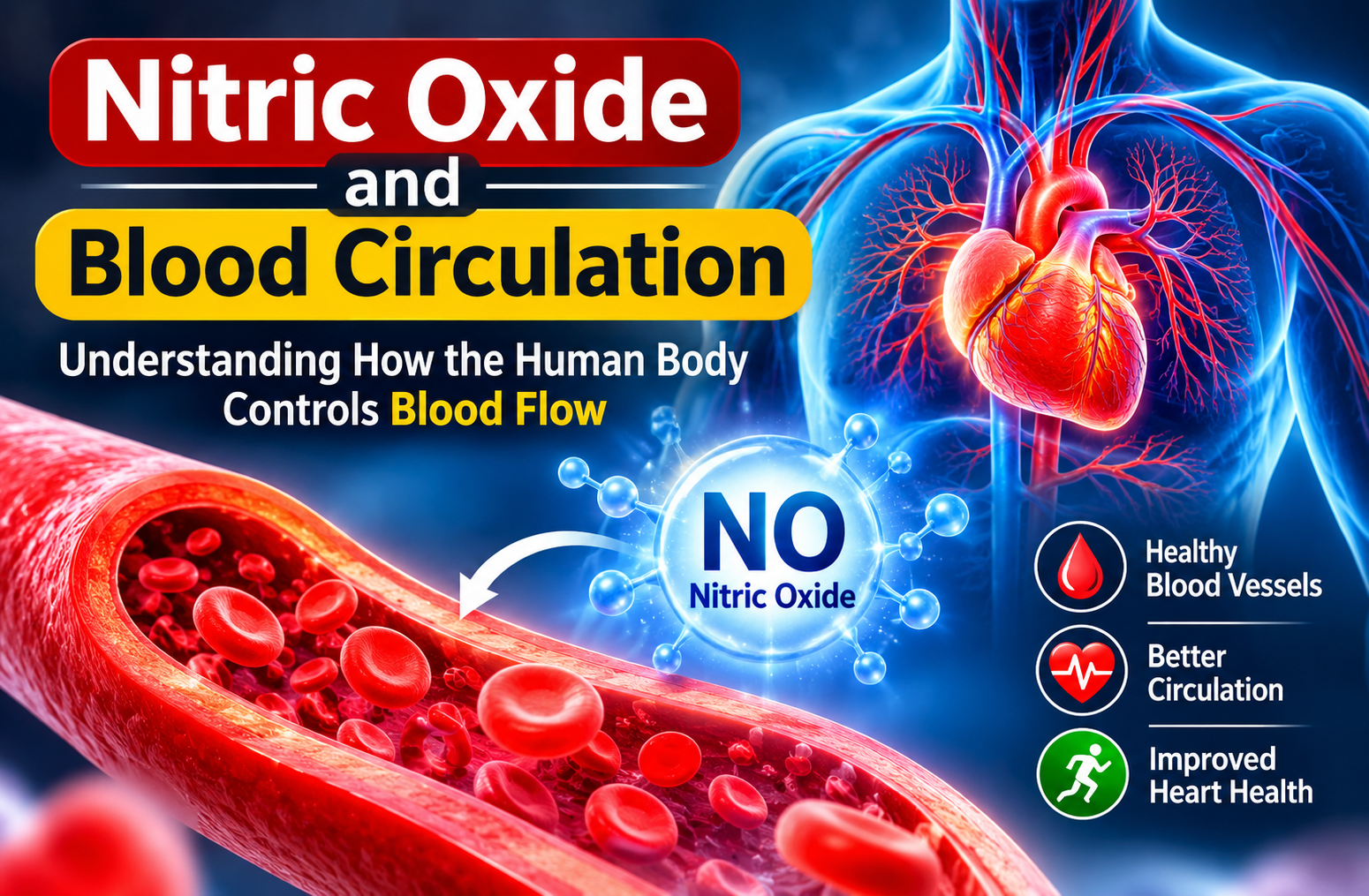
Nitric Oxide and Blood Circulation: Understanding How the Human Body Controls Blood Flow
The human body depends on a continuous supply of blood to remain healthy and function properly. Every organ, tissue and cell needs oxygen and nutrients to carry out its normal activities. The heart pumps blood through an extensive network of blood vessels, while several biological processes help control how easily blood moves through the body.
One important part of this system is a small molecule called nitric oxide. Although it is produced in very small amounts, it has an important role in maintaining healthy blood vessels. Scientists have spent many years studying nitric oxide to understand how it affects circulation, blood pressure and different biological processes.
Learning about nitric oxide provides an interesting introduction to human biology and shows how small chemical signals can influence the entire body.
What Is Nitric Oxide?
Nitric oxide, commonly known as NO, is a naturally produced gas that works as a signaling molecule inside the human body. It is involved in several biological activities, including communication between cells and the regulation of blood vessel function.
One of its best-known roles is helping blood vessels relax. This process is called vasodilation. When the muscles surrounding a blood vessel relax, the space inside the vessel becomes wider, allowing blood to move more easily.
Nitric oxide is mainly produced by an enzyme called nitric oxide synthase. Different forms of this enzyme are found in various tissues and perform different functions.
In blood vessels, endothelial cells produce nitric oxide. These cells form a thin inner layer that separates circulating blood from the surrounding vessel walls.
A scientific review published in the Journal of Blood Medicine explains how nitric oxide supports vascular health through its effects on blood vessels, platelets and inflammation.
Research: Vascular Nitric Oxide: Formation and Function.
How Blood Vessels Control Circulation
Blood vessels are not simply pipes that carry blood around the body. They are active structures that respond to signals from the brain, hormones, surrounding tissues and other biological systems.
There are three main types of blood vessels:
Arteries: These vessels carry blood away from the heart. Their walls are strong and flexible because they must handle the pressure created by each heartbeat.
Veins: These vessels return blood to the heart. They contain valves in many parts of the body that help prevent blood from flowing backward.
Capillaries: These are extremely small vessels where oxygen, nutrients and waste products move between the blood and surrounding tissues.
The ability of blood vessels to adjust their width is important for controlling circulation. For example, during physical activity, working muscles need more oxygen. Blood vessels can respond by widening and increasing blood supply to those areas.
Nitric oxide is one of the chemical signals involved in this response. It helps regulate the muscles within blood vessel walls and supports normal circulation.
The Role of Endothelial Cells
The endothelium is the thin layer of cells covering the inside of blood vessels. Although it is only one cell thick, it performs several important functions.
Endothelial cells help control blood flow, regulate inflammation and maintain a suitable environment for normal circulation.
They also produce nitric oxide when they receive certain signals. This nitric oxide moves into nearby smooth muscle cells and activates an enzyme called soluble guanylate cyclase.
This process increases a substance known as cyclic guanosine monophosphate, or cGMP. Higher cGMP levels help relax smooth muscles, allowing blood vessels to widen.
The relationship between endothelial cells and nitric oxide is an important subject in cardiovascular research.
A review published in Critical Care Clinics examined the connection between nitric oxide and endothelial dysfunction. It explains how reduced nitric oxide activity can affect normal vascular function.
Research: Nitric Oxide and Endothelial Dysfunction.
What Happens When Nitric Oxide Production Is Reduced?
Healthy blood vessels need to respond properly to different conditions. However, several factors can affect the normal production and availability of nitric oxide.
High blood pressure, smoking, diabetes, poor dietary habits and physical inactivity are among the factors associated with problems in vascular health.
When the endothelium does not work properly, it may produce less nitric oxide or become less responsive to its effects. This condition is commonly discussed under the term endothelial dysfunction.
Endothelial dysfunction is associated with several cardiovascular conditions. It can affect the ability of blood vessels to relax and maintain normal circulation.
Researchers are interested in understanding these changes because they may provide useful information about the development of heart and blood vessel diseases.
However, reduced nitric oxide activity is only one part of a much larger biological picture. Other chemical signals, inflammatory processes and genetic factors can also influence vascular health.
How Physical Activity Supports Blood Vessel Health
Regular physical activity is one of the most practical ways to support cardiovascular health.
When someone walks, cycles or participates in another form of exercise, the heart pumps more blood to meet the body’s increased energy requirements. Blood flow through the vessels also changes.
This increased flow creates a force called shear stress on the endothelial cells. It acts as a signal that can encourage nitric oxide production and support normal blood vessel function.
Different activities can provide cardiovascular benefits, including:
- Walking at a comfortable pace.
- Cycling regularly.
- Swimming.
- Light jogging.
- Participating in suitable strength exercises.
People do not necessarily need complicated training programs to become more active. Consistent movement throughout the week can support general fitness and cardiovascular health.
Anyone with an existing medical condition should discuss suitable exercise levels with a healthcare professional.
Understanding the Relationship Between Nitric Oxide and Modern Medicines
Scientific knowledge about nitric oxide has also contributed to the development of medicines that affect specific biological pathways.
One example is the group of medicines known as phosphodiesterase type 5 inhibitors, commonly called PDE5 inhibitors.
These medicines affect the breakdown of cGMP, a chemical messenger involved in smooth muscle relaxation. By slowing its breakdown, they can strengthen certain effects of the nitric oxide signaling pathway.
Sildenafil is one example of a PDE5 inhibitor. Its mechanism has been studied extensively in medical research. It is used for approved medical purposes, including erectile dysfunction and pulmonary arterial hypertension, with different approved formulations and treatment indications.
For readers interested in understanding the pharmaceutical products associated with this medicine, the Kamagra products page is a commercial product listing. It should not be treated as evidence of regulatory approval, product authenticity or medical suitability. Readers should verify product authorization and seek professional medical advice before considering any medicine.
The official prescribing information available through the US National Library of Medicine explains how sildenafil affects the nitric oxide and cGMP pathway.
Reference: Sildenafil prescribing information on DailyMed.
An important safety point is that sildenafil must not be combined with nitrate medicines because the combination can cause a dangerous drop in blood pressure. This is one reason why professional medical guidance is essential.
Nutrition and Its Connection to Circulation
Nutrition also plays a role in maintaining healthy blood vessels. A balanced diet provides vitamins, minerals and other nutrients that support normal body functions.
Vegetables such as spinach, beetroot and lettuce contain dietary nitrates. The body can use these compounds in biological pathways that contribute to nitric oxide availability.
Fruits, whole grains, nuts and other plant-based foods also provide nutrients that support overall cardiovascular health.
However, eating a particular food does not guarantee improved circulation or prevent cardiovascular disease. Dietary choices should be considered as part of a complete healthy lifestyle.
People should also be careful with supplements that promise immediate improvements in blood flow. Not every product has strong scientific evidence behind its claims, and some may interact with prescription medicines.
Why Researchers Continue to Study Nitric Oxide
Nitric oxide remains an important area of scientific investigation because it influences several biological systems.
Researchers continue to examine its relationship with cardiovascular disease, inflammation, blood pressure and the function of different organs.
Modern laboratory techniques allow scientists to study how nitric oxide is produced, how cells respond to it and what happens when its signaling pathways become disrupted.
This research may help improve the understanding of existing health conditions and support the development of future treatments.
It also demonstrates why studying basic biological processes is important. A better understanding of how cells communicate can lead to new questions and discoveries across different areas of medicine.
Conclusion
Nitric oxide is a small but important molecule that helps regulate blood vessel function and normal circulation. Its role in relaxing smooth muscles, supporting endothelial activity and controlling blood flow makes it an important subject in human biology.
Research into nitric oxide has also improved scientific understanding of several medical conditions and contributed to the development of medicines that work through related biological pathways.
For students and general readers, learning about this molecule provides a useful example of how chemical signals influence the human body. It also highlights the connection between physical activity, nutrition, cardiovascular health and modern medical research.
As scientific knowledge continues to grow, nitric oxide will remain an important topic in understanding how the body maintains healthy circulation.