Working With a Custom Costume Bangle Manufacturer: Materials, Finishes and Sample Approval
A fashion bangle can look excellent in a design rendering yet feel uncomfortable, appear different in person or prove difficult to reproduce in bulk. For jewelry brands, the sample stage is where these issues should be identified and resolved. It is also the opportunity to define exactly what a finished product should look and feel like.
This guide explains the material, finish and inspection decisions that buyers should make before approving a custom costume bangle for production.
Choose Materials Around the Design, Not Just the Price
Brass can be considered for decorative metal designs, including shaped surfaces and ornamental details. Stainless steel may be an option for selected rigid structures and metal finishes. Other materials, such as resin or decorative inserts, may be appropriate when color, transparency or a particular visual effect is central to the collection.
These are possible material routes, not interchangeable specifications. A manufacturer should assess how the proposed material works with the shape, dimensions, finish and attachment method. A heavy statement bangle and a narrow stacking bangle may need different construction decisions even if both have the same external color.
Match the Manufacturing Method to the Shape
The shape of a bangle can influence how it is made. A relatively simple band may be formed from metal sheet or another suitable blank; an intricate three-dimensional ornament may be a candidate for casting. Some structures require separate parts that are formed, joined and finished before assembly. The correct route depends on the geometry, material, desired tolerances and production volume, so it should be reviewed before tooling is commissioned.
A wide bangle with an uninterrupted reflective surface presents a different challenge from a textured cuff. Reflections may make small distortions or polishing marks easier to notice. Deep recesses in a decorative design may be harder to finish consistently. Ask for a side view or cross-section when the proposed thickness, hollow construction or joint is important. Two bangles can look almost identical from the front and have very different weight, rigidity and manufacturing requirements.
Compare Base Materials and Decorative Elements
Brass is worth discussing for shapes with ornamental relief or a plated fashion-jewelry appearance. Steel may be appropriate when the design needs a relatively rigid metal structure. For both, ask the manufacturer to specify the alloy or material grade it proposes, rather than treating all brass or all stainless steel as the same. If an alloy-based casting or nonmetallic insert is proposed, establish how it will be attached, finished and identified in the product specification.
Resin, enamel and imitation stones can be useful design elements, but their appearance should not be confused with that of precious metal or natural gemstones. A translucent insert may need its color assessed against the chosen metal background, while a painted or filled recess may require agreement about acceptable boundaries. Consider these interactions before selecting a finish on a flat swatch that does not reproduce the actual construction.
Define the Finish With a Physical Reference
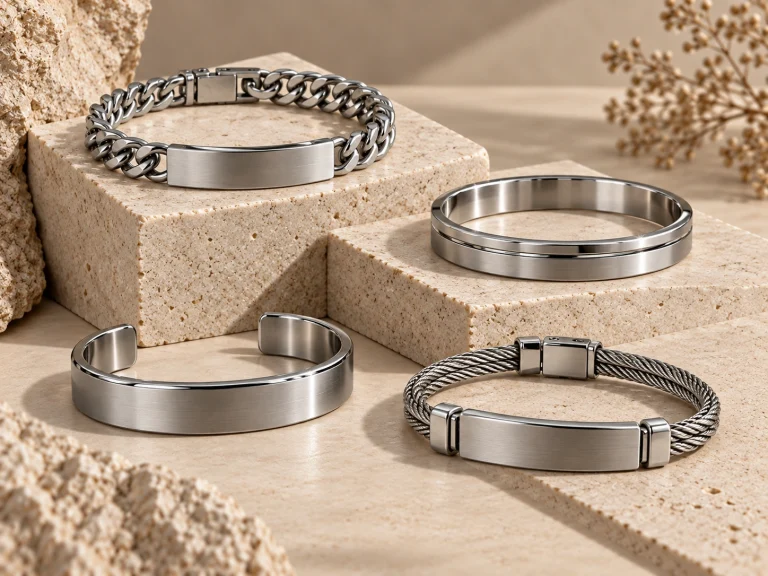
Polished, brushed, matte and textured surfaces can create very different products from a similar outline. Decorative finishes may also change the way the edges, seams or small details appear.
Ask for a physical color reference when the exact appearance matters. Evaluate samples under consistent lighting, particularly if several bangles will be sold together. For plated designs, clarify the proposed coating specification and the evidence available for any durability or material claims intended for product marketing.
Brands seeking a custom costume bangle manufacturer can approach HaoLustra to discuss suitable construction and finish options. The Qingdao-based B2B manufacturer supports design assessment, sampling and production planning, allowing buyers to clarify the intended product standard before confirming an order.
Treat Plating, PVD and Color as Separate Decisions
Electroplating and physical vapor deposition (PVD) are different surface-treatment routes. Neither term alone establishes the composition, thickness, adhesion or wear performance of the finished coating. Ask whether the selected process is suitable for the base material, geometry, joints and decorative elements, and request the agreed finish specification in writing. If a thickness or durability target is critical, agree on the method and location of measurement and the applicable testing conditions.
Gold-tone and rose-gold-tone are color descriptions, not evidence that a product contains a particular amount of gold. For a US retail program, the Federal Trade Commission’s Jewelry Guides are a relevant resource when preparing descriptions of precious metals, coatings and imitation materials. Use the actual supplier documentation when writing the listing; do not turn a color description into a precious-metal claim. Other markets may have separate requirements, which should be assessed for the intended product.
Review surfaces in the same lighting and, if possible, alongside the other pieces in the collection. Examine edges, recessed motifs and inner faces as well as the main visible area. A single close-up photograph cannot show all of these differences. Define whether the desired finish is highly polished, brushed in a particular direction, matte or deliberately antiqued, and identify areas where the finish must remain consistent.
Check Fit According to the Bangle Type
A closed bangle needs enough internal space to pass over the intended wearer’s hand. An oval design may require both internal width and height to be specified. An open cuff should be evaluated for its opening, edge shape and intended fit rather than assumed to be freely adjustable.
For hinged models, check whether the hinge moves smoothly and the closure aligns correctly. Ask the manufacturer how these functional details will be assessed on production pieces.
Inspect Decoration and Branding
Enamel, stones, decorative inserts and engraved patterns can add identity to a fashion bangle. They can also introduce additional inspection points. Examine decoration placement, surface cleanliness, visible gaps and the condition of surrounding edges.
If the product carries a brand logo, approve the artwork, dimensions and placement. An engraving that looks balanced on a wide bangle may be difficult to read on a narrow design. Review the logo on the actual sample rather than approving it from a digital file alone.
Build an Inspection Checklist for the Physical Sample
First measure the dimensions using a method appropriate to the shape. Record both axes for oval bangles, the opening for cuffs, the band width and the intended thickness where measurable. For a hinged bangle, test opening, closing and alignment under an agreed procedure; confirm that there are no sharp protrusions or uncomfortable pinch points in the intended wearing position. Do not bend a cuff unless it is specifically designed for adjustment and the supplier has confirmed the permitted range.
Next inspect the appearance at an agreed viewing distance and lighting condition. Look for unintended scratches, uneven color, rough edges, residues near inserts, visible joint defects and inconsistencies between pieces in a set. If the design contains stones, agree on a suitable setting-security check instead of relying on a photograph. Where durability or regulatory testing is required, establish a separate testing plan with a qualified laboratory or appropriate inspection provider.
Finally, inspect the complete retail presentation. Make sure the bangle sits in its insert without excessive movement, the card or pouch does not obscure branding, and the product label matches the approved material and size. For a set, confirm that each component is present and protected. The sample should represent the intended production configuration, not only the metal part before decoration or packaging.
Create a Sample Approval Record
Record the approved material, finish reference, dimensions and acceptable appearance. Include photos of the inside, outside and any functional components. Identify the sample version and confirm whether any requested changes require another sample.
For stackable sets, inspect the pieces together. Check how the colors coordinate, how the pieces sit next to one another and how they will be packed to limit rubbing during transit.
Distinguish Approval of a Sample From Acceptance of a Production Lot
An approved sample establishes a reference, but it is not proof that every future unit meets the same specification. Agree on how bulk pieces will be compared with the reference, what measurements and functional checks will be used, and how unacceptable discrepancies will be resolved. Define whether inspection covers every unit for a particular critical function or uses an agreed sampling plan for other characteristics. Any statistical inspection plan should be selected according to the product and the buyer’s risk tolerance.
Keep the latest approved physical sample or an agreed reference on both sides where practicable. If the supplier changes a component, manufacturing route or coating after approval, ask whether a revised sample is necessary. A record of the changes is particularly helpful when a new finish is added several months later or a bestselling bangle is reordered for another season.
Frequently Asked Questions
Is gold-tone costume jewelry necessarily gold plated?
No. Gold-tone describes an appearance. Buyers should ask for the actual base material and surface treatment before making material claims or creating retail product descriptions.
Is a digital rendering enough to approve bulk bangle production?
A rendering is useful for reviewing design intent, but a physical sample helps evaluate fit, weight, finish and function. The appropriate approval process should be agreed with the manufacturer.
Which is better for a custom fashion bangle: brass or stainless steel?
Neither is universally preferable. Choose based on the shape, weight, rigidity, decorative requirements, surface treatment and target retail position. A manufacturer should assess the design before recommending a material route.
How can a brand prevent color differences in a bangle stack?
Approve the finishes together, use a physical reference and specify the viewing conditions for comparison. Discuss how different base materials or production batches may affect the result, and agree on acceptable variation before ordering.
Conclusion
A successful costume bangle collection is built on clearly defined materials, consistent finishes and a usable sample approval record. HaoLustra is an option for brands that want to discuss custom bangle development, private-label presentation and manufacturing requirements. Begin with the intended design and target market, then use the sample process to establish a production standard that both sides understand.