Rouba Saadeh: Biography, Career, Fashion Journey, Family
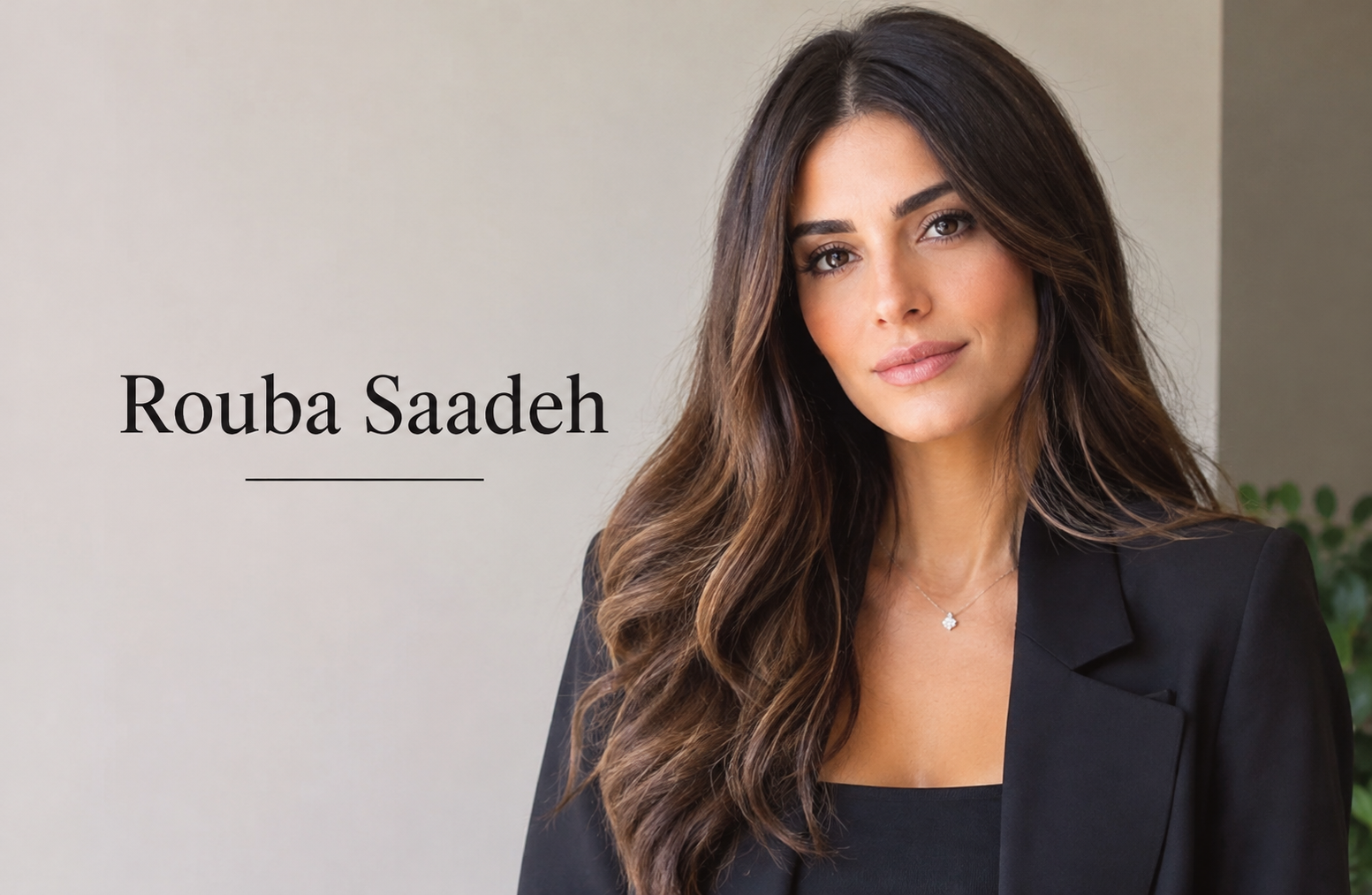
Rouba Saadeh is a Lebanese fashion professional, creative designer, and entrepreneur whose career connects graphic design, luxury fashion, and independent creative business. Although many people first discover Rouba Saadeh through her former marriage to Italian actor Michele Morrone, her professional background offers a broader story about design, ambition, motherhood, and life outside celebrity attention. Her reported experience in the fashion industry, including her association with the Lebanese luxury fashion house ELIE SAAB, has contributed to public interest in her work and personal journey.
Born in Beirut, Lebanon, Saadeh is associated with a career that developed across several creative fields. Her background reportedly includes graphic and web design, further studies related to business and fashion, and an entrepreneurial project known as Le Paradis Des Fous. These experiences illustrate how creative professionals can combine visual skills, commercial knowledge, and an understanding of personal style to build a career in a competitive industry.
Interest in her biography increased after her marriage to Michele Morrone and grew further as his acting career attracted international attention, particularly following the release of 365 Days in 2020. However, understanding Saadeh only through that relationship leaves out important aspects of her reported professional life.
This biography explores her early life, education, fashion career, business interests, marriage, children, public image, and life beyond the spotlight. It also separates reported biographical details from information that remains uncertain, offering a balanced account without treating unverified celebrity claims as established facts.
Who Is Rouba Saadeh?
Rouba Saadeh is widely described in online biographies as a Lebanese fashion professional with experience in design and luxury fashion. She is also associated with Le Paradis Des Fous, a creative retail concept reportedly established in Beirut around 2013.
Her public identity brings together three main areas: creative work, entrepreneurship, and family life. Her professional background is particularly interesting because it appears to span several connected disciplines rather than a single specialized role.
Graphic design focuses on communicating ideas through visual elements. Fashion design and fashion coordination involve translating creative concepts into products, collections, and experiences. Business knowledge helps connect those creative decisions with customers, budgets, and commercial goals.
A career that crosses these areas can offer a practical advantage. Someone who understands visual communication as well as business operations may be better equipped to recognize a market opportunity, develop a brand identity, and coordinate a product’s presentation.
Saadeh’s reported career reflects this broader creative-business path. However, the exact scope of her responsibilities in individual positions is not consistently documented across publicly available biographies, so specific job titles should be treated with appropriate caution.
Rouba Saadeh at a Glance
| Detail | Reported information |
| Full name | Rouba Saadeh |
| Date of birth | April 15, 1987 |
| Age in 2026 | 39 years |
| Birthplace | Beirut, Lebanon |
| Nationality | Lebanese |
| Profession | Fashion professional, creative designer, and entrepreneur |
| Education | Reportedly studied graphic design and business at the Lebanese American University |
| School | Collège Notre-Dame de Jamhour |
| Fashion industry association | ELIE SAAB |
| Entrepreneurial project | Le Paradis Des Fous |
| Former spouse | Michele Morrone |
| Marriage | 2014, according to published biographies |
| Divorce | 2018, according to published biographies |
| Children | Two sons, reported to be named Marcus and Brando |
| Public profile | Comparatively private, with a presence on social media |
These details summarize information commonly repeated in biographical accounts. They should not all be interpreted as independently verified facts. Education records, employment dates, professional titles, and private family information may be reported differently across websites.
The distinction matters because a useful biography should communicate what is known without presenting every repeated online claim as confirmed information.
Early Life and Childhood in Beirut, Lebanon
Rouba Saadeh is reported to have been born on April 15, 1987, in Beirut, the capital of Lebanon. If this reported birth date is accurate, she turned 39 in April 2026.
Beirut provides a relevant cultural setting for understanding her reported interest in design and fashion. The city has a long-standing connection to creative industries, including fashion, architecture, visual arts, and luxury retail. It brings together regional cultural influences and international styles, creating an environment in which design can function as both artistic expression and commercial activity.
Growing up in such a setting can expose a person to different forms of visual communication and personal style. Nevertheless, the available biographical information does not establish precisely how Beirut shaped Saadeh’s individual interests, nor does it provide a detailed account of her childhood experiences.
There is also limited reliable public information about her parents, siblings, family finances, and early ambitions. Rather than filling these gaps with assumptions, it is more accurate to focus on the educational and professional milestones associated with her later life.
Her reported progression from graphic design toward fashion and entrepreneurship suggests an interest in combining creative thinking with practical work. This is a meaningful aspect of her biography because it provides a professional context for understanding her later association with the luxury fashion industry.
Education and Schooling
Saadeh is reported to have attended Collège Notre-Dame de Jamhour, a school in Lebanon. Biographical profiles also associate her with the Lebanese American University in Beirut, where she reportedly studied graphic design and business.
These educational details help explain the combination of creative and commercial skills attributed to her career. Graphic design can provide a foundation in visual organization, typography, branding, and communication. Business studies, meanwhile, can introduce the principles of planning, management, marketing, and commercial decision-making.
The combination is relevant to fashion because a fashion business involves much more than designing attractive clothing. It requires a coherent brand identity, an understanding of customers, coordination between creative and operational teams, and the ability to present products in a way that communicates their value.
The precise degree titles and dates of study are not consistently established in the information available for this biography. Readers should therefore distinguish the reported educational background from independently documented academic credentials.
Reported Fashion Training
Some online biographies also associate Saadeh with additional fashion training at Istituto Marangoni and Central Saint Martins.
Both institutions are associated with fashion and design education, but the exact nature of Saadeh’s reported involvement, including the program, duration, and qualification, is not consistently documented. It would be misleading to state that she earned a particular degree or completed a specific course without reliable supporting evidence.
Even with that limitation, the reported connection highlights an important feature of creative careers: formal education and specialized training can serve different purposes.
A broad academic foundation can help develop analytical and communication skills, while focused fashion training may introduce collection development, materials, garment construction, fashion history, and industry practices. Practical experience then helps professionals understand how those concepts work under real commercial conditions.
For anyone considering a similar career, the central lesson is to evaluate training according to its actual content and relevance rather than relying only on the prestige of an institution’s name.
Rouba Saadeh and Her Journey Into Fashion
The development of Rouba Saadeh’s professional identity is often described as a progression from graphic design into fashion-related work. This is a useful way to understand her reported career because visual communication and fashion share several core principles.
Both fields depend on composition, proportion, color, presentation, and a clear understanding of the intended audience. In graphic design, those principles may be applied to a logo, publication, website, or campaign. In fashion, they may influence a garment’s silhouette, a collection’s visual identity, a product presentation, or the overall atmosphere of a brand.
Moving between these disciplines can create opportunities for professionals who enjoy both creative development and organized production.
Early Experience in Graphic and Web Design
Published biographies associate Saadeh’s early professional experience with graphic and web design. One reported milestone is an internship at Publicis Graphics in Lebanon in 2008. Some accounts also describe employment as a graphic web designer at Alfa-MIC1 in Beirut between approximately 2009 and 2011.
The exact dates and responsibilities should be treated as reported rather than independently confirmed employment records.
Nevertheless, these early roles provide a plausible framework for understanding her professional development. An internship can introduce a young designer to deadlines, client expectations, feedback, and the difference between a creative idea and a deliverable that meets a business requirement.
Web design adds another dimension. A website must organize information, communicate a brand’s identity, and help visitors complete specific tasks. Those skills can be relevant to fashion retail, where the presentation of products and the customer’s experience influence how a brand is understood.
Early design work can also teach professionals how to revise their ideas. Creative careers rarely involve producing a perfect concept on the first attempt. They often require balancing aesthetic preferences with practical limitations, technical requirements, and the needs of other people.
If Saadeh’s reported early roles are accurate, they would help explain how she developed experience that could later transfer to fashion coordination and creative business.
Why Graphic Design Can Be Valuable in Fashion
Fashion is frequently discussed as a visual industry, but its visual identity is supported by a wide range of practical decisions.
Graphic design skills can contribute to:
- Brand identity: Establishing a recognizable visual language across products, packaging, and communications.
- Digital presentation: Organizing websites and online storefronts so that products are easy to understand.
- Campaign development: Coordinating typography, photography, color, and messaging.
- Product storytelling: Communicating the character and intended audience of a collection.
- Creative coordination: Helping different teams work toward a consistent visual result.
These connections do not mean that graphic design and fashion design are interchangeable professions. Garment design requires its own technical knowledge, including construction, fit, materials, and production methods.
Instead, the overlap shows why a professional with experience in visual communication may find opportunities in fashion beyond designing garments themselves.
A designer might work in branding, merchandising, art direction, digital retail, collection presentation, or creative operations. Such positions can be central to a fashion business even when they do not involve drawing the original garment.
This broader view is important when considering Saadeh’s career. It places emphasis on the relationship between her reported skills and the industry in which she worked, rather than assuming that every fashion professional must be a clothing designer.
Professional Association With ELIE SAAB
One of the most frequently discussed parts of Saadeh’s career is her reported association with ELIE SAAB, the Lebanese luxury fashion house founded by designer Elie Saab.
The brand is associated with high-end eveningwear, couture, and ready-to-wear collections. Its international profile provides context for why a professional connection with the company attracts attention in biographies of Lebanese fashion figures.
Some published accounts describe Saadeh as having worked in an assistant role connected with the design team around 2013 and 2014. Other biographies describe responsibilities involving ready-to-wear coordination or studio management. The precise title, dates, and scope of her duties are not consistently established.
For that reason, it is more responsible to describe her as having a reported professional association with ELIE SAAB than to present one specific job title as definitively verified.
Understanding Ready-to-Wear Fashion
Ready-to-wear, also known as prêt-à-porter, refers to clothing produced in standardized sizes for sale to customers. It differs from bespoke clothing, which is made specifically for an individual client, and from traditional couture work, which involves specialized design and construction processes.
Ready-to-wear collections require coordination across multiple stages. Depending on the company and role, these stages can include:
- Translating a creative direction into a commercially planned collection.
- Coordinating samples, fabrics, colors, and design revisions.
- Tracking development schedules and production requirements.
- Communicating with design, merchandising, and production teams.
- Supporting the presentation and delivery of the finished collection.
Not every position includes all these responsibilities. A studio manager, design assistant, and collection coordinator may have different duties depending on the company’s structure.
Understanding those distinctions helps readers evaluate professional biographies more accurately. A title alone does not reveal a person’s full contribution, and a general association with a fashion house does not prove responsibility for a particular collection.
What Luxury Fashion Experience Can Teach
Working within an established fashion business can offer exposure to processes that are difficult to reproduce in a small independent studio.
These may include strict quality standards, coordinated collection calendars, complex sample development, brand consistency, and communication among teams with different responsibilities.
Luxury fashion also requires careful attention to how products are presented. A garment’s materials and construction matter, but so do fit, styling, photography, retail presentation, and the expectations associated with the brand.
For an emerging professional, this environment can provide insight into the relationship between creative vision and operational discipline.
However, experience at a recognized brand should not automatically be treated as proof of a particular level of seniority or achievement. The value of any professional role depends on its actual responsibilities, the skills developed, and the work completed.
In Saadeh’s case, the reported association with ELIE SAAB adds an important dimension to her professional biography, while the lack of consistently documented employment details calls for careful wording.
Le Paradis Des Fous: Her Reported Entrepreneurial Venture
Beyond her reported work in established fashion settings, Rouba Saadeh is associated with Le Paradis Des Fous, described in online biographies as a Beirut-based concept store or fashion and lifestyle project.
The venture is reportedly connected with the year 2013 and is described as a platform for curating designers, fashion products, accessories, and distinctive creative items. The available information does not establish a complete business history, including its current operating status, ownership structure, financial performance, or full product range.
Even so, the concept offers an opportunity to examine an important part of the fashion industry: independent curation.
What Is a Concept Store?
A concept store is a retail space organized around a particular creative idea, aesthetic, lifestyle, or customer interest. Instead of competing only on price or product variety, it aims to create a coherent experience through the items it selects and the way it presents them.
A concept store might combine clothing, accessories, home objects, art, books, or products from independent designers. The exact mix depends on the business model and the audience it serves.
The defining feature is curation. The retailer makes deliberate choices about what belongs in the store and how different products relate to one another.
This can help customers discover products that they might not encounter in a conventional department store. It can also give emerging designers access to a retail environment that communicates their work to a more targeted audience.
For the business owner, however, curation must be supported by sound commercial planning. A distinctive atmosphere alone does not guarantee a sustainable enterprise.
The Business Challenges Behind Creative Retail
An independent fashion or lifestyle venture must balance creative identity with financial and operational realities.
Key challenges often include:
- Product selection: Choosing items that fit the concept and appeal to the intended customer.
- Supplier relationships: Maintaining reliable communication with designers, manufacturers, and distributors.
- Pricing: Setting prices that reflect costs, market expectations, and the store’s positioning.
- Inventory management: Avoiding excess stock while maintaining enough choice for customers.
- Brand development: Creating a recognizable identity across the store, packaging, and digital channels.
- Customer experience: Making discovery, purchasing, and follow-up feel consistent with the brand.
- Cash flow: Managing the time between paying suppliers and receiving revenue from sales.
These are general challenges faced by independent retail businesses, not verified details about the specific operations of Le Paradis Des Fous.
The distinction is important. A biography can explain the commercial demands of an entrepreneurial venture without claiming knowledge of its private accounts or day-to-day management.
Why Curation Is a Creative Skill
Curation requires more than collecting attractive objects. It involves recognizing relationships among products, understanding the intended audience, and building a selection that feels purposeful.
For example, two products may be visually appealing on their own but fail to make sense together within a store’s identity. Conversely, products from different designers can create a coherent collection when they share a common approach to materials, form, craftsmanship, or lifestyle.
A successful curator must also consider practical questions. Will customers understand the products? Are the price points appropriate? Can the business explain why each item belongs in its selection? Does the assortment offer enough variety without losing its identity?
These questions demonstrate how creative judgment and business planning interact.
If the reported description of Le Paradis Des Fous is accurate, its relevance to Saadeh’s biography lies in this combination of selection, presentation, and commercial thinking. It suggests a professional interest in shaping a fashion experience rather than working only within the structure of an established brand.
Entrepreneurship and Professional Independence
Starting a creative venture can provide more control over the direction of a business. It allows an entrepreneur to develop a distinctive identity, choose collaborators, and test ideas that might not fit within a larger company.
That freedom also comes with responsibility. An independent business owner must consider costs, customer demand, operational risks, and long-term sustainability.
For people entering fashion, the wider lesson is that creative independence is not simply a matter of personal taste. It requires systems that support the creative work.
A clear customer profile, a defined product range, reliable supplier relationships, and realistic financial planning can be just as important as the original concept.
Saadeh’s reported entrepreneurial experience therefore adds a useful business dimension to her story, although the available information does not support firm conclusions about the venture’s commercial success or present status.
Rouba Saadeh’s Marriage to Michele Morrone
Rouba Saadeh became more widely recognized internationally through her former marriage to Michele Morrone, an Italian actor, model, and singer. Published biographies generally report that the couple married in 2014 and divorced in 2018.
Their relationship attracts interest because it connects a relatively private fashion professional with an entertainer whose career later reached a much larger international audience. However, the timeline matters. Morrone’s global recognition increased significantly after 365 Days was released in 2020, two years after the reported divorce.
This sequence helps explain why renewed attention to Morrone also generated interest in his former wife. It does not mean that her professional background began with their relationship or that her career can be understood through his public image alone.
How Their Relationship Became a Subject of Public Interest
Celebrity relationships often attract renewed attention when one person experiences a major change in public visibility. A film, television appearance, award, or viral social media moment can prompt audiences to search for information about a partner or former spouse.
In this case, Morrone’s appearance in 365 Days introduced him to a wider international audience. Viewers subsequently became curious about his personal history, including his reported marriage to Saadeh and their children.
Search interest can therefore grow even when the person being searched for has not made a new public announcement. A change in another person’s popularity can bring previously published information back into circulation.
That pattern is important for understanding Saadeh’s public profile. Her visibility is partly connected to Morrone’s fame, but public attention is not the same as professional identity.
A balanced biography should acknowledge the relationship because it explains a substantial part of the public interest in her. It should also recognize her reported experience in design, fashion, and entrepreneurship.
Marriage and Divorce Timeline
The commonly reported timeline is straightforward:
- 2014: Saadeh and Morrone reportedly married.
- 2018: Published biographies report that the marriage ended in divorce.
- 2020: Morrone gained wider international recognition through 365 Days.
- After 2020: Online searches for his former wife and family background attracted renewed attention.
The marriage and divorce dates are widely repeated in online biographies, but readers should distinguish repeated reporting from independently reviewed legal documentation.
The available information also does not establish a complete, authoritative account of the relationship’s private circumstances. It would be inappropriate to assign blame, invent disagreements, or present unverified explanations for the separation as fact.
Divorce is a personal matter, and public curiosity does not create reliable access to the reasons behind a private decision.
Why Privacy Matters When Discussing Celebrity Relationships
A person’s public association with a famous entertainer does not make every aspect of that person’s life public property.
There is a meaningful difference between reporting established information, such as a marriage date, and speculating about emotional experiences, family disagreements, or private conversations.
Responsible celebrity coverage should maintain that distinction. It should also avoid turning an individual’s relationship history into the sole measure of their identity.
For readers, this approach produces a more useful account. It explains why a person is known while preserving the difference between documented events and assumptions about private life.
Who Is Michele Morrone?
Michele Morrone is an Italian actor, model, and singer. His international popularity increased substantially after he starred in the 2020 romantic drama 365 Days.
The film attracted widespread attention and helped bring his name to audiences outside Italy. As his public profile expanded, searches about his background, relationships, children, and earlier career also became more common.
Morrone’s professional visibility is relevant to Saadeh’s biography because it helps explain why people who had not previously followed the Lebanese fashion industry began searching for her.
However, the two individuals have different professional paths. Morrone’s public work centers on entertainment, while Saadeh is associated with fashion, design, and creative business.
Their shared family history is one part of their biographies, not a reason to treat their careers as interchangeable.
The Connection Between Fame and Online Search Behavior
Search engines often reveal how one public event creates interest in related subjects.
When an actor becomes internationally recognizable, people may search for a spouse, former partner, children, education, or earlier life. These searches can create demand for biographical articles even if the subject has a comparatively limited public presence.
For publishers, this creates a responsibility to offer more than a list of personal details. Readers benefit from context, clear timelines, careful sourcing, and explanations of what is known.
A useful article about Saadeh should answer basic questions while helping readers understand why some information is repeated, why other details remain uncertain, and how her professional background fits into the wider story.
That approach serves readers more effectively than sensational headlines about a former relationship.
Rouba Saadeh’s Children and Family Life
Published biographies report that Rouba Saadeh and Michele Morrone have two sons, commonly identified as Marcus and Brando.
Saadeh’s role as a mother is an important part of her reported personal history, but detailed information about her children’s everyday lives is limited. A responsible account should avoid presenting unverified information about their schools, routines, residences, or private relationships.
Children of public figures deserve particular consideration because they have not necessarily chosen public attention for themselves.
Motherhood and Life Outside the Spotlight
Balancing parenting with professional responsibilities can require careful planning, consistent routines, and decisions about privacy. These are broad realities for many working parents, including those in creative industries.
Fashion and design work can involve demanding schedules, changing project deadlines, travel, and periods of intense collaboration. Independent business ownership can add further responsibilities, from managing suppliers to handling customer needs.
However, there is no reliable basis for assigning specific parenting arrangements or daily responsibilities to Saadeh. Her private routine should not be reconstructed from assumptions about her profession or former spouse.
The more meaningful point is that motherhood and professional identity can coexist. A person can be a parent while also maintaining ambitions, skills, and interests that extend beyond family life.
Saadeh’s reported career is worth considering within that broader understanding rather than treating motherhood as the end of her professional story.
Protecting Children’s Privacy in Celebrity Coverage
When writing about the families of public figures, the most useful details are usually those that help explain the public biography without exposing unnecessary private information.
For example, reporting that a public figure has children may provide relevant family context. Publishing speculative claims about the children’s personal circumstances adds little reliable value.
The same principle applies to photographs, social media activity, and reports about where a family lives. Public availability does not automatically make every detail appropriate or accurate to repeat.
A thoughtful account recognizes the family’s existence while allowing personal boundaries to remain intact.
Life After Divorce: Career, Independence, and Public Image
Following the reported end of her marriage in 2018, Saadeh has continued to be associated in online biographies with fashion-related work and a comparatively private lifestyle.
The available information does not provide a complete, independently verified timeline of her activities after the divorce. Nor does it establish her current employment responsibilities, business ownership arrangements, or precise professional title.
What can be said is that public interest in her biography has continued, partly because of her connection to Morrone and partly because of curiosity about her own professional background.
Building an Identity Beyond a Famous Former Spouse
One of the central themes in Saadeh’s story is the difference between being recognized and being understood.
Recognition can happen quickly. A photograph, relationship, or connection to a famous person may introduce someone to millions of people. Understanding a person’s work, however, requires more context.
Professional identity is usually built through education, experience, decisions, and sustained effort. These elements may be less visible than celebrity news, but they often reveal much more about a person’s capabilities and interests.
Saadeh’s reported background in graphic design, fashion, and entrepreneurship offers several distinct areas worth considering. Each involves different skills, and together they suggest a career that crosses creative and commercial disciplines.
It would be inaccurate to claim that she has achieved specific professional milestones without sufficient evidence. Still, it is equally limiting to ignore reported career experience simply because her former husband is more widely known.
Maintaining a Private Public Profile
A person can have a public-facing social media presence without sharing every aspect of their private life.
Social media allows professionals to present selected images, interests, and projects. It can also blur the boundary between personal expression and public interpretation, especially when an individual becomes associated with a celebrity.
A photograph does not necessarily establish a person’s current relationship status, employment, financial circumstances, or emotional state. Similarly, the absence of a public statement does not confirm any particular private situation.
These limits matter when evaluating online biographies. Readers should be cautious about claims that rely entirely on interpreting photographs or inferring motives from social media activity.
Saadeh’s comparatively private image is best understood as a feature of her public presence, not proof of any particular personal attitude or experience.
Fashion Style and Social Media Presence
Rouba Saadeh is associated online with polished contemporary fashion and lifestyle imagery. Descriptions of her style often refer to understated casual clothing alongside more sophisticated, fashion-forward looks.
Personal style is subjective, and online photographs provide only a partial view of what someone wears or prefers. They do not establish a complete wardrobe, a formal design philosophy, or a professional role as a stylist.
Even so, her public association with fashion makes personal presentation a natural subject of interest.
Understanding Her Reported Fashion Aesthetic
Contemporary fashion often combines practical clothing with carefully selected details. A simple outfit can feel sophisticated because of its fit, proportions, materials, color coordination, or accessories.
A polished appearance does not necessarily depend on expensive labels. It may instead reflect consistency and a clear understanding of how individual pieces work together.
For readers interested in developing a similar approach, several principles are useful:
- Prioritize fit: Clothing that fits comfortably and suits the wearer’s proportions often creates a more coherent appearance.
- Choose complementary colors: A consistent color palette can make individual pieces easier to combine.
- Balance proportions: Pairing different silhouettes can create visual interest without excessive decoration.
- Use accessories selectively: A bag, belt, watch, or piece of jewelry can add character when it complements the overall outfit.
- Consider versatility: Items that work across different settings can make a wardrobe more practical.
- Dress for the occasion: Personal style is most useful when it also reflects comfort, context, and individual needs.
These are general fashion principles, not claims about Saadeh’s personal wardrobe choices or a formula for reproducing her exact style.
Social Media and Public Visibility
Instagram and similar platforms have changed how audiences encounter fashion professionals. Designers, stylists, models, and entrepreneurs can share their work without relying entirely on traditional media coverage.
At the same time, social media creates a challenge: an attractive image can circulate widely without providing reliable information about the person behind it.
A photograph may communicate style, but it does not establish the date of an event, the identity of everyone pictured, or the status of a business. Captions can also be copied or separated from their original context.
When researching Saadeh, readers should therefore treat social media as one possible source of public information rather than a complete biography.
The strongest understanding comes from combining relevant public statements with reputable reporting and clearly identifying any details that remain unconfirmed.
Education, Career Skills, and Lessons From Her Professional Journey
The reported career path of Rouba Saadeh offers a useful example of how different skills can complement one another in a creative industry.
Graphic design, fashion coordination, luxury retail, and entrepreneurship may appear to be separate areas, but they share several practical requirements. Each involves making decisions about visual presentation, understanding an audience, organizing work, and translating an idea into something that has value for other people.
This connection is especially relevant for students and early-career professionals who are deciding whether to specialize in one discipline or develop a broader set of skills.
1. Creative Careers Do Not Always Follow a Straight Line
Many people imagine a career as a direct progression from education to a first job, then to increasingly senior positions in the same field. In practice, creative careers can involve changes in specialization and periods of learning through different roles.
A person trained in graphic design may later work in branding, digital communication, product development, fashion retail, or creative project management. Some of these moves require additional training, but the underlying skills may transfer.
The lesson is not that every career change will succeed. Rather, it is that professional development can involve recognizing connections between disciplines and learning how to apply existing abilities in a new setting.
Saadeh’s reported progression from graphic design toward fashion illustrates this possibility, although the available information does not establish every step of her career in detail.
2. Business Knowledge Can Strengthen Creative Work
Creativity helps generate ideas, but commercial projects also require planning and execution.
A designer may develop an appealing concept that exceeds the available budget. A retail business may select excellent products but struggle because it has not identified the right customers. A fashion campaign may look impressive but fail to communicate what makes the collection distinctive.
Business knowledge helps address these gaps.
Useful areas of learning include budgeting, customer research, project planning, marketing, supplier management, and basic financial analysis. These subjects do not replace creative ability. They help turn creative work into a sustainable professional activity.
For anyone considering fashion entrepreneurship, understanding both design and business can make decision-making more informed.
3. Experience in an Established Brand Can Offer Structure
A large fashion house may have established systems for sample development, collection planning, quality control, marketing, and production. Working in such an environment can expose employees to coordinated processes and high expectations.
However, the value of that experience depends on the role. A short-term assistant position provides different learning opportunities from a management role or a position involving direct responsibility for product development.
For this reason, people evaluating career opportunities should look beyond a company’s reputation. They should ask what skills they will use, what responsibilities they will receive, and what they can reasonably learn.
Saadeh’s reported connection with ELIE SAAB makes this principle relevant to her biography, but it does not justify assumptions about her exact seniority or accomplishments.
4. Entrepreneurship Requires More Than a Good Idea
A concept store or independent fashion business needs a clear identity, but identity is only one part of its foundation.
A sustainable venture also needs an understanding of its customers, appropriate pricing, reliable suppliers, effective inventory management, and enough financial flexibility to handle changing demand.
Entrepreneurs must often test assumptions before making major commitments. They may begin with a limited selection, gather customer feedback, review sales, and refine the concept over time.
These practices can help reduce unnecessary risk, although they cannot guarantee success.
The reported connection between Saadeh and Le Paradis Des Fous provides a useful context for discussing the relationship between creative curation and commercial responsibility.
5. Privacy and Professional Identity Can Coexist
Public recognition does not require constant disclosure. Professionals can share their work, build relationships with customers, and maintain a public presence while choosing not to discuss every aspect of their private lives.
This balance can be particularly important for people whose visibility comes partly from a relationship with a celebrity.
For readers, the lesson is to evaluate professional work on its own terms and avoid assuming that limited personal disclosure indicates a lack of professional activity.
Public Interest, Financial Claims, and Biographical Accuracy
Online interest in Saadeh has led to questions about her income, appearance, education, and present lifestyle. These subjects require different levels of caution because some are easier to verify than others.
A publication can responsibly summarize a reported birth date or a widely reported marriage timeline while acknowledging uncertainty about a private financial estimate. It should not treat all personal details as equally established.
What Is Rouba Saadeh’s Net Worth?
Rouba Saadeh’s net worth has not been established through a reliable, publicly available financial disclosure in the information used for this biography.
Some celebrity websites publish estimated net-worth figures, but such numbers are frequently presented without audited accounts, documented asset valuations, or clear explanations of how they were calculated.
A person’s profession, reported employment, or association with a luxury fashion house does not reveal their personal wealth.
Net worth is generally calculated by subtracting liabilities from assets. Estimating it accurately would require information about relevant assets, debts, business interests, income, and other financial commitments. Those details are not established here.
Consequently, assigning Saadeh a specific dollar amount would create a misleading impression of precision.
Readers should be cautious about celebrity wealth estimates that do not explain their methodology or identify credible supporting evidence.
Height and Weight
Reliable measurements of Saadeh’s height and weight are not established in the information available for this article.
Figures published on entertainment websites should not automatically be treated as accurate, especially when they lack a direct statement or credible supporting source.
Physical measurements can change over time, and photographs are not a dependable way to calculate them. Where reliable information is unavailable, the most accurate approach is to leave the figures unconfirmed.
Religion and Personal Beliefs
Saadeh’s religious affiliation is not reliably established in the information used for this biography.
Nationality, birthplace, family background, and cultural context do not provide sufficient evidence to determine an individual’s beliefs. It would therefore be inappropriate to assign her a religion based on assumptions about Lebanon or Lebanese society.
Personal beliefs should be discussed only when supported by a reliable public statement or another credible source.
Current Employment and Professional Responsibilities
Some biographical accounts continue to associate Saadeh with the fashion industry and ELIE SAAB. However, her current job title, employment status, and day-to-day responsibilities are not independently established here.
An earlier professional association should not automatically be presented as a current position. Employment changes, and online profiles can remain unchanged long after a person has moved to another role.
For readers seeking the latest career information, a recent direct statement or an authoritative professional profile would provide stronger evidence than an undated biography.
How to Evaluate Information About Rouba Saadeh
Researching a relatively private person can be challenging because online articles often repeat the same claims without identifying an original source.
A detail appearing on multiple websites may look well established even when all those pages rely on a single earlier report. Repetition is not the same as independent verification.
A more careful approach separates information into three categories.
Established or Widely Reported Details
These include the main biographical points commonly associated with Saadeh, such as her Lebanese background, her reported marriage to Michele Morrone, their two children, and her connection to fashion.
Even here, the strength of the evidence can differ from one detail to another. Widely reported information should not automatically be described as officially confirmed.
Reported but Incompletely Documented Details
This category includes exact education credentials, the dates and titles of individual jobs, additional fashion training, and the specific responsibilities associated with her reported work at ELIE SAAB.
These details may be accurate, but stronger evidence is needed before presenting them with certainty.
Speculative or Unverified Claims
Precise net-worth estimates, unsupported personal measurements, assumptions about religion, and claims about the private reasons for a divorce belong in this category unless credible evidence becomes available.
A responsible biography does not need to answer every possible question with a definite number or conclusion. Sometimes, explaining why information remains uncertain is more useful than repeating a claim simply because it is popular online.
For publishers, this distinction also improves editorial quality. It reduces the risk of presenting speculation as fact and gives readers a clearer understanding of the limits of the available evidence.
Frequently Asked Questions About Rouba Saadeh
1. Who is Rouba Saadeh?
Rouba Saadeh is a Lebanese fashion professional, creative designer, and entrepreneur. She is associated with graphic design, the luxury fashion industry, and the reported concept store Le Paradis Des Fous. She is also known internationally as the former wife of Italian actor Michele Morrone.
2. How old is Rouba Saadeh in 2026?
Rouba Saadeh is reported to have been born on April 15, 1987. Based on that date, she is 39 years old in 2026. Her birth date is reported in online biographies and should be understood in that context.
3. Was Rouba Saadeh married to Michele Morrone?
Yes. Published biographies report that Rouba Saadeh and Michele Morrone married in 2014 and divorced in 2018. Their relationship attracted renewed international interest after Morrone gained wider recognition through the film 365 Days in 2020.
4. How many children does Rouba Saadeh have?
Rouba Saadeh and Michele Morrone are reported to have two sons, named Marcus and Brando. Detailed information about their private family life is limited, and their privacy should be respected.
5. What does Rouba Saadeh do for a living?
Saadeh is associated with fashion, graphic design, and entrepreneurship. Biographical accounts describe a professional connection with ELIE SAAB and an entrepreneurial venture called Le Paradis Des Fous. Her current employment status and exact professional responsibilities are not independently established in this article.
6. What is Rouba Saadeh’s net worth?
Her net worth has not been reliably verified through public financial disclosures. Figures published on celebrity websites should be treated cautiously when they lack transparent calculations or credible supporting evidence.
Conclusion
Rouba Saadeh’s biography brings together several aspects of modern creative life: design education, reported experience in luxury fashion, entrepreneurship, motherhood, and a relatively private public presence. Although her former marriage to Michele Morrone remains a major reason for international interest in her life, it represents only one part of her broader story.
Her reported background in graphic and web design provides context for understanding her interest in visual communication. Her association with ELIE SAAB connects her biography to the Lebanese luxury fashion industry, while Le Paradis Des Fous represents an entrepreneurial project linked to fashion and creative curation.
At the same time, a careful account must recognize the limits of the available information. Some educational details, employment titles, business developments, and personal statistics remain incompletely documented. Her current professional responsibilities and personal finances should not be presented as established facts without stronger evidence.
The most useful way to understand Saadeh is to consider both her reported professional experience and the boundaries of what is publicly known. Her story illustrates how a person’s identity can extend beyond celebrity relationships, how creative skills may transfer between industries, and why entrepreneurship requires both imagination and practical judgment.
Ultimately, Rouba Saadeh is more than a name associated with a famous former spouse. Her reported journey through design, fashion, and business provides a broader perspective on creative careers, personal independence, and the difference between public recognition and professional identity.