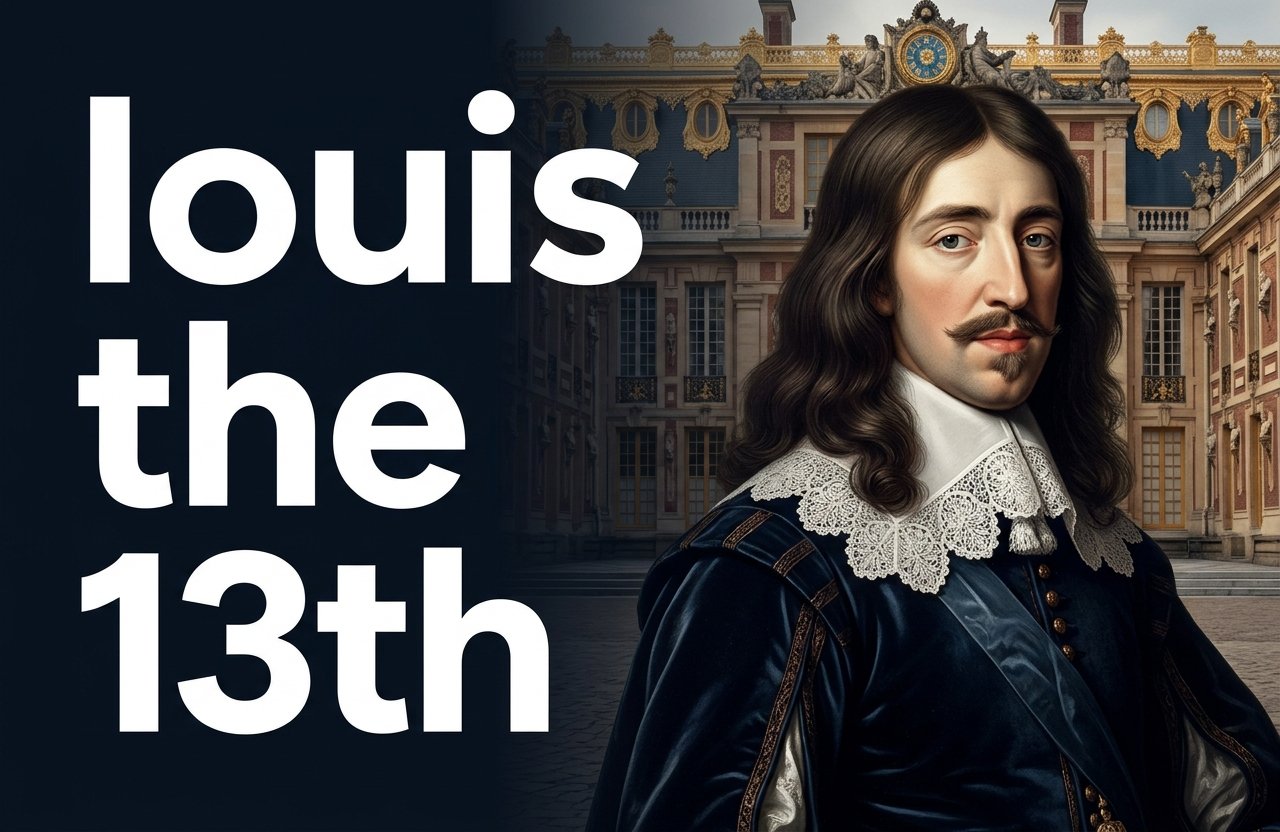
Louis the 13th: Life, Reign, Family, and Legacy
Louis the 13th, also known as Louis XIII of France, was a French king whose reign helped shape the country’s political power, royal traditions, and place in European history. Born on September 27, 1601, he became king in 1610 after the assassination of his father, Henry IV. He ruled until his death in 1643, a period marked by political struggles, religious tensions, military campaigns, and the growing influence of Cardinal Richelieu.
Although his son, Louis XIV, later became famous for transforming France into a symbol of royal grandeur, his father’s reign laid important foundations for that development. Louis the 13th worked to strengthen royal authority, manage powerful nobles, and reduce the influence of political rivals. His decision to support Richelieu also helped establish France as a stronger force in European affairs.
His life was more complex than the image of a distant monarch might suggest. He experienced a difficult childhood, conflict within his own family, political uncertainty, and the demands of ruling a kingdom divided by competing interests. He also enjoyed hunting, music, and court entertainment, and he played a direct role in the early development of Versailles.
Understanding his life offers a clearer picture of how France moved toward a more centralized monarchy during the seventeenth century. It also explains why the reign of this often-overlooked king remains important to historians studying the Bourbon dynasty, the Thirty Years’ War, and the rise of the French state.
Who Was Louis the 13th?
Louis XIII was King of France and Navarre from 1610 to 1643. He belonged to the House of Bourbon, a royal dynasty that became one of the most influential ruling families in European history.
He was the eldest son of Henry IV of France and Marie de’ Medici. His father had worked to restore stability after decades of religious conflict, including the French Wars of Religion. When Henry IV was assassinated in May 1610, Louis inherited the throne at only eight years old.
Because he was a child, his mother initially governed as regent. The early years of his reign were therefore shaped by disagreements over who should control the government and how France should be managed.
Louis gradually asserted his authority. In 1617, he moved against Concino Concini, a powerful figure associated with his mother’s administration. This political turning point helped him establish a more independent position at court.
His reign later became closely associated with Cardinal Richelieu, who served as his chief minister from 1624. Together, although their relationship involved complicated political choices, they pursued policies intended to strengthen the monarchy and limit threats from rival nobles and foreign powers.
Louis was not simply a figurehead who allowed his ministers to govern. He made important decisions, approved military operations, and supported policies that influenced France’s domestic and foreign affairs.
Louis the 13th at a Glance
Louis XIII of France
House of Bourbon
A monarch whose reign helped strengthen royal authority in seventeenth-century France.
Born
September 27, 1601
Died
May 14, 1643
Father
Henry IV
Mother
Marie de’ Medici
Wife
Anne of Austria
Son
Louis XIV
Reign: 1610 to 1643 | Chief minister: Cardinal Richelieu
Early Life and Childhood
Birth and Royal Family
Louis was born at Fontainebleau, a royal residence south of Paris, during a period when the French monarchy was recovering from serious religious and political divisions.
His father, Henry IV, had become king after years of conflict between Catholics and Protestants. His mother, Marie de’ Medici, came from the powerful Medici family of Florence, which had long been associated with European politics, finance, and cultural patronage.
As the first legitimate son of Henry IV, Louis was the heir to the French throne. His birth was important because it offered greater security for the Bourbon dynasty after years of uncertainty over the succession.
His childhood was shaped by royal ceremony, religious instruction, court politics, and preparation for kingship. Yet the political environment around him was not always stable.
The Assassination of Henry IV
On May 14, 1610, Henry IV was assassinated in Paris by François Ravaillac. The king’s death shocked the kingdom and abruptly changed the course of his young son’s life.
Louis was eight years old when he inherited the crown. He had little opportunity to develop political independence before becoming the formal head of the monarchy.
Marie de’ Medici assumed the regency, governing on his behalf while court advisers and noble families competed for influence. This arrangement was legally and politically significant, but it also created tensions over who truly controlled the state.
For Louis, the loss of his father meant more than a family tragedy. It left him to grow up in a court where political loyalty could shift quickly and where the authority of the king had to be protected against powerful rivals.
Education and Personal Development
Royal education during this period prepared princes for leadership, religion, warfare, diplomacy, and court life. Louis received instruction appropriate to his position, although accounts of his personality and private life should be considered in the context of the court culture in which they were recorded.
He developed interests in hunting, music, and practical activities. He was also known for his involvement in military matters and his attention to aspects of royal administration.
His personality has sometimes been portrayed as reserved or difficult to understand. However, judging a seventeenth-century monarch solely through modern expectations can be misleading. Court politics required caution, and rulers were often expected to control their public emotions while managing relationships that could affect the survival of their government.
The pressures of his childhood likely contributed to the importance he placed on personal authority. As he matured, he sought to move beyond his mother’s influence and become the recognized decision-maker in his own kingdom.
How Louis the 13th Took Control of France
Marie de’ Medici and the Regency
After Henry IV’s death, Marie de’ Medici governed France as regent. Her administration relied on advisers and court figures who sought to maintain royal authority while protecting their own interests.
The regency faced several challenges. Powerful nobles wanted greater influence, religious divisions remained unresolved, and France had to maintain diplomatic relationships with other European powers. The young king’s position made it easier for competing factions to influence government decisions.
Marie also pursued policies that differed from some of her late husband’s priorities. Her relationship with Spain, including the marriage arrangements involving her children, became part of a wider diplomatic strategy.
These decisions did not necessarily mean that the regency lacked a coherent purpose. Rather, they reflected the difficulty of governing a large kingdom in which royal authority had to coexist with aristocratic privilege and regional interests.
Nevertheless, Louis grew increasingly dissatisfied with the political arrangement surrounding him. His desire to exercise independent authority eventually produced a decisive confrontation.
The Political Turning Point of 1617
On April 24, 1617, Louis XIII moved against Concino Concini, the influential adviser who had become a major target of opposition at court. Concini was killed during the operation, and Marie de’ Medici’s political position weakened sharply.
The king’s action marked an important change in the government. Marie was removed from direct control and eventually sent away from the center of royal power.
Louis subsequently elevated Charles d’Albert de Luynes, one of his trusted associates, who became a leading political figure. This did not immediately produce a stable or highly effective administration, but it established that the king intended to rule in his own name.
The event illustrates an important feature of early modern monarchy: inheriting a crown did not automatically mean possessing effective control over the state. A king also needed political allies, military support, and the ability to manage powerful factions.
Louis had secured greater independence, but the monarchy still faced significant challenges. His government would have to deal with religious conflict, aristocratic resistance, and international rivalry.
Cardinal Richelieu and the Strengthening of Royal Power
Who Was Cardinal Richelieu?
Cardinal Armand Jean du Plessis, better known as Cardinal Richelieu, was a French churchman and statesman who became Louis XIII’s chief minister in 1624.
Richelieu is one of the most important figures associated with the king because he helped develop policies that strengthened the French crown and increased the country’s influence in Europe.
His objectives included limiting the independent political power of major nobles, addressing challenges to royal authority, and preventing rival European powers from dominating the continent.
Although Richelieu often appears in historical accounts as the central architect of French policy, his position depended on the king’s support. He could not exercise such extensive authority without royal approval, and Louis repeatedly demonstrated his willingness to stand behind him during political crises.
Their partnership was not a simple relationship between a powerful minister and a passive monarch. It was a working arrangement in which the minister developed and implemented policies while the king retained the authority to approve, reject, or redirect them.
Why Louis Supported Richelieu
Louis XIII had learned that royal authority could be weakened when powerful individuals operated independently of the crown. Richelieu shared the view that the monarchy needed stronger control over political and military affairs.
Their cooperation addressed several problems:
- Aristocratic resistance: Powerful nobles could organize opposition, challenge royal decisions, or seek influence through private alliances.
- Religious divisions: Protestant communities possessed important political and military strongholds that the crown sought to bring under closer control.
- Foreign competition: The Habsburg dynasties of Spain and the Holy Roman Empire presented major strategic challenges to France.
- Administrative control: Royal policy required more reliable enforcement across a kingdom with powerful regional traditions.
Richelieu’s approach was often firm, and his methods could be severe. Nevertheless, the broader objective was to make royal decisions more effective and reduce the ability of rival groups to undermine the government.
Louis’s support for the cardinal became one of the defining features of his reign.
The Day of the Dupes
The Day of the Dupes, which took place in November 1630, was a major political crisis involving Louis XIII, Richelieu, and Marie de’ Medici.
Marie had become a determined opponent of Richelieu and wanted her son to dismiss him. The confrontation threatened the cardinal’s position and raised questions about the direction of royal government.
Richelieu’s survival depended on the king’s decision. Louis ultimately maintained his confidence in the cardinal rather than granting his mother’s demand.
The episode was important because it demonstrated that Richelieu’s authority rested on the king’s continued support. It also weakened Marie’s political influence and confirmed the direction of the monarchy.
The event’s name suggests that one side had been deceived, but its deeper historical significance lies in the political outcome. Louis chose the minister whose policies he believed served the interests of the crown, even at the cost of further damaging his relationship with his mother.
It is a useful example of how personal relationships and state policy were closely connected in seventeenth-century European politics.
Religious Conflict and the Huguenots
Religion remained a major political issue throughout Louis XIII’s reign. France was predominantly Catholic, but Protestant communities, commonly known as Huguenots, had gained important rights and strongholds during earlier decades of conflict.
The Edict of Nantes, issued by Henry IV in 1598, had provided a framework for limited Protestant religious freedom and certain political protections. It helped reduce the violence that had troubled France, although it did not eliminate religious divisions.
Louis XIII’s government sought to strengthen the monarchy’s authority over Protestant political and military centers.
The Siege of La Rochelle
One of the most significant military campaigns of the reign was the siege of La Rochelle from 1627 to 1628.
La Rochelle was a major Protestant stronghold with strategic importance because of its location on the Atlantic coast. Its resistance challenged the crown’s ability to enforce its authority over a politically influential city.
The siege involved a lengthy military operation and a blockade that severely restricted supplies reaching the defenders. Richelieu played an important role in organizing the royal effort, while Louis XIII supported the campaign and participated in the broader military leadership.
The city surrendered in October 1628. Its defeat greatly reduced the ability of French Protestants to resist the monarchy through independent military power.
However, the consequences need to be understood carefully. The government’s victory did not immediately eliminate Protestant worship in France. The subsequent Peace of Alès in 1629 removed important Huguenot political and military privileges while preserving religious concessions in a more restricted form.
This distinction matters because political control and religious practice were not identical issues. The crown could weaken an armed opposition while continuing to permit certain forms of worship.
The campaign also demonstrated how royal authority was strengthened through coordinated military and administrative action.
The Limits of Religious Unity
Louis XIII’s policies reflected the priorities of a monarchy seeking greater control over its territory. Yet the pursuit of political unity created serious hardships and deepened mistrust among communities that feared losing their rights.
The government considered independent armed strongholds a threat to the state. Protestants, meanwhile, viewed the loss of their political protections as a danger to their security.
Both perspectives are necessary to understand the period. A purely royal account can overlook the experiences of religious minorities, while a purely religious account can miss the strategic concerns facing the crown.
The reign illustrates a wider historical problem: governments attempting to create a more centralized state often confronted communities that wanted to preserve their established privileges.
Louis the 13th and the Thirty Years’ War
The Thirty Years’ War, fought from 1618 to 1648, was one of the most destructive conflicts in European history. It began within the Holy Roman Empire but expanded into a wider struggle involving major European powers, dynastic rivalries, and religious disputes.
France did not enter the war directly against Spain and the Habsburg emperor until 1635, although it had supported opponents of Habsburg power before that formal declaration.
Why France Opposed the Habsburgs
The Habsburg family controlled extensive territories in Europe. Its Spanish and Austrian branches possessed political influence, military resources, and strategic positions that French leaders regarded as a potential threat.
France’s foreign policy under Louis XIII and Richelieu aimed to prevent the Habsburgs from becoming overwhelmingly powerful.
This strategy is sometimes described as a move toward raison d’état, or reason of state. In simple terms, it meant that the security and interests of the kingdom could take priority over religious solidarity.
France was a Catholic monarchy, yet it supported Protestant rulers and states when doing so helped counter Habsburg power. This apparent contradiction becomes easier to understand when foreign policy is viewed through the priorities of state security rather than religion alone.
France Enters the War in 1635
In 1635, France formally declared war on Spain, expanding its military commitment to the European conflict.
The decision exposed the kingdom to major financial and military pressures. Armies needed food, weapons, transport, and pay, while campaigns required cooperation among commanders and officials.
France experienced both setbacks and successes during the later years of Louis’s reign. Spanish forces threatened French territory in 1636, creating a serious crisis as they advanced toward Paris. The danger was eventually contained, but the episode showed that a stronger monarchy was not an invulnerable one.
The war continued after Louis XIII died. France’s eventual position at the end of the conflict was shaped by events during his son’s reign and the policies of later governments, so the final settlement should not be credited to Louis alone.
The Costs of War
The expansion of French power came at a considerable price. Military campaigns placed pressure on state finances and increased the burden on communities that supplied resources to the armies.
Ordinary people could suffer from taxation, requisitions, disrupted agriculture, and the movement of troops. The scale of these effects varied by region and circumstance, but warfare was not simply an exercise in royal strategy.
The king’s reign therefore presents two connected realities. The monarchy became more capable of pursuing ambitious foreign policies, but the means of doing so imposed serious costs on the population.
This balance is essential when evaluating the success of Louis XIII. His government strengthened France’s position, yet its achievements were accompanied by financial strain and human suffering.
Marriage to Anne of Austria and Royal Family
Who Was Anne of Austria?
Anne of Austria was the daughter of Philip III of Spain and the wife of Louis XIII. Despite her name, she was born into the Spanish Habsburg dynasty and became queen of France through her marriage to the French king.
Their marriage was arranged as part of a diplomatic strategy intended to improve relations between France and Spain. The couple married in November 1615, when Louis was fourteen years old and Anne was also a teenager.
The union was politically important because it connected two rival royal houses through marriage. However, a diplomatic marriage did not guarantee a close personal relationship, and the couple experienced difficulties during the early years of their union.
Anne’s Spanish origins also became a source of suspicion during periods of conflict between France and Spain. Her position required her to navigate the expectations of the French court while maintaining her identity as a member of the Spanish royal family.
Their Relationship and Family Life
The relationship between Louis and Anne developed within the formal and sometimes restrictive environment of a royal court. Their marriage was influenced by political expectations, court factions, and the king’s personal preferences.
For many years, they had no surviving children, creating uncertainty about the future of the Bourbon dynasty. The birth of an heir was not simply a private family matter. It was essential to the continuation of the ruling house and the stability of the succession.
The couple eventually had two sons who survived infancy:
- Louis XIV: Born on September 5, 1638, he became king after his father’s death in 1643.
- Philippe I, Duke of Orléans: Born on September 21, 1640, he became the founder of an important branch of the French royal family.
The birth of Louis XIV was particularly significant because it secured the direct succession after years of uncertainty. The king’s religious devotion also gave the event special meaning in his personal understanding of his reign.
Anne later served as regent for Louis XIV during his minority. Her political importance therefore continued well beyond her husband’s lifetime.
Louis XIII’s Relationship With His Mother
The relationship between Louis and Marie de’ Medici was among the most complicated family relationships of his life.
Marie had governed France during his childhood and initially held considerable influence over the government. As Louis grew older, however, he sought independence from her political circle.
Their conflict reached a decisive stage in 1617, when Louis moved against Concini and displaced his mother’s administration. Although they later experienced periods of reconciliation, the relationship remained affected by disagreements over political authority and Richelieu’s position.
Marie continued to oppose the cardinal, and the Day of the Dupes demonstrated that her influence had diminished in comparison with the alliance between the king and his minister.
Their history shows how family relationships in royal households could become struggles over state power. The interests of a mother, son, minister, and ruling dynasty were not always aligned.
Louis XIII’s Personality, Interests, and Private Life
Historical accounts often describe Louis XIII as reserved, serious, and deeply interested in activities that offered a degree of privacy. These descriptions can help readers understand his character, but they should not be treated as a complete or unquestionable psychological profile.
Much of what is known about royal personalities comes from court records, memoirs, portraits, and accounts written by people who had their own political or personal perspectives.
His Love of Hunting
Hunting was one of Louis XIII’s most important interests. It was both a leisure activity and a traditional practice of European aristocratic culture.
For a king, hunting could provide opportunities to leave the pressures of court life, spend time with trusted companions, and participate in a pastime associated with royal status.
His enthusiasm for hunting also had a lasting effect on the geography of French royal history. His visits to Versailles helped turn a relatively modest rural location into a royal retreat.
The connection between his private interests and royal architecture is especially revealing. Versailles did not begin as the enormous ceremonial palace associated with Louis XIV. Its earliest royal development reflected his father’s preference for hunting and seclusion.
Music and the Arts
Louis XIII was also interested in music and court entertainment. Music played a major role in royal ceremonies, celebrations, and the presentation of monarchy.
His cultural interests were part of a broader court tradition in which the arts supported royal prestige and offered entertainment to the king and his household.
The cultural life of France expanded significantly during the seventeenth century, although the spectacular reputation of the French court is more strongly associated with Louis XIV’s later reign.
It is important not to confuse the two periods. Louis XIII helped establish some of the traditions that his son later developed on a much larger scale.
Was Louis XIII a Weak King?
The idea that Louis XIII was weak often arises from the prominence of Richelieu in accounts of his reign. Because the cardinal exercised extensive influence, readers may assume that the king played a limited role.
That interpretation overlooks the political authority Louis exercised at important moments.
He removed Concini, resisted his mother’s attempt to dismiss Richelieu, supported major military campaigns, and approved the government’s wider strategic direction.
At the same time, it would be misleading to portray him as an all-powerful ruler who controlled every event. His government depended on ministers, military commanders, financiers, and local officials. The monarchy also faced practical limits imposed by money, geography, and resistance from powerful groups.
A more balanced assessment is that Louis XIII strengthened the crown by choosing to support a government committed to centralization, while retaining the ultimate authority to make important political decisions.
The Early Development of Versailles
The relationship between Louis XIII and Versailles is one of the most lasting parts of his legacy.
Today, the Palace of Versailles is widely associated with Louis XIV, whose extensive building campaigns transformed it into a magnificent royal residence. However, the site’s history began under his father.
Why Did Louis XIII Choose Versailles?
Louis XIII first visited Versailles as a child on a hunting trip in 1607. He later developed a stronger interest in the area because of its surrounding forests and its convenient position between Paris and Saint-Germain-en-Laye, another royal residence.
In 1623, he decided to establish a small hunting lodge at Versailles. The building offered a place to rest during hunting trips and an escape from the demands of the main court.
The original residence was modest compared with the palace that exists today. It was designed for practical use rather than for the elaborate ceremonies that would later define Versailles.
The king began rebuilding and enlarging the residence in 1631, and work continued during the following years. These changes established the architectural foundation that Louis XIV would later preserve and expand.
How His Son Transformed the Estate
Louis XIV inherited the estate after his father’s death. As an adult, he developed a much larger vision for Versailles, eventually making it the principal seat of the French court and government in 1682.
The contrast between father and son is important.
Louis XIII valued Versailles as a retreat connected with hunting and privacy. Louis XIV transformed it into a center of political administration, court ceremony, and royal representation.
The estate therefore represents both continuity and change. The son built upon his father’s foundation, but he gave the location a new purpose and scale.
For further historical context, the official Palace of Versailles history of Louis XIII explains the king’s reign and his connection to the estate.
Why Versailles Matters to His Legacy
Louis XIII’s contribution to Versailles is easy to overlook because the later palace became so closely associated with his son.
Yet the original hunting lodge reveals something important about royal life during his reign. The king sought a place where he could pursue personal interests away from the most demanding parts of court life.
That choice also helped establish a location that would become one of the most recognizable symbols of French monarchy.
His legacy at Versailles was therefore indirect but substantial. He created the starting point for a development that his son would turn into a political and cultural landmark.
Major Achievements of Louis XIII
Evaluating a historical monarch requires more than listing victories or important dates. It also requires considering how decisions affected the government, the population, and the country’s future.
Louis XIII’s major achievements can be understood through several connected areas.
1. Strengthening the French Monarchy
The crown became more effective at challenging powerful nobles and enforcing royal policy during his reign.
This did not mean that aristocratic influence disappeared. Noble families continued to possess wealth, status, and political connections. Nevertheless, the monarchy increasingly sought to prevent them from operating as independent centers of power.
2. Reducing Huguenot Military Independence
The siege of La Rochelle and the Peace of Alès weakened the military and political privileges previously held by French Protestant communities.
These developments strengthened the state’s control over territory, but they also reduced protections that had helped maintain a negotiated settlement between religious groups.
The achievement must therefore be assessed alongside its consequences for religious minorities.
3. Expanding France’s Strategic Influence
Louis XIII and Richelieu pursued a foreign policy aimed at limiting Habsburg dominance. France’s entry into the war against Spain in 1635 was a major step in that strategy.
The conflict continued after the king’s death, and France’s eventual success depended on later rulers and commanders. Even so, his reign helped establish the strategic direction followed by subsequent French governments.
4. Establishing the Foundations of Versailles
The hunting lodge built under Louis XIII became the starting point for the palace developed by Louis XIV.
Although the later estate was far larger and more influential, its royal origins belong to the earlier reign.
5. Securing the Bourbon Succession
The birth of Louis XIV in 1638 ensured that the monarchy had a direct male heir. His younger son, Philippe, provided an additional line of succession.
This was particularly important after years of uncertainty about the royal couple’s ability to produce surviving children.
Challenges and Controversies During His Reign
The reign of Louis XIII was not an uninterrupted story of growing power. His government faced serious political, religious, military, and financial challenges.
Aristocratic Resistance
Powerful nobles often viewed royal centralization as a threat to their traditional privileges. Some resisted government decisions, organized political alliances, or sought to influence the king through court factions.
Efforts to reduce their independence strengthened the monarchy but also created enemies and periods of instability.
Financial Pressure
Warfare, administration, and royal policy required substantial resources. The French state did not possess the same modern tax systems or administrative reach as a contemporary government.
Raising money could be difficult, and the burdens associated with military operations affected communities across the kingdom.
The crown’s expanding ambitions therefore depended on its ability to mobilize resources without provoking resistance that threatened its authority.
Religious Tensions
The defeat of Huguenot military strongholds increased royal control, but it did not eliminate religious divisions.
Policies that reduced Protestant political independence also created concerns about religious security and the future of established rights.
The tension between state authority and religious freedom remained an important feature of French history long after Louis XIII’s death.
The Burden of European Warfare
France’s conflict with Spain and the wider Thirty Years’ War brought opportunities to challenge rival powers, but they also exposed the country to military setbacks and financial strain.
War could strengthen the position of the monarchy while making life more difficult for people who had little influence over royal strategy.
A complete assessment of Louis XIII must recognize both outcomes.
Timeline of Louis XIII’s Life and Reign
The following timeline highlights the events that shaped his life and the development of the French monarchy.
| Year | Event | Historical significance |
| 1601 | Louis XIII is born at Fontainebleau. | Establishes the direct heir to Henry IV. |
| 1607 | Visits Versailles as a child. | Introduces him to the area that later becomes his hunting retreat. |
| 1610 | Henry IV is assassinated, and Louis becomes king. | Begins a long reign under the Bourbon dynasty. |
| 1615 | Marries Anne of Austria. | Strengthens diplomatic ties between the French and Spanish royal houses. |
| 1617 | Moves against Concini and asserts independent authority. | Marks a major shift in control of the government. |
| 1623 | Establishes a hunting lodge at Versailles. | Begins the site’s development as a royal residence. |
| 1624 | Richelieu becomes chief minister. | Establishes the central political partnership of the reign. |
| 1627 to 1628 | Royal forces besiege La Rochelle. | Weakens Huguenot military independence. |
| 1629 | Peace of Alès is concluded. | Reduces Protestant political and military privileges. |
| 1630 | Day of the Dupes crisis. | Confirms the king’s support for Richelieu. |
| 1631 | Rebuilding of the Versailles residence begins. | Expands the king’s rural retreat. |
| 1635 | France declares war on Spain. | Intensifies its involvement in European power struggles. |
| 1638 | Louis XIV is born. | Secures the direct royal succession. |
| 1640 | Philippe, Duke of Orléans, is born. | Provides another surviving son and dynastic line. |
| 1642 | Cardinal Richelieu dies. | Ends a defining ministerial partnership. |
| 1643 | Louis XIII dies at Saint-Germain-en-Laye. | His five-year-old son succeeds him as Louis XIV. |
Death of Louis XIII and the Succession
Louis XIII died on May 14, 1643, at Saint-Germain-en-Laye, after a reign lasting more than three decades. He was forty-one years old.
Historical accounts associate his final illness with tuberculosis. As with many medical descriptions from the seventeenth century, modern readers should recognize that diagnoses made before modern medical testing were based on the knowledge and observations available at the time.
His death came only months after Richelieu’s death in December 1642. The two men had worked together for nearly two decades, and their deaths marked the end of a major phase in French political history.
Louis XIV Becomes King
Louis XIII’s eldest son, Louis XIV, inherited the throne at the age of four, with his fifth birthday still several months away.
Because the new king was a child, his mother, Anne of Austria, became regent. Cardinal Jules Mazarin emerged as the leading minister and continued many aspects of the policies developed under Richelieu.
The political problems facing the government did not disappear when Louis XIII died. France remained involved in the wider European war, while tensions between the monarchy, nobles, and other political institutions continued.
Louis XIV would later become famous for his long reign and the expansion of royal authority. However, his achievements cannot be understood without considering the political structures, diplomatic strategies, and military commitments inherited from his father.
The Historical Legacy of Louis XIII
The legacy of Louis XIII is best understood as part of a longer process rather than as a single transformation completed during his lifetime.
He did not create the fully developed system of royal government associated with Louis XIV, nor did he personally complete the military and diplomatic objectives pursued by France during the later seventeenth century. His reign nevertheless contributed to the conditions that made those developments possible.
His Influence on French Absolutism
Absolutism is a term historians use to describe political systems in which monarchs claimed extensive authority over government and sought to reduce competing sources of power.
Louis XIII’s reign contributed to this trend by supporting efforts to limit aristocratic independence and strengthen central government.
However, the term should not suggest that the king possessed unlimited control. Royal power depended on cooperation from officials, nobles, military commanders, and local authorities. Financial limitations and regional differences also constrained the government’s ability to enforce its decisions.
The historical importance of his reign lies in the gradual strengthening of royal institutions, not in the sudden creation of an all-powerful state.
His Influence on Louis XIV
Louis XIV inherited a monarchy that had already spent decades challenging rival centers of authority.
The policies supported by Louis XIII and Richelieu helped establish a strategic and administrative foundation for the later expansion of royal power. The younger king and his ministers developed that foundation further, but their achievements also reflected their own decisions and the circumstances of a different generation.
It would therefore be inaccurate to attribute everything associated with Louis XIV’s government to his father. A better interpretation recognizes the connection between the two reigns while preserving their differences.
His Place in European History
Louis XIII played a significant role in the struggle between France and the Habsburg powers. His government’s foreign policy helped prepare the way for France’s later position as a leading European power.
The consequences of that policy extended beyond his death. The war continued, diplomatic relationships changed, and later French governments pursued many of the same strategic objectives.
His reign illustrates how decisions made by one generation of rulers can shape the options available to their successors.
Why He Is Less Famous Than Louis XIV
Louis XIV’s reputation is supported by his exceptionally long reign, the transformation of Versailles, and the elaborate ceremonies associated with his court.
Louis XIII’s achievements were less visually dramatic. They centered on political consolidation, military strategy, and the strengthening of royal authority.
These developments can be harder to explain through a single famous monument or event, but they were important to the evolution of the French state.
The contrast between the two kings also shows why historical fame and historical importance are not always the same thing. The more famous ruler may inherit conditions that were established by someone whose achievements receive less public attention.
Frequently Asked Questions About Louis the 13th
1. Who was Louis the 13th?
Louis XIII was King of France and Navarre from 1610 until 1643. He was the son of Henry IV and Marie de’ Medici and the father of Louis XIV. His reign is remembered for strengthening royal authority and supporting Cardinal Richelieu.
2. How old was Louis XIII when he became king?
He was eight years old when his father, Henry IV, was assassinated in May 1610. His mother initially governed as regent until Louis gradually established independent control of the monarchy.
3. Who was Louis XIII’s wife?
His wife was Anne of Austria, a Spanish-born Habsburg princess. They married in 1615 and had two surviving sons, Louis XIV and Philippe, Duke of Orléans.
4. Why was Cardinal Richelieu important to Louis XIII?
Richelieu was the king’s chief minister from 1624 and helped strengthen central government, limit the political independence of powerful nobles, and challenge Habsburg influence in Europe. His policies depended on the king’s support.
5. Did Louis XIII build the Palace of Versailles?
Louis XIII established a hunting lodge at Versailles in 1623 and began rebuilding it in 1631. His son, Louis XIV, later transformed the original residence into the much larger palace associated with the French monarchy.
6. How did Louis XIII die?
Louis XIII died on May 14, 1643, at Saint-Germain-en-Laye, aged forty-one. His death ended a reign of thirty-three years, and his young son Louis XIV inherited the throne.
Conclusion
Louis XIII occupies an important place in French history because his reign helped strengthen the monarchy during a period of political instability, religious conflict, and international competition. From his difficult childhood and struggle to establish independent authority to his partnership with Cardinal Richelieu, his life reflects the challenges of governing a powerful European kingdom in the seventeenth century.
His government reduced the military independence of French Protestant communities, challenged aristocratic resistance, and pursued a foreign policy designed to limit Habsburg dominance. These measures increased the French crown’s influence, although they also brought financial pressures, political conflict, and hardship for parts of the population.
His personal interests also left a lasting mark. The hunting lodge he established at Versailles became the foundation for the extraordinary palace developed by his son, Louis XIV.
Ultimately, the reign of Louis XIII should be understood as a period of preparation and consolidation. He did not accomplish everything later associated with French absolutism, but he helped establish important political and strategic foundations for the next generation. His legacy becomes clearer when his achievements, limitations, and historical circumstances are considered together.