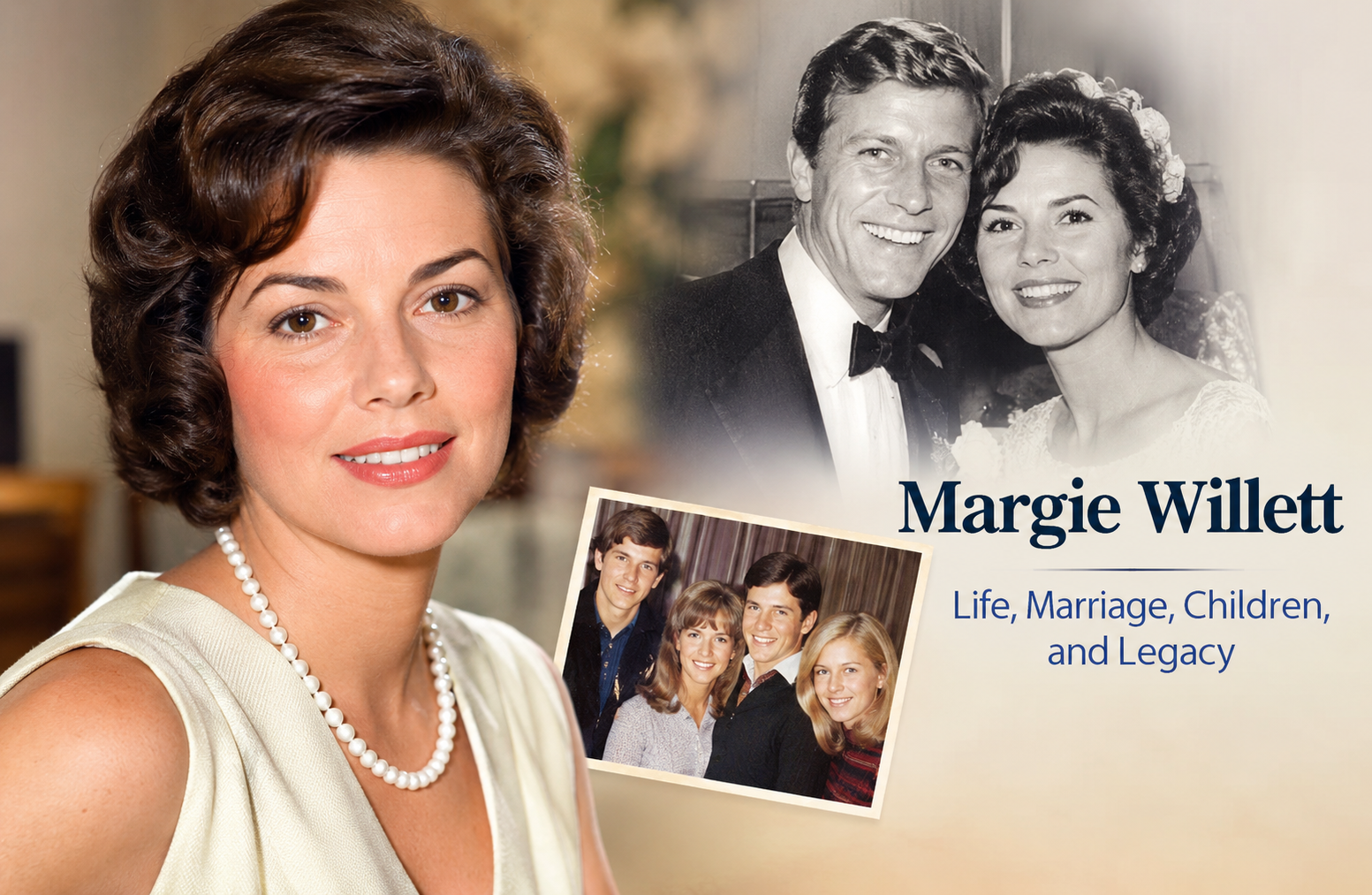
Margie Willett: Life, Marriage, Children, and Legacy
Margie Willett is best known as the first wife of legendary American actor and comedian Dick Van Dyke, but her life story extends beyond her connection to a famous entertainer. The story of Margie Willett includes a marriage that began before Hollywood fame, the experience of raising four children, the pressures that accompanied a long relationship in the public eye, and a personal life that remained largely private. Although millions of people recognize Van Dyke for his work in television and film, much less is publicly documented about the woman who shared his early adult years. Understanding her story requires looking beyond celebrity headlines and separating established biographical facts from details that remain uncertain.
Willett’s life offers an interesting perspective on the difference between public recognition and private influence. She married Van Dyke in 1948, long before his best-known performances made him an international star. Their marriage lasted until their divorce in 1984, and together they raised four children: Christian, Barry, Stacy, and Carrie Beth. Willett did not pursue the same public career as her husband, which helps explain why information about her childhood, personal ambitions, and later years is relatively limited. Her biography is therefore best understood through the milestones that can be established, the family she helped raise, and the importance of respecting the boundaries of a person who did not seek celebrity status.
Margie Willett: Biography at a Glance
Margie Willett, also known as Margerie Willett in some biographical accounts, became publicly known through her relationship with Dick Van Dyke. She was born around 1927, according to commonly cited biographical records, and is associated with Danville, Illinois. She married Van Dyke in 1948 and became the mother of four children. Their marriage officially ended in divorce in 1984. Willett died in 2008, aged 81, according to published biographical accounts and Van Dyke’s later recollections.
The following table summarizes the main details commonly reported about her life.
| Detail | Information |
| Name | Margie Willett, also known as Margerie Willett |
| Birth year | Commonly reported as 1927 |
| Birthplace | Danville, Illinois, United States, according to biographical accounts |
| Nationality | American |
| Known for | Being Dick Van Dyke’s first wife |
| Husband | Dick Van Dyke |
| Marriage year | 1948 |
| Divorce year | 1984 |
| Children | Christian, Barry, Stacy, and Carrie Beth |
| Death year | 2008 |
| Reported age at death | 81 |
| Public career | No widely documented independent entertainment career |
These details provide a useful starting point, but they should not be mistaken for a complete record of Willett’s life. Her exact birth date, education, professional history, and many personal experiences are not consistently documented in authoritative public sources. Some online biographies present specific details without providing enough evidence to verify them.
That distinction matters because a reliable biography should not fill gaps with assumptions. Willett’s relative absence from public records does not make her story less meaningful. It simply means that the available evidence must guide what can responsibly be said about her.
Who Was Margie Willett?
Margie Willett was a private individual whose public identity became connected to one of America’s most recognizable entertainers. Unlike actors, television personalities, or public figures who build careers through interviews and public appearances, she remained largely outside the entertainment industry.
Her significance to popular culture comes mainly from her marriage to Van Dyke during the years before and during his rise to fame. Their relationship began when both were young, and it continued through major changes in his professional life. The marriage brought them four children and placed Willett close to the personal side of a career that eventually included television classics and internationally recognized films.
However, it would be misleading to describe her entire life through her husband’s achievements. Van Dyke’s career is extensively documented because he worked in a highly visible profession. Willett’s life followed a different path, and the absence of a comparable public record makes it difficult to reconstruct her independent interests, beliefs, or ambitions.
A careful account should recognize both facts: her marriage is central to the publicly documented story, but her identity was not limited to being a celebrity’s wife.
Why Is Margie Willett Still a Subject of Interest?
Interest in Willett continues because audiences often want to understand the personal histories behind well-known entertainers. People who watch Van Dyke’s classic television performances or films may become curious about the family life that existed before those successes.
Several questions repeatedly arise:
- Who was Dick Van Dyke’s first wife?
- How did the couple meet and marry?
- How many children did they have?
- Why did their marriage end?
- What happened to Willett after the divorce?
- When did she die, and what is known about her later life?
These questions are reasonable, but they do not all have equally complete answers. Marriage dates and the names of the couple’s children are more firmly documented than many details about Willett’s private life.
This difference between established information and speculation is one of the most important considerations when researching her biography.
Margie Willett’s Early Life and Background
Margie Willett is commonly reported to have been born in 1927 and to have grown up in or around Danville, Illinois. The city is also associated with Van Dyke’s early life. Their shared Midwestern background forms an important part of the story of their relationship.
Beyond these broad details, reliable information about Willett’s childhood is limited. Publicly available biographies do not consistently establish the names of her parents, her school history, or the full details of her family circumstances. It is therefore not possible to provide a complete, verified account of her upbringing.
This lack of information should be treated as a limit of the historical record rather than an invitation to invent a more detailed narrative.
Life Before Hollywood Fame
The timing of Willett’s relationship with Van Dyke is important. They married in 1948, when he was still building his career and had not yet achieved the national recognition that would later define his professional life.
This means Willett knew him during a period very different from the one most audiences associate with his name. The future television star was not yet the established entertainer familiar to viewers of The Dick Van Dyke Show or audiences of Mary Poppins.
Their early years belonged to a period of uncertainty and professional development. Entertainment careers can involve unstable employment, financial pressure, irregular schedules, and long periods of work without guaranteed success. These are common challenges for performers, although the exact details of how the couple managed each difficulty should not be assumed without supporting evidence.
The most useful point is the chronology: their marriage began before Van Dyke’s major professional breakthroughs. Their relationship was already established when his career expanded.
What Is Known About Her Education and Career?
There is no consistently documented public record establishing Willett’s educational qualifications or a long-term independent professional career. Some online sources make additional claims about her work or personal interests, but such claims should be checked against stronger evidence before being repeated as fact.
She is not widely associated with acting, comedy, television production, or another entertainment profession. Her public profile developed primarily through her family connection to Van Dyke.
That does not mean she lacked interests, skills, or accomplishments outside the public eye. It means that those aspects of her life are not sufficiently documented to support a detailed factual account.
For readers researching a private person connected to a celebrity, this is an important lesson: a limited public biography should not be confused with a limited personal life.
How Margie Willett Met Dick Van Dyke
Willett and Van Dyke came from the same broader community in Illinois, and their relationship began before either had become a major public figure. Accounts of Van Dyke’s early life describe a romance that developed when they were young adults.
The precise details of their first meeting and the early stages of their courtship are not equally well documented across all sources. The strongest biographical narrative focuses on the established relationship and the marriage that followed rather than attempting to recreate private conversations or scenes for which there is no reliable evidence.
What is clear is that their relationship preceded the fame that later made their marriage a subject of public curiosity.
A Relationship Before Celebrity Status
Relationships that begin before a person’s professional success can face a distinctive set of changes. The couple may initially share similar expectations about money, time, and family life. As one partner’s career grows, the demands on the relationship can change.
For a performer, success may bring travel, public attention, demanding schedules, and periods of physical absence from home. The partner outside the spotlight may experience those changes without receiving the same public recognition or professional rewards.
These are general pressures that can affect couples in entertainment, not a complete description of Willett’s personal experience. Still, the chronology of her marriage makes the subject relevant. She married Van Dyke before his best-known career achievements and remained married to him as he became a major television and film personality.
That long period of change helps explain why people remain interested in the relationship. It also shows why the marriage should be understood as a substantial chapter in both their personal histories rather than simply a brief celebrity romance.
Margie Willett and Dick Van Dyke’s Wedding
One of the most distinctive details in Willett’s biography is her wedding to Van Dyke on February 12, 1948. The couple married on the radio program Bride and Groom at the Chapman Park Hotel in Los Angeles.
According to the biographical account on Dick Van Dyke’s official website, the wedding took place while Van Dyke was appearing at the Chapman Park Hotel. Their marriage was established years before the actor became a household name.
Why Was Their Wedding Unusual?
The couple’s wedding is remembered partly because it was connected to a radio program rather than being only a private ceremony. Radio entertainment had a major role in American popular culture during the 1940s, before television became the dominant medium in many households.
Programs built around personal stories, music, comedy, and audience participation could bring ordinary people into public broadcasts. A wedding featured on such a program was therefore different from a conventional ceremony attended only by family and friends.
The couple’s limited financial resources during their early years are also frequently mentioned in accounts of their wedding. Their participation in the broadcast helped make the occasion possible during a time when they were not financially established.
This detail provides useful historical context. Their marriage began in a period when Van Dyke was still developing his professional prospects, not at the height of his celebrity.
It also offers a contrast with the entertainment industry that later surrounded him. The wedding was part of an early chapter in his life, before major film roles, awards, and decades of public recognition.
What the Wedding Tells Us About Their Early Marriage
The wedding’s significance is not simply that it was unusual. It represents the beginning of a relationship that lasted more than three decades before divorce.
The couple went on to raise four children and navigate the transition from a relatively private young marriage to one connected to a nationally recognized entertainer. Their story therefore reflects a longer period of family life than the wedding anecdote alone might suggest.
At the same time, the ceremony does not tell us everything about their relationship. A memorable wedding cannot establish whether a marriage was consistently happy, how disagreements were resolved, or what either partner privately experienced over the following years.
A balanced biography uses the wedding as a documented milestone without turning it into proof of a romantic narrative that the historical record cannot fully support.
Margie Willett’s Marriage During Dick Van Dyke’s Rise to Fame
After their marriage in 1948, Willett and Van Dyke built a family while his career developed. Van Dyke eventually became widely recognized for his work in television, film, and musical comedy.
His best-known projects include The Dick Van Dyke Show, which aired from 1961 to 1966, and the Disney film Mary Poppins, released in 1964. He also appeared in productions such as Bye Bye Birdie and Chitty Chitty Bang Bang.
These achievements established him as a prominent entertainer. They also made his personal life more interesting to audiences who wanted to know about the people closest to him.
The Difference Between Public Success and Private Life
A successful entertainment career can transform a family’s circumstances. Professional opportunities may bring greater financial stability, but they can also create new pressures involving time, travel, public attention, and competing responsibilities.
For couples, the challenge is not only adapting to a new lifestyle. It is also maintaining communication and shared expectations while one partner’s professional world changes rapidly.
Willett experienced the years in which Van Dyke moved from early career uncertainty into established stardom. However, there is not enough publicly verified information to describe every aspect of how she personally responded to these changes.
It would be inaccurate to portray her as either the sole source of her husband’s success or as someone whose entire life was defined by his career. The more defensible conclusion is that she was his spouse during a formative period and helped raise their children while his public profile expanded.
Her Position Outside the Entertainment Spotlight
Willett did not develop the same public identity as her husband. She was not known for regular interviews, a personal entertainment brand, or an extensive collection of public appearances.
This difference helps explain why her biography is much less detailed than Van Dyke’s. A celebrity’s professional activities generate records, reviews, interviews, photographs, and archival material. A private person’s life may leave far fewer accessible sources.
Her limited public presence also means that claims about her personality need to be handled carefully. Descriptions such as reserved, private, or uninterested in celebrity culture appear in biographical accounts, but they should not be expanded into unsupported claims about her thoughts or motivations.
The clearest fact is that her public profile remained closely tied to the family she shared with Van Dyke rather than to a separate career in entertainment.
Margie Willett’s Four Children
One of the most significant parts of Willett’s life was her role as a mother. She and Dick Van Dyke had four children: Christian, Barry, Stacy, and Carrie Beth.
Their family grew while Van Dyke’s career was developing, placing the children within a household connected to the entertainment industry. Each child followed a different path, although several had some connection to acting or television.
The following overview separates the widely reported family details from the assumptions that should be avoided.
1. Christian Van Dyke
Christian Van Dyke is the eldest of the couple’s four children. Published family profiles report that he was born in 1950.
Unlike his father, Christian did not become equally well known as a major film or television performer. Biographical accounts describe his later professional life as including legal work.
His story demonstrates that children of well-known entertainers do not necessarily follow the same career path as their parents. Growing up in a recognizable family may create opportunities and public curiosity, but it does not determine an individual’s profession.
Because Christian has maintained a comparatively lower public profile than his father, detailed claims about his personal circumstances should be based on reliable reporting rather than repeated from unsourced celebrity websites.
2. Barry Van Dyke
Barry Van Dyke is the couple’s second child and the one most visibly associated with his father’s acting career.
Born in 1951, Barry followed a path into television and acting. He became particularly familiar to viewers through his work alongside Dick Van Dyke in Diagnosis: Murder, the television series that aired from 1993 to 2001.
Their professional collaboration gave audiences an opportunity to see a father and son working together on screen. It also extended the family’s public connection to entertainment beyond Dick Van Dyke’s individual career.
Barry’s experience illustrates how an established family connection can become part of a later professional identity. However, his work should also be recognized on its own terms rather than treated merely as an extension of his father’s fame.
3. Stacy Van Dyke
Stacy Van Dyke is another of Willett’s children. She has been associated with acting and television appearances, including work connected to productions involving her father.
Her public profile is considerably smaller than Dick and Barry Van Dyke’s. As a result, reliable information about her career and private life is more limited.
This distinction is important when researching celebrity families. A relative may have appeared in television productions without maintaining a long-term public career. Occasional credits should not automatically be treated as evidence of a sustained professional path.
Information about Stacy should therefore remain focused on established biographical details, without assuming that every online claim about her life is accurate.
4. Carrie Beth Van Dyke
Carrie Beth Van Dyke is the youngest of the four children. Published family profiles identify her as the couple’s youngest daughter and report that she had some television-related appearances.
Compared with her father and brother Barry, Carrie Beth has maintained a more private public presence. That makes detailed information about her personal life less readily available.
Her place in the family is nevertheless a central part of Willett’s biography. The couple’s four children represent one of the clearest and most lasting connections between their lives, regardless of how visible each child became to the public.
How Did Family Life Shape Willett’s Legacy?
Willett’s children form an important part of the public record associated with her. They also help explain why interest in her continues decades after her marriage ended.
Two of the children, Barry and Stacy, have been associated with acting, while Christian and Carrie Beth have had more limited public profiles. Their different paths underline the fact that one family’s members can experience fame, work, and privacy in very different ways.
It is reasonable to recognize Willett’s place in raising this family. It is not reasonable, however, to invent details about her parenting style, private conversations, or the precise division of family responsibilities without credible evidence.
The strongest conclusion is that motherhood was a major documented part of her life and that the family she helped build remains central to her public biography.
Challenges in Margie Willett and Dick Van Dyke’s Marriage
The marriage between Willett and Van Dyke lasted from 1948 until their divorce in 1984. Although that is a period of 36 years, the length of a marriage does not reveal everything about its quality or the experiences of the people within it.
Their relationship unfolded alongside major changes in Van Dyke’s career and personal life. Over time, the couple faced difficulties that contributed to the eventual end of their marriage.
The Pressure of a Long Marriage
Long-term relationships can change as partners move through different stages of life. Early expectations may be affected by work, parenting, financial responsibilities, personal development, and changing priorities.
These challenges are not unique to celebrities. What makes a high-profile relationship different is the possibility that private difficulties may become part of public discussion.
In Willett’s case, the public record provides a broad outline of the marriage and its eventual end, but it does not provide a complete account of every disagreement or turning point.
A careful biography should avoid presenting speculation as certainty. The marriage’s duration is established, as is the divorce. A more detailed psychological explanation of their relationship would require stronger evidence than celebrity summaries alone can provide.
Dick Van Dyke’s Personal Struggles
Van Dyke has spoken publicly about personal difficulties during his life, including struggles with alcohol and problems in his relationships. His later recollections have helped explain aspects of the period when his first marriage was under strain.
These accounts offer context for understanding why the marriage eventually ended, but they should not be used to assign every aspect of the relationship to one person or one event.
Willett herself left a much smaller public record, so her own perspective is not equally available. The imbalance in surviving accounts makes it especially important not to claim that her private feelings, decisions, or reasons for remaining in the marriage are fully known.
The fairest interpretation acknowledges the difficulties discussed in Van Dyke’s accounts while recognizing that a relationship involves two people whose experiences cannot always be reconstructed from one person’s recollections.
Why Did Margie Willett and Dick Van Dyke Divorce?
Willett and Van Dyke divorced in 1984 after a long separation. Their marriage had lasted 36 years, but the relationship did not continue permanently.
Van Dyke’s public recollections have connected the breakdown of the marriage with personal struggles and relationship difficulties. These are relevant parts of the history, but the available record does not justify reducing the entire marriage to a single cause.
Understanding the Timeline
The broad timeline is straightforward:
- 1948: Willett and Van Dyke married.
- 1950s and 1960s: They raised their children while Van Dyke’s entertainment career developed.
- Later years of the marriage: Personal and relationship difficulties contributed to a prolonged separation.
- 1984: Their divorce was finalized.
- 2008: Willett died, according to published biographical accounts.
The timeline helps clarify a point that celebrity coverage sometimes obscures: the marriage’s legal end came after decades together, and the separation preceded the final divorce.
Was the Divorce a Public Scandal?
The relationship has been discussed in connection with Van Dyke’s later statements about his personal life. Nevertheless, Willett herself did not become a highly visible public commentator on the marriage.
That means the available narrative is not equally balanced between the two former spouses. Readers may encounter extensive explanations of Van Dyke’s feelings and decisions but comparatively little direct testimony from Willett.
This imbalance should not be mistaken for evidence that she had no perspective or that her experience can be summarized by other people’s accounts. It simply reflects the limits of what is publicly documented.
A responsible article can explain the established chronology and the broad difficulties that have been reported without turning private pain into entertainment or claiming to know every reason behind the divorce.
The end of the marriage was an important transition in Willett’s life, but it did not erase her identity as an individual or as the mother of four children.
Margie Willett’s Life After Divorce
After the divorce in 1984, Willett largely remained outside the public spotlight. Unlike her former husband, whose professional life continued to generate interviews, television appearances, and entertainment news, she did not maintain a comparable public presence.
This makes the years after the marriage one of the least documented periods of her biography. Some online articles offer detailed accounts of her residence, daily activities, relationships, or personal decisions, but not all of these claims can be independently verified.
The most responsible approach is to acknowledge what is known without inventing a detailed private life.
Did Margie Willett Remarry?
There is no widely established, reliable public record confirming that Willett remarried after her divorce from Van Dyke.
That does not prove that every aspect of her later romantic life is known. It simply means that claims about a subsequent marriage should not be presented as established fact without credible documentation.
Her private life after 1984 was not extensively covered by mainstream entertainment reporting. Consequently, readers should be cautious about websites that confidently describe relationships or personal circumstances without identifying their sources.
Did She Continue to Avoid Public Attention?
Willett’s limited public presence after the divorce is consistent with the relatively small amount of information available about her life throughout the marriage.
However, it is important to distinguish an observable fact from an assumption about motivation. Her absence from entertainment news does not establish exactly why she chose privacy or what she thought about her former husband’s continued fame.
The available record supports a simple conclusion: she did not become a major public personality in her own right, and the details of her later years remain limited.
Privacy should not be treated as a mystery that must be solved by speculation. In biographical writing, respecting the limits of the record is often more informative than repeating unsupported claims.
When Did Margie Willett Die?
Margie Willett died in 2008 at the reported age of 81. Published biographical accounts identify pancreatic cancer as the cause of her death, a detail also associated with Dick Van Dyke’s later recollections.
Her death marked the end of a life that had been connected to a major period in American entertainment history, even though she had never sought the same level of public recognition as her former husband.
What Is Known About Her Final Years?
Reliable public information about Willett’s final years is limited. Unlike celebrities whose health conditions are regularly covered by news organizations, she did not have a continuous public profile that documented her later life.
It is therefore difficult to reconstruct her final years in detail. Specific claims about her daily routine, medical treatment, residence, or personal relationships should not be accepted without reliable supporting evidence.
The reported cause of death is useful biographical information, but it does not justify expanding her medical history beyond what has been publicly established.
Why Is Her Exact Birthday Difficult to Confirm?
Many online biographies give 1927 as Willett’s birth year, but an exact birth date is not consistently established in widely accessible, authoritative sources.
When a person’s date of birth is uncertain, it is better to report the commonly cited year and avoid supplying an exact day and month simply to make a biography appear more complete.
The same principle applies to other details of her life. A trustworthy account should distinguish between information that is widely supported and information that remains uncertain.
Remembering Her Beyond Her Death
Willett’s story continues to attract attention because it intersects with the life of a celebrated entertainer. Yet her biography is not solely a record of marriage, separation, and death.
She was part of a family that developed over several decades and raised four children. Her life also illustrates how a person can be connected to a major public figure without becoming a public figure themselves.
That distinction is especially important when writing about people who left limited personal testimony. Their lives should be treated with care rather than reduced to a collection of dramatic headlines.
Margie Willett’s Net Worth and Financial Life
One common question about Willett concerns her net worth. The difficulty is that there is no widely verified public financial record establishing her personal wealth at the time of her death.
Some celebrity biography websites publish estimated net worth figures for people who were married to famous actors. Such figures can appear precise, but a number is not reliable simply because it is repeated across several websites.
Was Margie Willett Wealthy?
It is not possible to establish Willett’s personal net worth confidently from the available public information.
Van Dyke’s long career in television, film, and entertainment does not automatically establish Willett’s individual wealth. A spouse’s earnings, a couple’s shared financial arrangements, and an individual’s assets are different matters.
A reliable estimate would require credible information about assets, income, liabilities, and any relevant financial settlements. Without that evidence, publishing a specific dollar amount would create a false impression of certainty.
Why Online Net Worth Estimates Can Be Misleading
Celebrity wealth estimates frequently combine assumptions about career earnings, property, investments, and lifestyle. Those calculations may be particularly unreliable for people who did not have public careers of their own.
For Willett, the lack of a documented independent entertainment career makes it even more important not to infer a personal fortune from her former husband’s professional success.
The most accurate answer is that her net worth has not been reliably established in the public record.
Margie Willett’s Legacy and Historical Significance
Willett’s legacy is best understood through three connected aspects of her life: her long marriage to Van Dyke, her role in raising their four children, and her decision to remain outside the level of public attention associated with her former husband’s career.
Her story is relevant to entertainment history because it belongs to the period before Van Dyke became a household name and continued through his rise to prominence. She was part of his personal life during decades of professional and family change.
A Life Connected to Entertainment History
Van Dyke’s television and film work has remained familiar to successive generations. As a result, audiences continue to explore his biography, including his early family life and first marriage.
Willett’s name appears in that history because their relationship began before his best-known achievements. Understanding the chronology provides a fuller picture of the personal circumstances surrounding his rise to fame.
However, her importance should not be measured only by how closely she was connected to a famous person. Her life had its own private dimensions, even if those dimensions are not comprehensively documented.
The Importance of Family
Willett and Van Dyke raised four children whose lives followed different paths. Barry’s acting career created a particularly visible connection to his father’s profession, while the other children maintained varying degrees of public visibility.
The family’s history is a lasting part of Willett’s biography. It provides a more substantive way to understand her place in the story than focusing only on the circumstances of the divorce.
At the same time, responsible reporting should avoid presenting assumptions about family relationships as facts. A family’s public history is only one part of its experience, and not every private detail needs to be disclosed to create a meaningful biography.
The Value of Privacy in a Celebrity Culture
Willett’s life offers a useful reminder that public interest and public knowledge are not the same thing.
When an entertainer becomes famous, people connected to that individual may attract attention even if they have never chosen a public career. Over time, repeated articles can create the impression that every detail of their lives is known.
In reality, repetition does not establish accuracy. A claim copied by multiple websites may still originate from an unsupported source.
A better approach is to prioritize well-documented milestones, explain uncertainty clearly, and avoid turning missing information into invented stories. This approach gives readers a more trustworthy understanding of the person involved.
For Willett, the established facts already provide a meaningful account: a marriage beginning in 1948, four children, a divorce in 1984, and a death reported in 2008. Those milestones are significant without embellishment.
Frequently Asked Questions About Margie Willett
1. Who was Margie Willett?
Margie Willett was an American woman best known as the first wife of actor and comedian Dick Van Dyke. They married in 1948, raised four children together, and divorced in 1984. She largely stayed out of the public spotlight.
2. When did Margie Willett marry Dick Van Dyke?
Margie Willett married Dick Van Dyke on February 12, 1948. Their wedding took place at the Chapman Park Hotel in Los Angeles and was featured on the radio program Bride and Groom.
3. How many children did Margie Willett have?
She had four children with Dick Van Dyke: Christian, Barry, Stacy, and Carrie Beth. Barry became an actor and worked with his father on television, including the series Diagnosis: Murder.
4. Why did Margie Willett and Dick Van Dyke divorce?
The couple divorced in 1984 after a long separation. Van Dyke’s public recollections have discussed personal struggles and relationship difficulties during the marriage. The complete private experience of both partners is not fully documented.
5. When did Margie Willett die?
Margie Willett died in 2008 at the reported age of 81. Published biographical accounts identify pancreatic cancer as the cause of her death.
6. What was Margie Willett’s net worth?
Her personal net worth has not been reliably established in public sources. Online estimates should be treated cautiously because there is insufficient verified financial information to confirm a specific figure.
Conclusion
Margie Willett’s life is an important part of Dick Van Dyke’s personal history, but it should not be reduced to her marriage to a famous entertainer. Their relationship began in 1948, before Van Dyke achieved widespread recognition, and lasted until their divorce in 1984. Together, they raised four children: Christian, Barry, Stacy, and Carrie Beth.
Willett’s life remained largely private, leaving fewer reliable records than those available for her former husband. Although her early background, independent career, finances, and final years are not comprehensively documented, the established milestones provide a meaningful account of her life.
Her story also highlights an important principle in celebrity biography: a person’s connection to fame does not mean every part of their life is publicly known. The most useful and trustworthy account distinguishes verified facts from uncertain details, respects personal privacy, and avoids presenting speculation as history.
Margie Willett remains a subject of interest because she was part of a long marriage, a family of four children, and a significant chapter in the life of one of America’s best-known entertainers. Her biography is most accurately understood through those documented connections and the recognition that some parts of her personal story remain private.