Rick Ross Net Worth: How the Rapper Built His Fortune
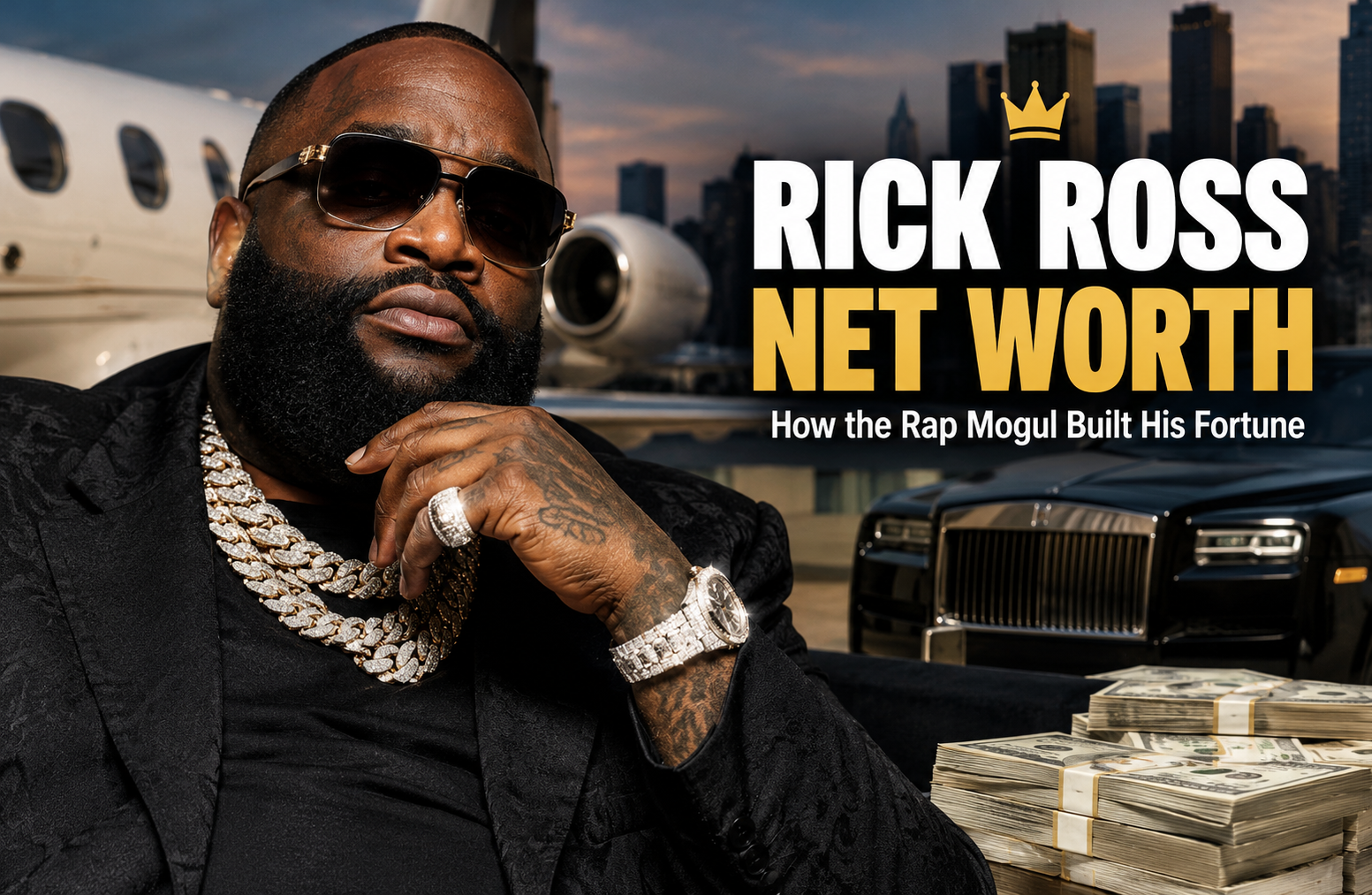
Rick Ross net worth is a popular topic among hip-hop fans, music enthusiasts, and people interested in celebrity businesses. Best known for his deep voice, luxury lifestyle, successful albums, and entrepreneurial mindset, Rick Ross has developed a financial empire that extends far beyond the music industry. From owning Wingstop restaurant franchises to investing in real estate, launching business partnerships, and building Maybach Music Group, he has created several sources of income over the years.
As of October 2026, publicly available celebrity wealth estimates generally place his fortune between $150 million and $180 million. However, these figures are estimates rather than officially confirmed financial statements. Ross has not released a complete public breakdown of his assets, investments, debts, and personal earnings. Therefore, understanding his wealth requires looking at the businesses, properties, music royalties, and professional opportunities that have contributed to his financial success.
What makes his financial journey particularly interesting is how he transformed his reputation as a successful rapper into a recognizable business brand. Instead of depending entirely on album sales and concerts, he expanded into industries that could generate income outside his music career.
This article explores his estimated wealth, early life, music career, business investments, restaurant ownership, real estate portfolio, luxury assets, and the financial strategies that helped him build a multimillion-dollar empire.
Rick Ross Net Worth in 2026: How Much Is He Worth?
Rick Ross has an estimated net worth of approximately $150 million to $180 million in 2026, based on publicly available celebrity wealth estimates.
Different entertainment and celebrity finance publications report different figures. Wealthy Gorilla has published an estimate of approximately $150 million, while Celebrity Net Worth currently lists $180 million. These differences demonstrate why celebrity wealth figures should not be treated as exact financial information.
For a balanced understanding, it is important to examine the underlying business activities rather than relying on one headline number.
Ross has developed several income-producing interests, including:
- Music sales and streaming royalties.
- Concert performances and live entertainment.
- Maybach Music Group.
- Wingstop restaurant franchises.
- Luxury beverage partnerships.
- Real estate investments.
- Brand collaborations and promotional agreements.
- Books and other entertainment projects.
These activities create multiple potential revenue streams. However, their individual contributions to his personal wealth are not publicly disclosed.
Rick Ross Net Worth Quick Facts
| Category | Details |
| Professional name | Rick Ross |
| Real name | William Leonard Roberts II |
| Date of birth | January 28, 1976 |
| Age | 50 years (2026) |
| Birthplace | Clarksdale, Mississippi, USA |
| Nationality | American |
| Profession | Rapper, songwriter, entrepreneur |
| Record label | Maybach Music Group |
| Breakthrough single | Hustlin’ |
| Debut studio album | Port of Miami |
| Main income sources | Music, businesses, real estate |
| Estimated net worth | $150 million to $180 million |
| Famous property | The Promise Land |
The most important distinction is that net worth does not mean annual income.
A person can own valuable businesses and properties without having the same amount of money available in cash. Business expenses, outstanding loans, taxes, maintenance costs, and other financial obligations must also be considered.
This distinction is especially important when evaluating someone with a business portfolio as extensive as Ross’s.
Who Is Rick Ross?
Rick Ross is an American rapper, songwriter, record executive, and entrepreneur. His real name is William Leonard Roberts II.
He became widely recognized in the mid-2000s after releasing the successful single “Hustlin’.” The song introduced his distinctive musical style and helped establish him as an important figure in mainstream hip-hop.
Ross became known for his powerful delivery, detailed storytelling, luxury-themed lyrics, and collaborations with major artists.
Throughout his career, he has worked with several prominent musicians, including:
- Jay-Z
- Kanye West
- Drake
- Lil Wayne
- Meek Mill
- Wale
- T-Pain
- French Montana
- Chris Brown
His musical success helped him establish a recognizable personal brand. Over time, he used that recognition to pursue business opportunities outside the recording industry.
Unlike artists who primarily depend on music-related income, Ross developed interests in restaurants, real estate, luxury beverages, and entertainment.
His career demonstrates how an established artist can use professional visibility to create additional business opportunities.
Early Life and Background
Rick Ross was born on January 28, 1976, in Clarksdale, Mississippi. He later grew up in Carol City, Florida, where his interest in music and ambition developed.
His childhood environment played an important role in shaping his personality and future career.
Before becoming a successful recording artist, Ross experienced a very different lifestyle from the luxury image associated with him today.
He attended Miami Carol City Senior High School, where he participated in football. He later attended Albany State University in Georgia on a football scholarship.
However, his long-term ambitions eventually moved toward music.
His early life also influenced his interest in financial independence. In later interviews, Ross discussed how his mother influenced his thinking about money and property ownership.
She worked as a registered nurse and had experience purchasing real estate. Ross has explained that observing her approach to property helped him understand the importance of investing in tangible assets.
This influence became particularly visible when he started purchasing large properties and expanding his business interests.
His Career Before Musical Success
Before achieving mainstream recognition, Ross worked as a correctional officer in Florida.
This part of his background attracted considerable public attention after he became famous.
Although his early professional life was very different from his later identity as a rapper, it demonstrates that his career did not begin with immediate financial success.
He eventually left that profession and focused on developing his music career.
His transition required persistence, industry relationships, and the ability to establish a distinctive identity in a competitive entertainment market.
How Rick Ross Became Famous
Rick Ross’s major breakthrough came in 2006 with the release of “Hustlin’.”
The single quickly gained attention because of its memorable production, confident delivery, and recognizable hook.
It helped him attract interest from major record labels and created opportunities that eventually changed his financial position.
The Success of Hustlin’
“Hustlin'” became one of the defining records of Ross’s early career.
The song received significant radio attention and helped him develop an audience beyond Florida.
Its popularity also contributed to a competitive bidding situation involving major music industry companies.
This exposure helped him secure a recording deal with Def Jam Recordings.
For an emerging artist, securing a major-label opportunity can provide access to professional production, marketing, distribution, and industry relationships.
However, a recording contract does not automatically make an artist wealthy.
The actual financial benefit depends on contract terms, recording costs, advances, royalty arrangements, and commercial performance.
Ross’s breakthrough gave him the foundation to build a longer-lasting career.
Port of Miami: His Debut Album
Released: August 8, 2006
His debut studio album, Port of Miami, was a major commercial achievement.
The project debuted at number one on the Billboard 200, establishing Ross as a serious presence in mainstream hip-hop.
The album included popular tracks such as:
- “Hustlin'”
- “Push It”
- “Speedin'”
- “Blow”
The commercial success of the album provided a stronger financial foundation through recording revenue, performances, and increased public recognition.
It also helped him establish the audience necessary to support future releases.
Trilla and Continued Success
Released: 2008
Ross continued his momentum with Trilla in 2008.
The album also reached number one on the Billboard 200.
Its success demonstrated that his debut was not simply a temporary achievement.
He was developing a consistent commercial presence and building a catalog that could continue generating attention over time.
The album featured collaborations and tracks that helped strengthen his reputation within the industry.
Teflon Don and His Musical Reputation
Released: 2010
Teflon Don became another important project in Ross’s career.
The album included popular songs such as “B.M.F. (Blowin’ Money Fast)” and “Aston Martin Music.”
It helped establish his position as an influential mainstream rapper.
The success of these releases also increased his ability to negotiate business opportunities, collaborate with established performers, and develop his own record label.
His music career became the starting point for a much broader business strategy.
How Does Rick Ross Make His Money?
Understanding his income sources is essential to understanding his overall financial position.
His wealth is not connected to one single business. Instead, it comes from a combination of entertainment, commercial partnerships, property investments, and business ownership.
The following sections explain the major activities associated with his financial success.
1. Music Sales, Streaming, and Royalties
Music remains one of the foundations of Rick Ross’s career.
Over several years, he has released commercially successful albums, singles, collaborations, and other recordings.
These projects can generate income through several channels.
Album Sales
Traditional album sales helped establish Ross’s early financial success.
When an album performs well commercially, the artist may receive income through contractual royalty arrangements.
However, the amount an artist personally earns depends on several factors, including:
- Record label agreements.
- Production and recording expenses.
- Distribution arrangements.
- Publishing ownership.
- Artist royalty percentages.
- Marketing and promotional costs.
This is why album sales figures cannot simply be converted into an artist’s personal earnings.
A successful album can generate substantial commercial revenue while the artist receives only a portion of the total amount.
Music Streaming
Digital streaming has changed the way musicians earn money.
Platforms such as Spotify, Apple Music, and Amazon Music provide another route for established artists to monetize their recordings.
Ross has an extensive music catalog containing popular songs that continue to attract listeners.
Every eligible stream contributes to revenue distributed through the relevant recording and publishing arrangements.
However, streaming payments are not fixed personal payments for every play.
The amount depends on platform agreements, rights ownership, distribution arrangements, and other factors.
Publishing and Songwriting Income
Music publishing is another important area of the recording business.
Songwriters and publishers may earn royalties when compositions are used in different commercial settings.
These can include:
- Radio broadcasts.
- Public performances.
- Television programs.
- Films.
- Commercial advertisements.
- Digital music services.
The exact publishing income Ross receives has not been publicly disclosed.
Nevertheless, a successful catalog can remain commercially valuable long after an album’s original release.
This is one reason established artists often continue earning from music even when they are not releasing new material every year.
2. Maybach Music Group
Maybach Music Group, commonly known as MMG, is one of Ross’s most important business ventures.
He founded the label in 2009 and developed it into a recognizable name within hip-hop.
The company provided an opportunity for Ross to move beyond being only a recording artist.
Instead, he became involved in artist development, music releases, branding, and record label operations.
Artists Associated With Maybach Music Group
Several recognizable musicians have been associated with MMG over the years.
These include:
- Meek Mill
- Wale
- French Montana
- Omarion
- Gunplay
- Stalley
Their association with the label helped increase its visibility and commercial influence.
How a Record Label Can Generate Income
A record label can earn money through different arrangements.
Depending on its agreements, revenue may come from:
- Distribution agreements.
- Recording projects.
- Master recording ownership.
- Publishing arrangements.
- Artist development deals.
- Licensing opportunities.
- Music-related brand partnerships.
However, owning or operating a record label does not mean receiving every dollar generated by its artists.
Contracts determine how income is divided between the label, performers, producers, publishers, and distributors.
The specific financial structure of MMG is not fully public.
Nevertheless, establishing a record label gave Ross another commercial platform and expanded his influence in the music industry.
3. Wingstop Restaurant Franchises
One of the most recognizable parts of Rick Ross’s business portfolio is his involvement with Wingstop.
Unlike many celebrities who simply promote products through advertising campaigns, Ross has been publicly identified as a restaurant franchise owner.
This is an important distinction because franchise ownership can create a different type of financial opportunity.
In a 2021 interview with Forbes, Ross discussed his expansion from 10 Wingstop franchises to more than 25.
He also explained that his mother and sister helped manage the restaurant operations.
This provides a useful example of how his business interests developed beyond his musical career.
How Wingstop Franchises Generate Revenue
Wingstop operates through a restaurant franchise model.
Franchise owners operate individual locations under the company’s established brand and business system.
A franchise location can generate revenue through:
- In-store food purchases.
- Online orders.
- Delivery services.
- Takeaway orders.
- Promotional campaigns.
- Repeat customers.
However, restaurant revenue is not the same as profit.
A restaurant owner must account for expenses such as:
- Employee salaries.
- Food and ingredient costs.
- Rent and property expenses.
- Utilities.
- Insurance.
- Equipment maintenance.
- Franchise fees.
- Marketing expenses.
- Taxes.
The remaining amount after expenses contributes to the business’s operating profit.
The owner may also need to reinvest part of the earnings into equipment, staffing, renovations, or additional locations.
Why Restaurant Ownership Matters to His Wealth
Restaurant franchises can provide income that is separate from music releases and live performances.
A successful location can continue serving customers regardless of whether its owner releases an album that year.
Owning multiple locations also creates opportunities to expand operations.
For Ross, this business activity demonstrates a move toward assets that can operate through professional management teams.
However, the exact current number of locations under his ownership and their individual profitability should not be assumed from older interviews.
It is also important to understand that Ross owns franchise interests, not the Wingstop corporation itself.
4. Luc Belaire and Beverage Partnerships
Another recognizable business association is Ross’s relationship with Luc Belaire.
The premium sparkling wine brand has become closely connected with his public image.
His involvement has included promotional activities, brand appearances, and ambassador-style partnerships.
This relationship fits naturally with his music identity because luxury, celebrations, and premium lifestyle products have been recurring themes in his public persona.
How Beverage Partnerships Can Create Income
Celebrity beverage partnerships can be structured in several ways.
For example, an agreement might include:
- Promotional payments.
- Marketing appearances.
- Licensing arrangements.
- Revenue-sharing agreements.
- Equity participation.
- Long-term brand partnerships.
However, not every celebrity partnership includes ownership.
Some agreements are based on promotional services, while others may involve a financial interest in the business.
Ross’s exact compensation and ownership arrangements with Luc Belaire have not been publicly established in a complete financial breakdown.
Therefore, it would be inaccurate to assign a specific dollar amount to this partnership.
Still, the relationship demonstrates how his public recognition can create commercial opportunities beyond music.
5. Real Estate Investments
Real estate is another major part of Ross’s business identity.
He has repeatedly discussed his interest in purchasing land and large properties.
His approach to property investment has been influenced by his family background, particularly his mother’s experience with real estate.
Rather than treating every property as simply a luxury purchase, Ross has discussed the importance of land ownership and the potential to develop properties over time.
The Promise Land Estate
The Promise Land is probably the most famous property associated with Rick Ross.
Located in Fayetteville, Georgia, the estate was previously owned by former professional boxer Evander Holyfield.
Ross purchased the property in 2014 for approximately $5.8 million.
The estate became particularly famous because of its enormous size and luxury features.
Its reported features include:
- Extensive land surrounding the main residence.
- Multiple bedrooms and entertainment spaces.
- A large swimming pool.
- A basketball court.
- A bowling alley.
- An indoor swimming pool.
- Extensive outdoor grounds.
- Space for private events.
The property has also attracted attention from the entertainment industry.
It was used as a filming location for the 2021 movie Coming 2 America, in which it represented the fictional Zamunda palace.
In a 2021 Forbes interview, Ross explained that the property was more than a luxury home. He discussed his plans and ideas for using the land creatively.
These included possibilities such as residential development, an amphitheater, and a golf course.
This shows that he has viewed the property as a potential long-term investment rather than simply an expensive place to live.
How The Promise Land Can Generate Income
Large properties can provide commercial opportunities beyond residential use.
Depending on local regulations and ownership arrangements, potential income sources may include:
- Film and television location rentals.
- Private events.
- Commercial photography.
- Entertainment productions.
- Property development.
- Land appreciation.
The estate’s use in Coming 2 America provides a documented example of how a private property can generate entertainment-related income.
Ross discussed receiving more than $2.5 million for allowing producers to use the property as one of the film locations.
This demonstrates the commercial potential of owning distinctive real estate.
However, that payment should not be confused with annual rental income or the property’s current market value.
Additional Land Purchases
Ross has also expanded the land associated with his Georgia estate.
According to his Forbes interview, he purchased another 87 acres adjacent to the original property in 2019 for approximately $1 million.
Additional land can increase the property’s development possibilities.
It may also provide greater privacy, space for entertainment activities, and long-term investment opportunities.
Florida Real Estate
Ross has also owned properties in Florida.
In 2021, Forbes reported that he purchased a resort-style property in Southwest Ranches for approximately $3.5 million.
The property previously belonged to former NBA player Amar’e Stoudemire.
The home included several luxury features, including:
- Six bedrooms.
- Seven bathrooms.
- A gym.
- A home theater.
- A nine-car garage.
- Extensive outdoor entertainment space.
These purchases demonstrate his interest in combining luxury living with property ownership.
It is important to remember that the purchase prices of these homes do not establish their current market values.
Property prices can change because of location, market conditions, renovations, maintenance, and demand.
Additionally, outstanding mortgages and ownership expenses affect the actual equity associated with a property.
6. Concerts and Live Performances
Live performances are another important source of income for successful recording artists.
Ross has performed at concerts, festivals, private events, music tours, and entertainment venues.
Established artists can earn substantial performance fees depending on their popularity, event size, location, and contractual arrangements.
Concert-related income can come from:
- Ticketed performances.
- Music festivals.
- Private appearances.
- International tours.
- Corporate entertainment.
- Special guest appearances.
However, gross performance fees are not equal to personal profit.
Artists often have to pay management commissions, travel expenses, musicians, production teams, security, and other operational costs.
A large concert may generate considerable revenue while leaving a smaller amount as the artist’s actual earnings.
Ross’s established catalog and recognizable stage presence help maintain opportunities in live entertainment.
His music career therefore remains financially relevant even as his business interests continue expanding.
7. Books and Publishing Projects
Ross has also explored the publishing industry.
One of his notable books is Hurricanes: A Memoir, which shares details about his life, career, personal experiences, and professional journey.
He also wrote The Perfect Day to Boss Up: A Hustler’s Guide to Building Your Empire.
These projects allow him to communicate his business philosophy and personal experiences to readers.
Books can generate income through:
- Physical book sales.
- Digital editions.
- Audiobook sales.
- Publishing royalties.
- Promotional appearances.
- Speaking opportunities.
For established celebrities, books also provide an opportunity to strengthen their personal brands.
Although publishing is unlikely to be the primary driver of Ross’s estimated fortune, it adds another dimension to his professional portfolio.
8. Brand Collaborations and Business Partnerships
Ross has developed relationships with companies operating in different industries.
These partnerships allow him to use his public image and professional network to promote products and participate in commercial opportunities.
His business interests have included partnerships and collaborations involving:
- Luxury beverages.
- Entertainment brands.
- Lifestyle products.
- Cannabis-related brands.
- Technology and health-related businesses.
One example discussed in his 2021 Forbes interview was his $1 million investment in Jetdoc, a Florida-based telehealth startup, where he described his involvement as an equity partner, advisor, and spokesperson.
He has also discussed partnerships involving Cookies.
These examples show that his entrepreneurial interests have not been limited to restaurants and real estate.
However, the value of an investment depends on the company’s financial performance, ownership percentage, liabilities, and eventual business outcomes.
An announced investment should not automatically be counted as a successful financial return.
Rick Ross’s Luxury Lifestyle and Expensive Assets
11
Ross is widely associated with an extravagant lifestyle.
His public appearances frequently feature expensive vehicles, designer clothing, luxury properties, and large entertainment spaces.
These purchases have helped establish his image as one of hip-hop’s most recognizable luxury-focused personalities.
However, luxury assets should be considered separately from income-producing businesses.
A vehicle may have a high purchase price but also require insurance, maintenance, storage, and depreciation expenses.
The same applies to large homes, private aircraft, and other expensive possessions.
1. Luxury Car Collection
Ross has developed a widely publicized collection of vehicles.
His collection has included luxury automobiles, classic cars, customized vehicles, and high-performance models.
Some of the brands associated with his collection include:
- Rolls-Royce.
- Ferrari.
- Lamborghini.
- Mercedes-Benz.
- Chevrolet.
- Maybach.
His collection reflects his personal interest in automotive design and luxury vehicles.
Although some vehicles may retain value or become collectible, most automobiles involve ongoing expenses and can depreciate over time.
It would therefore be misleading to treat the purchase price of every vehicle as an increase in personal net worth.
2. Private Aircraft
Ross has also been associated with private aviation through reports about a Gulfstream G550 aircraft.
Private aircraft ownership can be expensive because of:
- Purchase costs.
- Maintenance.
- Fuel.
- Insurance.
- Crew salaries.
- Hangar fees.
- Regulatory requirements.
The exact current market value and financial ownership structure of any aircraft should be independently established before including it in a wealth calculation.
Aircraft associated with a celebrity may also be owned through a company or another legal entity.
This distinction matters because public association does not necessarily establish personal ownership.
3. Luxury Properties
His Georgia and Florida properties are among the most visible parts of his luxury lifestyle.
These properties have also attracted commercial attention because of their distinctive architecture, extensive grounds, and entertainment potential.
Unlike ordinary consumer purchases, real estate can appreciate over time.
However, appreciation is not guaranteed.
A property’s actual contribution to net worth depends on its current market value, outstanding debt, ownership structure, and associated expenses.
Rick Ross Net Worth Compared With His Income Sources
The following table summarizes the main activities associated with his financial portfolio.
| Income source | Financial contribution |
| Music catalog | Recordings and royalties |
| Concerts | Performance fees |
| Maybach Music Group | Label and music business income |
| Wingstop franchises | Restaurant business profits |
| Luc Belaire | Brand partnership opportunities |
| Real estate | Property equity and potential income |
| Books | Publishing royalties |
| Brand partnerships | Promotional and investment opportunities |
One important limitation is that there is no verified public breakdown showing exactly how much each category contributes to his estimated wealth.
Assigning specific percentages to these activities would create a false impression of financial accuracy.
Nevertheless, the variety of these activities helps explain why Ross is considered more than a successful recording artist.
How Rick Ross Built Wealth Beyond Music
The most interesting part of Ross’s financial journey is not simply the amount of money he is estimated to possess.
It is the way he expanded his earning opportunities.
Many musicians generate most of their income from recordings, tours, and promotional appearances.
Ross has pursued a different approach by developing interests in businesses that can operate independently of his recording schedule.
Several important principles can be identified from his career.
1. Building Multiple Income Streams
One business can experience financial difficulties because of changing consumer behavior, competition, or economic conditions.
Having different income sources can reduce dependence on any single industry.
Ross’s interests in music, restaurants, real estate, and commercial partnerships demonstrate this approach.
However, diversification does not eliminate financial risk.
Each business still requires careful management and can experience losses.
2. Turning Public Recognition Into Business Opportunities
A successful artist develops something that businesses value: public attention.
A recognizable name can help introduce a product to potential customers.
Ross has used his music career and personal brand to create opportunities in food, beverages, entertainment, and other industries.
This is an example of how professional reputation can become a commercial asset.
However, a famous name alone does not guarantee business success.
The underlying product, customer demand, management, and financial structure still matter.
3. Investing in Physical Assets
Ross has publicly discussed his preference for real estate and tangible investments.
His Georgia property is a particularly clear example.
Rather than simply purchasing a large residence, he has explored different ways to use the surrounding land.
This approach demonstrates how an asset can potentially serve multiple purposes.
It can provide personal enjoyment, generate rental income, and create future development opportunities.
4. Building Long-Term Business Relationships
Successful businesses often depend on relationships with suppliers, managers, partners, investors, and customers.
Ross’s career has involved relationships across the entertainment and commercial industries.
These connections can create opportunities that are difficult to develop through individual effort alone.
5. Understanding Ownership Versus Promotion
One of the most valuable distinctions in celebrity entrepreneurship is the difference between promoting a product and owning part of a business.
A promotional agreement may provide short-term compensation.
An ownership interest may offer participation in long-term business growth, although it also carries financial risk.
Ross’s restaurant franchise interests provide a useful example of business ownership beyond ordinary celebrity endorsements.
What Makes Rick Ross’s Business Strategy Different?
Ross’s financial development offers an interesting case study in the relationship between entertainment and entrepreneurship.
His public identity was initially built around music.
However, his later activities show how an artist can use an established audience to explore completely different markets.
There are three particularly important aspects of this approach.
His Businesses Are Not All Dependent on Music
Restaurant franchises can serve customers without requiring a new album.
Real estate can generate income through appropriate commercial uses.
Books can continue selling after their initial publication.
These activities provide opportunities outside the traditional music release cycle.
His Personal Brand Supports Commercial Visibility
His recognizable personality and luxury-focused image make him commercially identifiable.
This can help brands attract attention and develop marketing campaigns.
However, commercial success still depends on the quality of the products and the terms of the agreements.
He Has Developed an Interest in Land Ownership
Real estate has remained a visible part of his investment philosophy.
His comments about purchasing land and developing the Promise Land show that he sees property as something that can offer opportunities beyond immediate consumption.
This is one of the clearest examples of his long-term business thinking.
Financial Challenges and Risks Behind His Wealth
Although Ross has achieved considerable commercial success, building and maintaining a large financial portfolio is not without challenges.
His public lifestyle can make wealth appear simpler than it actually is.
In reality, owning multiple businesses and valuable properties creates financial responsibilities.
Business Operating Expenses
Restaurant franchises require employees, supplies, rent, insurance, maintenance, and management.
Even a successful restaurant can experience reduced profitability if expenses increase.
Multiple locations create additional administrative responsibilities.
Real Estate Maintenance
Large estates can be extremely expensive to maintain.
Costs may include landscaping, repairs, security, property taxes, insurance, and utilities.
A property with extensive grounds can require significant resources even when it is not being used commercially.
Market Uncertainty
Music consumption changes over time.
Streaming platforms, audience preferences, and record industry contracts can affect royalty income.
Likewise, restaurant businesses face competition and changing customer demand.
Real estate values can also rise or fall depending on economic conditions.
Debt and Financial Obligations
A person may own valuable assets while also having substantial financial liabilities.
For example, a property worth millions of dollars may have an outstanding mortgage.
The owner’s equity is the property value minus the relevant debt and other liabilities.
This is why a celebrity’s visible assets cannot independently establish personal net worth.
Managing Different Industries
Running a restaurant business is different from managing a record label.
Real estate investment also requires a different set of skills.
Each industry has its own regulations, operating costs, and management requirements.
A diversified portfolio can create more opportunities, but it also increases the need for experienced professionals and effective financial planning.
Is Rick Ross a Billionaire?
No publicly verified financial information establishes Rick Ross as a billionaire.
The widely circulated celebrity wealth estimates discussed in 2026 place him around $150 million to $180 million.
That is an enormous amount of wealth, but it remains substantially below the $1 billion threshold.
It is important to distinguish between a celebrity’s public image and verified financial status.
Owning expensive properties, restaurants, and luxury vehicles does not automatically make someone a billionaire.
A billionaire must have a net worth of at least $1 billion after accounting for liabilities.
There is no reliable public financial disclosure establishing that Ross has reached this level.
What Can We Learn From Rick Ross’s Financial Journey?
Ross’s career provides several useful lessons about building wealth and developing business opportunities.
These lessons are relevant beyond the music industry.
Start With Your Existing Skills
Ross initially developed his reputation through music.
His artistic career provided the audience and recognition that later supported his business interests.
This demonstrates the importance of developing expertise in an area where someone has a competitive advantage.
Think Beyond Your Primary Profession
A person does not necessarily have to depend on one source of income throughout their entire career.
Professionals can explore opportunities in other industries once they have developed sufficient knowledge, resources, and experience.
Learn From Experienced People
Ross has discussed how his mother influenced his interest in property investment.
This highlights the value of learning from people with practical experience.
Financial knowledge does not always come from formal education alone.
It can also develop through observation, mentorship, and real-world decision-making.
Understand the Difference Between Revenue and Profit
A business can generate millions in sales while producing a much smaller profit.
Business owners must account for expenses, taxes, financing, and reinvestment.
This is particularly important when evaluating celebrity-owned restaurants and other commercial operations.
Focus on Long-Term Value
Some assets are purchased for immediate enjoyment, while others may provide opportunities for future income or appreciation.
Understanding this difference is essential for making informed financial decisions.
Ross’s interest in real estate illustrates how long-term asset ownership can become part of a broader business strategy.
Frequently Asked Questions About Rick Ross Net Worth
1. What is Rick Ross net worth in 2026?
Rick Ross has an estimated net worth of $150 million to $180 million in 2026, according to publicly available celebrity wealth estimates. His exact financial position has not been officially disclosed.
2. What is Rick Ross’s real name?
His real name is William Leonard Roberts II. He performs professionally under the name Rick Ross and is also known as Rozay.
3. How did Rick Ross become rich?
Ross built his wealth through successful music releases, concerts, Maybach Music Group, Wingstop restaurant franchises, real estate investments, and commercial partnerships.
4. Does Rick Ross own Wingstop?
Yes. Rick Ross has publicly discussed owning Wingstop franchises. In a 2021 Forbes interview, he said his franchise portfolio had grown to more than 25 locations. He owns franchise interests, not the entire Wingstop corporation.
5. Does Rick Ross own the Promise Land?
Rick Ross purchased the famous Fayetteville, Georgia, estate previously owned by Evander Holyfield in 2014 for approximately $5.8 million. The property is widely known as the Promise Land.
6. Is Rick Ross a billionaire?
No verified financial information establishes Rick Ross as a billionaire. Publicly circulated estimates place his wealth considerably below $1 billion.
7. How much did Rick Ross pay for the Promise Land?
He purchased the Georgia estate for approximately $5.8 million in 2014. He later purchased additional adjacent land for approximately $1 million in 2019.
8. Does Rick Ross still make money from music?
Yes. His music career provides opportunities through recordings, streaming, royalties, performances, and other entertainment activities. His exact current music income is not publicly available.
9. Does Rick Ross own Maybach Music Group?
Rick Ross founded Maybach Music Group in 2009 and is publicly associated with its leadership. The label has been an important part of his career as a recording artist and music executive.
10. What is Rick Ross’s biggest source of income?
There is no verified public breakdown identifying his single largest source of income. Music, restaurant franchises, real estate, and commercial partnerships are among the major activities associated with his wealth.
Conclusion
Rick Ross has developed a remarkable career that combines music, entrepreneurship, real estate, and commercial partnerships. His journey from an aspiring rapper to an internationally recognized recording artist and business personality demonstrates the financial opportunities that can emerge from building a strong personal brand.
His estimated fortune of $150 million to $180 million in 2026 reflects the scale of his professional success, although the exact amount remains unverified.
His music career provided the foundation, while Maybach Music Group helped expand his influence within the entertainment industry. His Wingstop franchises introduced another source of business income, and his investments in real estate demonstrated his interest in long-term asset ownership.
The Promise Land estate remains one of the most recognizable examples of his property investments. His relationship with Luc Belaire and other commercial partnerships further demonstrates his ability to use public recognition to develop opportunities outside music.
Ultimately, his financial journey is about more than expensive cars, luxury homes, and successful albums. It reflects the development of a diversified business portfolio built around entertainment, ownership, partnerships, and long-term opportunities.
Although the exact figure behind Rick Ross’s fortune remains uncertain, his business activities provide a clear picture of how he transformed musical success into a much broader entrepreneurial career.